Betty H.C. Cheng – författare
Visar alla böcker från författaren Betty H.C. Cheng. Handla med fri frakt och snabb leverans.
7 produkter
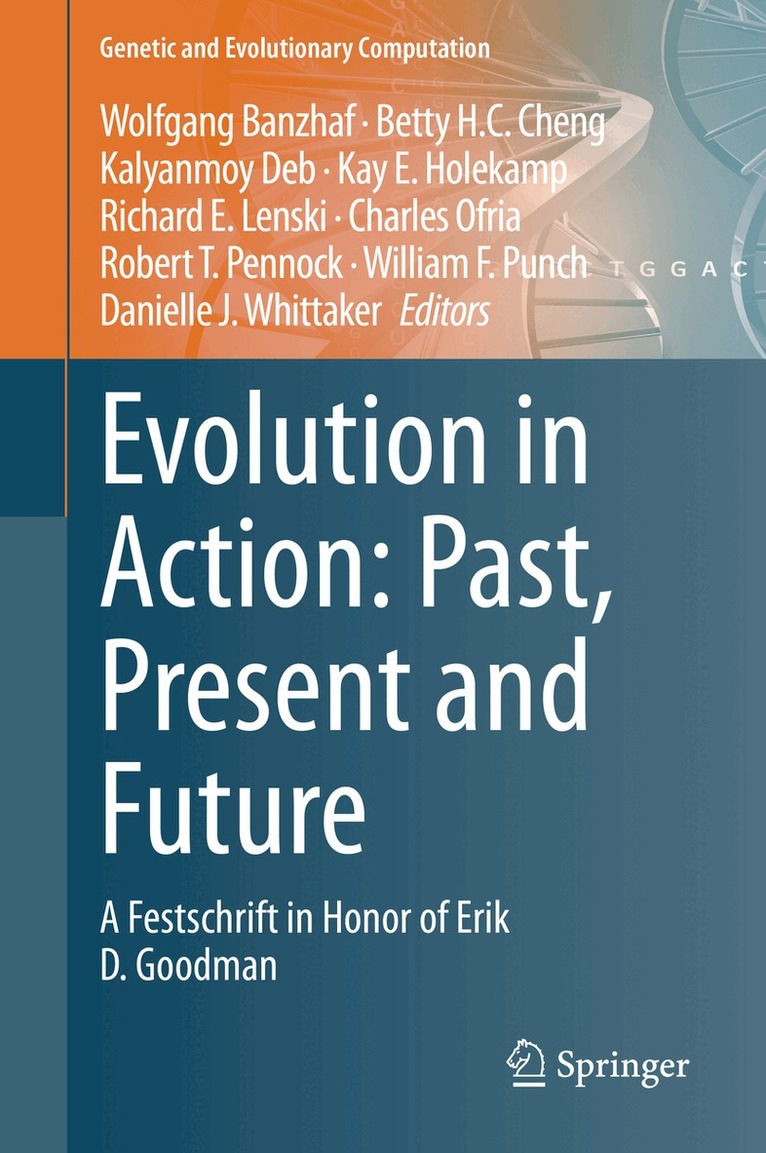
Evolution in Action: Past, Present and Future
A Festschrift in Honor of Erik D. Goodman
Av Wolfgang Banzhaf, Betty H.C. Cheng m. fl.
Inbunden, 2020
2401 kr
Lägg i varukorg
This edited research monograph brings together contributions from computer scientists, biologists, and engineers who are engaged with the study of evolution and how it may be applied to solve real-world problems. It also serves as a Festschrift dedicated to Erik D. Goodman, the founding director of …
Evolution in Action: Past, Present and Future
A Festschrift in Honor of Erik D. Goodman
Av Danielle J. Whittaker, William F. Punch m. fl.
E-bok, 2020
2982 kr
Lägg i varukorg
This edited research monograph brings together contributions from computer scientists, biologists, and engineers who are engaged with the study of evolution and how it may be applied to solve real-world problems. It also serves as a Festschrift dedicated to Erik D. Goodman, the founding director of …
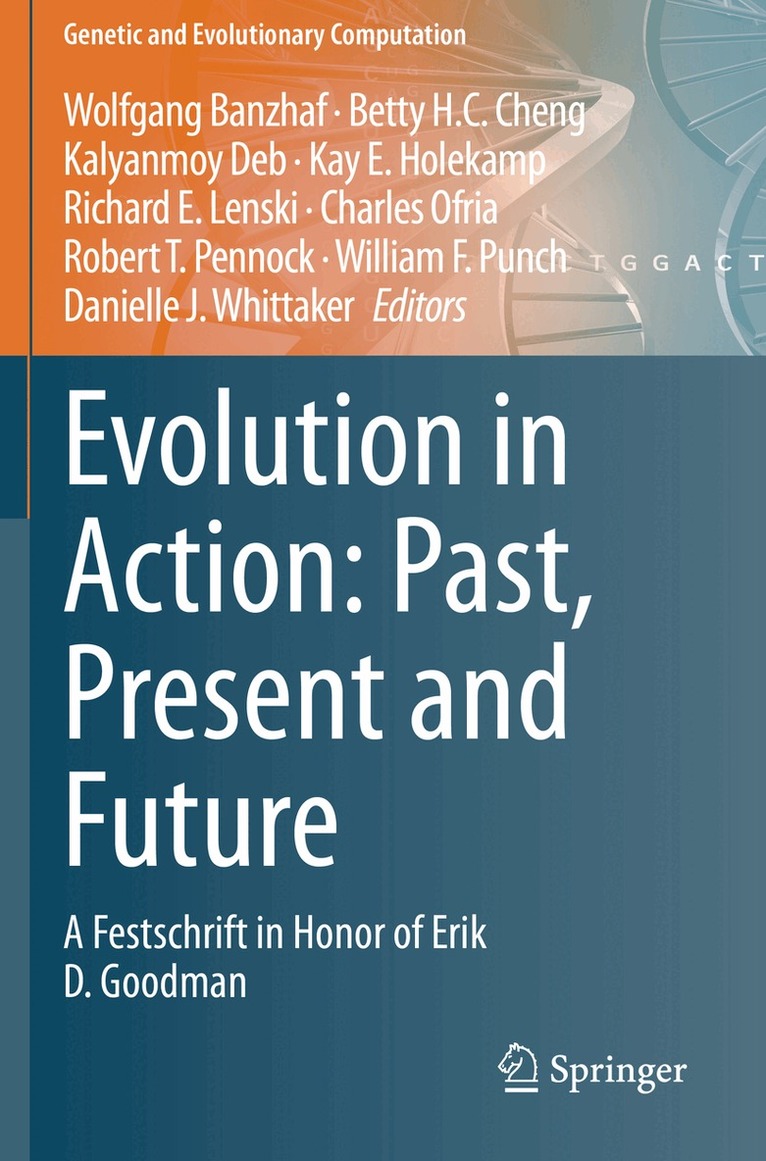
Evolution in Action: Past, Present and Future
A Festschrift in Honor of Erik D. Goodman
Av Wolfgang Banzhaf, Betty H.C. Cheng m. fl.
Häftad, 2021
2401 kr
Lägg i varukorg
This edited research monograph brings together contributions from computer scientists, biologists, and engineers who are engaged with the study of evolution and how it may be applied to solve real-world problems. It also serves as a Festschrift dedicated to Erik D. Goodman, the founding director of …
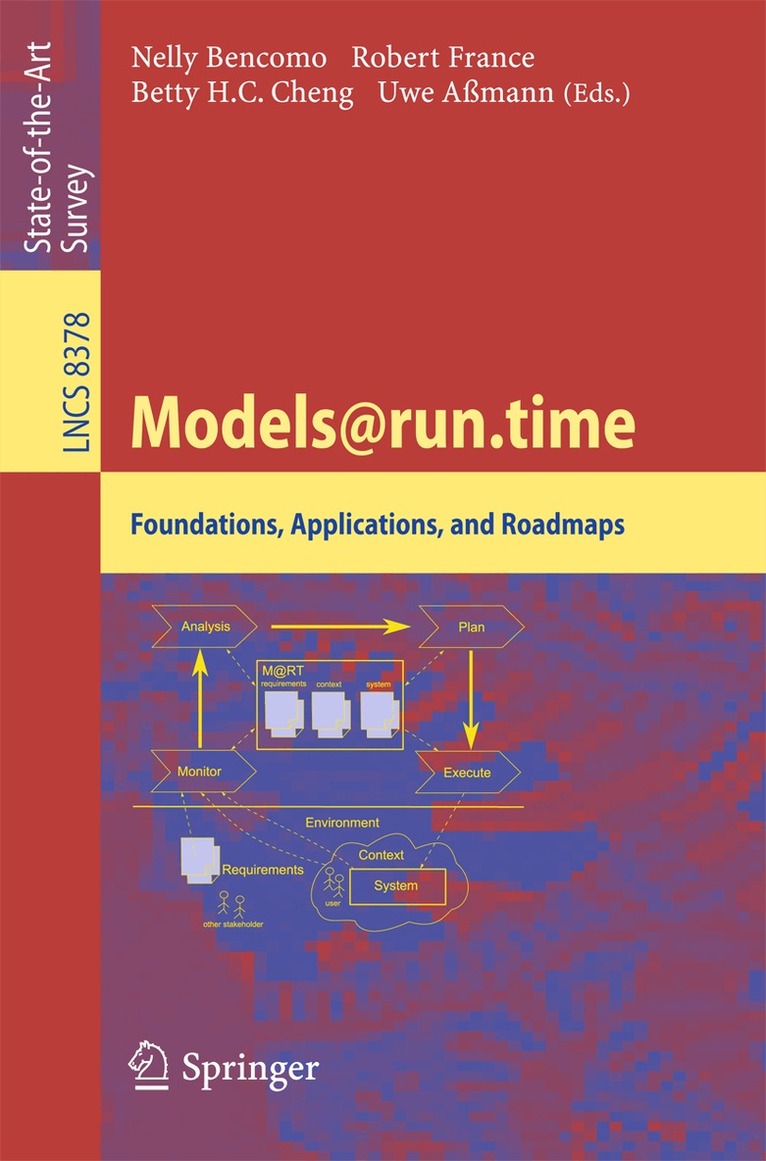
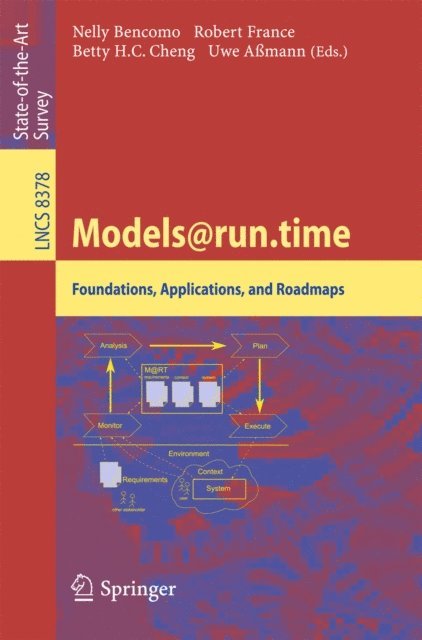
Models@run.time
Foundations, Applications, and Roadmaps
Av Nelly Bencomo, Robert B. France m. fl.
Häftad, 2014
567 kr
Lägg i varukorg
Traditionally, research on model-driven engineering (MDE) has mainly focused on the use of models at the design, implementation, and verification stages of development. This work has produced relatively mature techniques and tools that are currently being used in industry and academia. However, …
Models@run.time
Foundations, Applications, and Roadmaps
Av Uwe Amann, Betty H.C. Cheng m. fl.
E-bok, 2014
739 kr
Lägg i varukorg
Traditionally, research on model-driven engineering (MDE) has mainly focused on the use of models at the design, implementation, and verification stages of development. This work has produced relatively mature techniques and tools that are currently being used in industry and academia. However, …
Globalizing Domain-Specific Languages
International Dagstuhl Seminar, Dagstuhl Castle, Germany, October 5-10, 2014, Revised Papers
Av Benoit Combemale, Betty H.C. Cheng m. fl.
Häftad, 2015
455 kr
Lägg i varukorg
The development of modern complex software-intensive systems often involves the use of multiple DSMLs that capture different system aspects. Supporting coordinated use of DSMLs leads to what we call the globalization of modeling languages, that is, the use of multiple modeling languages to support …
Globalizing Domain-Specific Languages
International Dagstuhl Seminar, Dagstuhl Castle, Germany, October 5-10, 2014, Revised Papers
Av Bernhard Rumpe, Jean-Marc Jezequel m. fl.
E-bok, 2015
588 kr
Lägg i varukorg
The development of modern complex software-intensive systems often involves the use of multiple DSMLs that capture different system aspects. Supporting coordinated use of DSMLs leads to what we call the globalization of modeling languages, that is, the use of multiple modeling languages to support …