Betty I. Roots – författare
Visar alla böcker från författaren Betty I. Roots. Handla med fri frakt och snabb leverans.
7 produkter
7 produkter
Inbunden, Engelska, 1995
1 669 kr
Skickas inom 10-15 vardagar
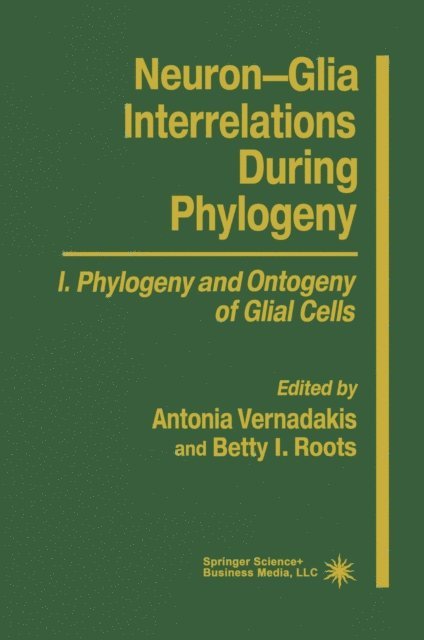
It is now established that neuroglia are the intimate partners of neurons and that neuronal function is a result of neuron-glia interrelations at several levels of organization. The literature shows that the study of phylogeny has contributed a deeper understand- ing of the complex functions of the neuroglia and the neuron-glia unit. It is the purpose of Neuron-Glia Interrelations During Phylog- eny: I. Phylogeny and Ontogeny of Glial Cells, as well as its compan- ion volume Neuron-Glia Interrelations During Phylogeny: II. Plasticity and Regeneration, to present to the scientific community a broad spectrum of information on neuroglia through phylog- eny and ontogeny, the focus of this volume. In view of the role of neuroglia in plasticity and regeneration, the companion volume will cover this aspect of neuroglia during phylogeny. Neuron-Glia Interrelations During Phylogeny: I. Phylogeny and Ontogeny of Glial Cells begins with the elegant chapter "Glial Types, Gliogenesis, and Extracellular Matrix in Mammalian CNS" by Amico Bignami, to whom this volume is dedicated.He was one of the pioneers in describing gliogenesis and this chapter brings together everything we know today on this critical topic. It also includes the latest views of Bignami on the role of extracellular matrix in gliogenesis and glial functions. "Evolution of Astrocytes in the Vertebrate CNS" by Suarez et al. complements and extends the information in Bignami's chapter by including ependymal astrocytes.
Inbunden, Engelska, 1995
2 223 kr
Skickas inom 10-15 vardagar
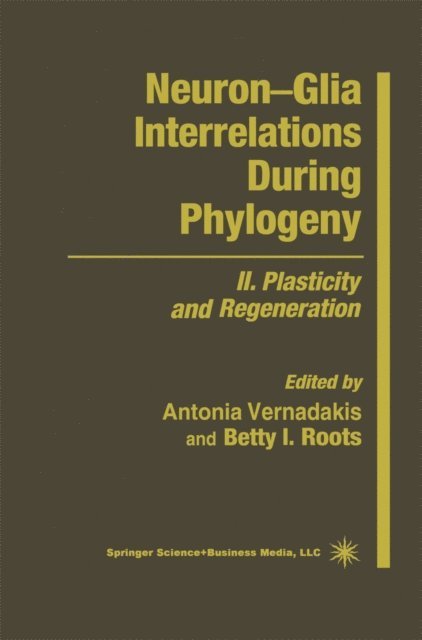
It has been established that neuroglia are involved in early neu- ronal growth, differentiation, and migration; these issues are well discussed in the companion volume entitled Neuron-Glia Interrela- tions During Phylogeny: I. Phylogeny and Ontogeny of Glial Cells. The present volume, Neuron-Glia Interrelations During Phylogeny: II. Plas- ticity and Regeneration, focuses on two aspects: (1) neuron-glia inter- relations as they relate to the physiological and metabolic homeostasis of neurons; and (2) the role of neuroglia and neuronal plasticity in regeneration and aging. Neuron-Glia Interrelations During Phylogeny: II. Plasticity and Regeneration begins with the unique presentation, "Neuron-Glia In- teractions in the Human Fetal Brain," by Sogos et al. The interesting issue discussed in this chapter is the immunocompetence of the CNS, a field that is now rising. The chapter by Oland et al. , "Glial Cells Playa Key Role in the Construction of Insect Olfactory Glomeruli," discusses a unique role of glial cells as intermediates in afferent- axon induction of substructure with the CNS.The chapter by Vanhems, "Insect Glial Cells and Their Relationships with Neurons," compliments the information presented in the companion volume by Fredieu and Mahowald and, in this volume, the chapter by Tobert and Oland. The chapter by Tsacopoulos and Poitry, "Metabolite Exchanges and Signal Trafficking Between Glial Cells and Neurons in the Insect Retina," provides evidence of the nutritive functions of glial cells and the important role of alanine supplied by glial cells to photoreceptors, a clear neuron-glia interaction.
Häftad, Engelska, 2013
2 171 kr
Skickas inom 10-15 vardagar
It has been established that neuroglia are involved in early neu- ronal growth, differentiation, and migration; these issues are well discussed in the companion volume entitled Neuron-Glia Interrela- tions During Phylogeny: I. Phylogeny and Ontogeny of Glial Cells. The present volume, Neuron-Glia Interrelations During Phylogeny: II. Plas- ticity and Regeneration, focuses on two aspects: (1) neuron-glia inter- relations as they relate to the physiological and metabolic homeostasis of neurons; and (2) the role of neuroglia and neuronal plasticity in regeneration and aging. Neuron-Glia Interrelations During Phylogeny: II. Plasticity and Regeneration begins with the unique presentation, "Neuron-Glia In- teractions in the Human Fetal Brain," by Sogos et al. The interesting issue discussed in this chapter is the immunocompetence of the CNS, a field that is now rising. The chapter by Oland et al. , "Glial Cells Playa Key Role in the Construction of Insect Olfactory Glomeruli," discusses a unique role of glial cells as intermediates in afferent- axon induction of substructure with the CNS.The chapter by Vanhems, "Insect Glial Cells and Their Relationships with Neurons," compliments the information presented in the companion volume by Fredieu and Mahowald and, in this volume, the chapter by Tobert and Oland. The chapter by Tsacopoulos and Poitry, "Metabolite Exchanges and Signal Trafficking Between Glial Cells and Neurons in the Insect Retina," provides evidence of the nutritive functions of glial cells and the important role of alanine supplied by glial cells to photoreceptors, a clear neuron-glia interaction.
E-bok
PDF, Engelska, 2013756 kr
Läs direkt efter köp
Nerve Membranes: A Study of the Biological and Chemical Aspects of Neuron–Glia Relationships presents the various aspects of neuronal and glial structure and function. This book provides an interdisciplinary approach to the analysis of neuron–glia relationships and of membranes in the nervous system. Comprised of seven chapters, this book begins with an overview of the function of the biological membranes to improve, retard, and regulate the rate of cellular reactions. This text then determines the differences in the organization of the cells in the nervous system in the vertebrates and the invertebrates. Other chapters examine the role of certain intermolecular forces and of water in the organization of lipid–protein and lipid–lipid associations. This book reviews as well the theories of biological membrane structure and considers how these contribute towards understanding the methods by which membranes perform their role. This book is a valuable resource for neuroscientists, neurochemists, and researchers.
E-bok
PDF, Engelska, 19951 977 kr
Läs direkt efter köp
E-bok
PDF, Engelska, 19952 741 kr
Läs direkt efter köp
Häftad, Engelska, 2010
1 630 kr
Skickas inom 10-15 vardagar
It is now established that neuroglia are the intimate partners of neurons and that neuronal function is a result of neuron-glia interrelations at several levels of organization. The literature shows that the study of phylogeny has contributed a deeper understand- ing of the complex functions of the neuroglia and the neuron-glia unit. It is the purpose of Neuron-Glia Interrelations During Phylog- eny: I. Phylogeny and Ontogeny of Glial Cells, as well as its compan- ion volume Neuron-Glia Interrelations During Phylogeny: II. Plasticity and Regeneration, to present to the scientific community a broad spectrum of information on neuroglia through phylog- eny and ontogeny, the focus of this volume. In view of the role of neuroglia in plasticity and regeneration, the companion volume will cover this aspect of neuroglia during phylogeny. Neuron-Glia Interrelations During Phylogeny: I. Phylogeny and Ontogeny of Glial Cells begins with the elegant chapter "Glial Types, Gliogenesis, and Extracellular Matrix in Mammalian CNS" by Amico Bignami, to whom this volume is dedicated.He was one of the pioneers in describing gliogenesis and this chapter brings together everything we know today on this critical topic. It also includes the latest views of Bignami on the role of extracellular matrix in gliogenesis and glial functions. "Evolution of Astrocytes in the Vertebrate CNS" by Suarez et al. complements and extends the information in Bignami's chapter by including ependymal astrocytes.