Bharat Singh - Böcker
Visar alla böcker från författaren Bharat Singh. Handla med fri frakt och snabb leverans.
17 produkter
17 produkter
2 331 kr
Skickas inom 7-10 vardagar
Biofuel Crop Sustainability brings together the basic principles of agricultural sustainability and special stipulations for biofuels, from the economic and ecological opportunities and challenges of sustainable biofuel crop production to the unique characteristics of particular crops which make them ideal for biofuel applications. This book will be a valuable resource for researchers and professionals involved in biofuels development and production as well as agriculture industry personnel. Chapters focus the broad principles of resource management for ecological, environmental and societal welfare, the sustainability issues pertaining to several broad categories of biofuel crops , as well as the economics and profitability of biofuels on both a local and international scale. Coverage includes topics such as utilizing waste water for field crop irrigation and algae production, reliability of feedstock supply, marginal lands, and identifying crops with traits of significance for survival and growth on low fertility soils. The development of production practices with low external inputs of fertilizer, irrigation, and pesticides is also covered.Biofuel Crop Sustainability will be a valuable, up-to-date reference for all those involved in the rapidly expanding biofuels industry and sustainable agriculture research fields.
Del 164 - ASA, CSSA, and SSSA Books
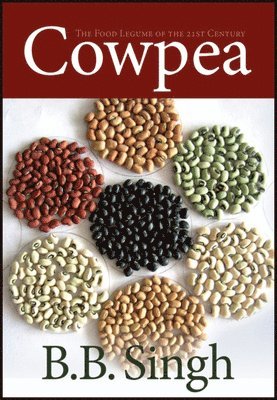
Cowpea
The Food Legume of the 21st Century
Inbunden, Engelska, 2020
483 kr
Skickas inom 7-10 vardagar
1 968 kr
Skickas inom 10-15 vardagar
This book examines how the progress of digital technology is transforming the world of work, skill demand, labour market institutions, and regulations in countries like India. It studies the challenges, opportunities, and current and future contributions of digital technologies. The volume poses salient questions regarding the ICT sector, I4.0 technologies, the gig economy, remote work, and the regulatory environment, and interrogates the policy and regulatory measures needed to promote more inclusive and decent work in the future.Part of the Towards Sustainable Futures series, this book will be an essential read for scholars and researchers of economics, sustainable development, sociology of work, labour economics, Indian economy, public policy, and human resource management. It will also be extremely useful to policymakers, government organisations, civil society organisations, and those in the corporate sector.
575 kr
Skickas inom 10-15 vardagar
This book examines how the progress of digital technology is transforming the world of work, skill demand, labour market institutions, and regulations in countries like India. It studies the challenges, opportunities, and current and future contributions of digital technologies. The volume poses salient questions regarding the ICT sector, I4.0 technologies, the gig economy, remote work, and the regulatory environment, and interrogates the policy and regulatory measures needed to promote more inclusive and decent work in the future.Part of the Towards Sustainable Futures series, this book will be an essential read for scholars and researchers of economics, sustainable development, sociology of work, labour economics, Indian economy, public policy, and human resource management. It will also be extremely useful to policymakers, government organisations, civil society organisations, and those in the corporate sector.
Ethnopharmacological Properties, Biological Activity and Phytochemical Attributes of Medicinal Plants Volume 4
Inbunden, Engelska, 2023
2 445 kr
Skickas inom 10-15 vardagar
This book covers the morphological characteristics, ethnopharmacological properties, isolated and identified structurally diverse secondary metabolites, biological and pharmacological activities of medicinal plants. Ethnopharmacology is the systematic study of folklore/traditional medicines, which continue to provide innovative drugs and lead molecules for the pharmaceutical industry. In fact, plant secondary metabolites, used as a single molecule or as a mixture, are medicines that can be effective and safe even when synthetic drugs fail. Therefore, the description of these secondary metabolites as well as methods for the targeted expression and/or purification is of high interest.In addition to surveying the morphological features, ethnopharmacological properties, biological and pharmacological activities, and studies of clinical trials, this book offers a comprehensive treatment of 56 plant species. It also presents the cell culture conditions and various methods used for increasing the production of medicinally important secondary metabolites in plant cell cultures.This volume:Provides the morphological features, habitat, and distribution of each species of 56 genera selected from the different regions of the world. Presents ethnopharmacological applications of various species of the 56 genera in this book. Different species of 56 genera are used for ethnomedicinal uses by the people of various countries of the world.Describes structures of various secondary metabolites identified in 56 plant species together with their biological and pharmacological activities.Discusses strategies of secondary metabolites production, such as organ culture, pH, elicitation, hairy root cultures, light, and mutagenesis.Provides a complete overview of each species of 56 genera and the complete information up to 2022.Ethnopharmacological Properties, Biological Activity and Phytochemical Attributes of Medicinal Plants is an important book for undergraduate and postgraduate students, pharmacologists, phytochemists, Ayurvedic practitioners, medical doctors, and biotechnologists interested in the ethnopharmacological properties, phytochemistry, biological, and pharmacological activities of plants.
Ethnopharmacological Properties, Biological Activity and Phytochemical Attributes of Medicinal Plants Volume 4
Häftad, Engelska, 2025
940 kr
Skickas inom 10-15 vardagar
This book covers the morphological characteristics, ethnopharmacological properties, isolated and identified structurally diverse secondary metabolites, biological and pharmacological activities of medicinal plants. Ethnopharmacology is the systematic study of folklore/traditional medicines, which continue to provide innovative drugs and lead molecules for the pharmaceutical industry. In fact, plant secondary metabolites, used as a single molecule or as a mixture, are medicines that can be effective and safe even when synthetic drugs fail. Therefore, the description of these secondary metabolites as well as methods for the targeted expression and/or purification is of high interest.In addition to surveying the morphological features, ethnopharmacological properties, biological and pharmacological activities, and studies of clinical trials, this book offers a comprehensive treatment of 56 plant species. It also presents the cell culture conditions and various methods used for increasing the production of medicinally important secondary metabolites in plant cell cultures.This volume:Provides the morphological features, habitat, and distribution of each species of 56 genera selected from the different regions of the world. Presents ethnopharmacological applications of various species of the 56 genera in this book. Different species of 56 genera are used for ethnomedicinal uses by the people of various countries of the world.Describes structures of various secondary metabolites identified in 56 plant species together with their biological and pharmacological activities.Discusses strategies of secondary metabolites production, such as organ culture, pH, elicitation, hairy root cultures, light, and mutagenesis.Provides a complete overview of each species of 56 genera and the complete information up to 2022.Ethnopharmacological Properties, Biological Activity and Phytochemical Attributes of Medicinal Plants is an important book for undergraduate and postgraduate students, pharmacologists, phytochemists, Ayurvedic practitioners, medical doctors, and biotechnologists interested in the ethnopharmacological properties, phytochemistry, biological, and pharmacological activities of plants.
Ethnopharmacological Properties, Biological Activity and Phytochemical Attributes of Medicinal Plants Volume 3
Inbunden, Engelska, 2023
2 445 kr
Skickas inom 10-15 vardagar
This book covers the morphological characteristics, ethnopharmacological properties, isolated and identified structurally diverse secondary metabolites, biological and pharmacological activities of medicinal plants. Ethnopharmacology is the systematic study of folklore/traditional medicines, which continue to provide innovative drugs and lead molecules for the pharmaceutical industry. In fact, plant secondary metabolites, used as a single molecule or as a mixture, are medicines that can be effective and safe even when synthetic drugs fail. Therefore, the description of these secondary metabolites as well as methods for the targeted expression and/or purification is of high interest.In addition to surveying the morphological features, ethnopharmacological properties, biological and pharmacological activities, and studies of clinical trials, this book offers a comprehensive treatment of 56 plant species. It also presents the cell culture conditions and various methods used for increasing the production of medicinally important secondary metabolites in plant cell cultures.This volume: · Provides the morphological features, habitat, and distribution of each species of 56 genera selected from the different regions of the world. · Presents ethnopharmacological applications of various species of included 56 genera of this book. Different species of 56 genera are used for ethnomedicinal uses by the people of various countries of the world.· Describes structures of various secondary metabolites identified in 56 plant species together with their biological and pharmacological activities.· Discusses strategies of secondary metabolites production, such as organ culture, pH, elicitation, hairy root cultures, light, and mutagenesis.· Provides a complete overview of each species of 56 genera and complete information up to year 2022.Ethnopharmacological Properties, Biological Activity and Phytochemical Attributes of Medicinal Plants is an important book for undergraduate and postgraduate students, pharmacologists, phytochemists, Ayurvedic practitioners, medical doctors, and biotechnologists interested in the ethnopharmacological properties, phytochemistry, and biological and pharmacological activities of plants.
Ethnopharmacological Properties, Biological Activity and Phytochemical Attributes of Medicinal Plants Volume 3
Häftad, Engelska, 2025
731 kr
Skickas inom 10-15 vardagar
This book covers the morphological characteristics, ethnopharmacological properties, isolated and identified structurally diverse secondary metabolites, biological and pharmacological activities of medicinal plants. Ethnopharmacology is the systematic study of folklore/traditional medicines, which continue to provide innovative drugs and lead molecules for the pharmaceutical industry. In fact, plant secondary metabolites, used as a single molecule or as a mixture, are medicines that can be effective and safe even when synthetic drugs fail. Therefore, the description of these secondary metabolites as well as methods for the targeted expression and/or purification is of high interest.In addition to surveying the morphological features, ethnopharmacological properties, biological and pharmacological activities, and studies of clinical trials, this book offers a comprehensive treatment of 56 plant species. It also presents the cell culture conditions and various methods used for increasing the production of medicinally important secondary metabolites in plant cell cultures.This volume: · Provides the morphological features, habitat, and distribution of each species of 56 genera selected from the different regions of the world. · Presents ethnopharmacological applications of various species of included 56 genera of this book. Different species of 56 genera are used for ethnomedicinal uses by the people of various countries of the world.· Describes structures of various secondary metabolites identified in 56 plant species together with their biological and pharmacological activities.· Discusses strategies of secondary metabolites production, such as organ culture, pH, elicitation, hairy root cultures, light, and mutagenesis.· Provides a complete overview of each species of 56 genera and complete information up to year 2022.Ethnopharmacological Properties, Biological Activity and Phytochemical Attributes of Medicinal Plants is an important book for undergraduate and postgraduate students, pharmacologists, phytochemists, Ayurvedic practitioners, medical doctors, and biotechnologists interested in the ethnopharmacological properties, phytochemistry, and biological and pharmacological activities of plants.
Ethnopharmacological Properties, Biological Activity and Phytochemical Attributes of Medicinal Plants, Volume 1
Inbunden, Engelska, 2023
2 445 kr
Skickas inom 10-15 vardagar
This book covers the morphological characteristics, ethnopharmacological properties, isolated and identified structurally diverse secondary metabolites, biological and pharmacological activities of medicinal plants. Ethnopharmacology is the systematic study of folklore/traditional medicines, which continue to provide innovative drugs and lead molecules for the pharmaceutical industry. In fact, plant secondary metabolites, used as a single molecule or as a mixture, are medicines that can be effective and safe even when synthetic drugs fail. Therefore, the description of these secondary metabolites as well as methods for the targeted expression and/or purification is of high interest.In addition to surveying the morphological features, ethnopharmacological properties, biological and pharmacological activities, and studies of clinical trials, this book offers a comprehensive treatment of 56 plant species. It also presents the cell culture conditions and various methods used for increasing the production of medicinally important secondary metabolites in plant cell cultures.This volume:· Provides the morphological features, habitat, and distribution of each species of 56 genera selected from the different regions of the world. · Presents ethnopharmacological applications of various species of the 56 genera included in this book. Different species of 56 genera are used for ethnomedicinal uses by the people of various countries of the world.· Describes structures of various secondary metabolites identified in 56 plant species together with their biological and pharmacological activities.· Discusses strategies of secondary metabolites production, such as organ culture, pH, elicitation, hairy root cultures, light, and mutagenesis.· Provides a complete overview of each species of 56 genera and complete information up to 2022.Ethnopharmacological Properties, Biological Activity and Phytochemical Attributes of Medicinal Plants is an important book for undergraduate and postgraduate students, pharmacologists, phytochemists, Ayurvedic practitioners, medical doctors, and biotechnologists interested in the ethnopharmacological properties, phytochemistry, and biological and pharmacological activities of plants.
Ethnopharmacological Properties, Biological Activity and Phytochemical Attributes of Medicinal Plants, Volume 1
Häftad, Engelska, 2025
940 kr
Skickas inom 10-15 vardagar
This book covers the morphological characteristics, ethnopharmacological properties, isolated and identified structurally diverse secondary metabolites, biological and pharmacological activities of medicinal plants. Ethnopharmacology is the systematic study of folklore/traditional medicines, which continue to provide innovative drugs and lead molecules for the pharmaceutical industry. In fact, plant secondary metabolites, used as a single molecule or as a mixture, are medicines that can be effective and safe even when synthetic drugs fail. Therefore, the description of these secondary metabolites as well as methods for the targeted expression and/or purification is of high interest.In addition to surveying the morphological features, ethnopharmacological properties, biological and pharmacological activities, and studies of clinical trials, this book offers a comprehensive treatment of 56 plant species. It also presents the cell culture conditions and various methods used for increasing the production of medicinally important secondary metabolites in plant cell cultures.This volume:· Provides the morphological features, habitat, and distribution of each species of 56 genera selected from the different regions of the world. · Presents ethnopharmacological applications of various species of the 56 genera included in this book. Different species of 56 genera are used for ethnomedicinal uses by the people of various countries of the world.· Describes structures of various secondary metabolites identified in 56 plant species together with their biological and pharmacological activities.· Discusses strategies of secondary metabolites production, such as organ culture, pH, elicitation, hairy root cultures, light, and mutagenesis.· Provides a complete overview of each species of 56 genera and complete information up to 2022.Ethnopharmacological Properties, Biological Activity and Phytochemical Attributes of Medicinal Plants is an important book for undergraduate and postgraduate students, pharmacologists, phytochemists, Ayurvedic practitioners, medical doctors, and biotechnologists interested in the ethnopharmacological properties, phytochemistry, and biological and pharmacological activities of plants.
Ethnopharmacological Properties, Biological Activity and Phytochemical Attributes of Medicinal Plants, Volume 2
Inbunden, Engelska, 2023
2 445 kr
Skickas inom 10-15 vardagar
This book covers the morphological characteristics, ethnopharmacological properties, isolated and identified structurally diverse secondary metabolites, biological and pharmacological activities of medicinal plants. Ethnopharmacology is the systematic study of folklore/traditional medicines, which continue to provide innovative drugs and lead molecules for the pharmaceutical industry. In fact, plant secondary metabolites, used as a single molecule or as a mixture, are medicines that can be effective and safe even when synthetic drugs fail. Therefore, the description of these secondary metabolites as well as methods for the targeted expression and/or purification is of high interest.In addition to surveying the morphological features, ethnopharmacological properties, biological and pharmacological activities, and studies of clinical trials, this book offers a comprehensive treatment of 56 plant species. It also presents the cell culture conditions and various methods used for increasing the production of medicinally important secondary metabolites in plant cell cultures.This volume:· Provides the morphological features, habitat, and distribution of each species of 56 genera selected from the different regions of the world. · Presents ethnopharmacological applications of various species of the 56 genera included in this book. Different species of 56 genera are used for ethnomedicinal uses by the people of various countries of the world.· Describes structures of various secondary metabolites identified in 56 plant species together with their biological and pharmacological activities.· Discusses strategies of secondary metabolites production, such as organ culture, pH, elicitation, hairy root cultures, light, and mutagenesis.· Provides a complete overview of each species of 56 genera and complete information up to 2022.Ethnopharmacological Properties, Biological Activity and Phytochemical Attributes of Medicinal Plants is an important book for undergraduate and postgraduate students, pharmacologists, phytochemists, Ayurvedic practitioners, medical doctors, and biotechnologists interested in the ethnopharmacological properties, phytochemistry, and biological and pharmacological activities of plants.
Ethnopharmacological Properties, Biological Activity and Phytochemical Attributes of Medicinal Plants, Volume 2
Häftad, Engelska, 2025
940 kr
Skickas inom 10-15 vardagar
This book covers the morphological characteristics, ethnopharmacological properties, isolated and identified structurally diverse secondary metabolites, biological and pharmacological activities of medicinal plants. Ethnopharmacology is the systematic study of folklore/traditional medicines, which continue to provide innovative drugs and lead molecules for the pharmaceutical industry. In fact, plant secondary metabolites, used as a single molecule or as a mixture, are medicines that can be effective and safe even when synthetic drugs fail. Therefore, the description of these secondary metabolites as well as methods for the targeted expression and/or purification is of high interest.In addition to surveying the morphological features, ethnopharmacological properties, biological and pharmacological activities, and studies of clinical trials, this book offers a comprehensive treatment of 56 plant species. It also presents the cell culture conditions and various methods used for increasing the production of medicinally important secondary metabolites in plant cell cultures.This volume:· Provides the morphological features, habitat, and distribution of each species of 56 genera selected from the different regions of the world. · Presents ethnopharmacological applications of various species of the 56 genera included in this book. Different species of 56 genera are used for ethnomedicinal uses by the people of various countries of the world.· Describes structures of various secondary metabolites identified in 56 plant species together with their biological and pharmacological activities.· Discusses strategies of secondary metabolites production, such as organ culture, pH, elicitation, hairy root cultures, light, and mutagenesis.· Provides a complete overview of each species of 56 genera and complete information up to 2022.Ethnopharmacological Properties, Biological Activity and Phytochemical Attributes of Medicinal Plants is an important book for undergraduate and postgraduate students, pharmacologists, phytochemists, Ayurvedic practitioners, medical doctors, and biotechnologists interested in the ethnopharmacological properties, phytochemistry, and biological and pharmacological activities of plants.
238 kr
Skickas inom 5-8 vardagar
2 280 kr
Skickas inom 7-10 vardagar
The demand for plant-based industrial raw materials has increased as well as research into expanding the utility of plants for current and future uses. Plants are renewable, have limited or positive environmental impact and have the potential to yield a wide range of products in contrast to petroleum-based materials. Plants can be used in a variety of different industries and products including bioenergy, industrial oil and starch, fibre and dye, rubber and related compounds, insecticide and land rehabilitation. This title offers a comprehensive coverage of each of these uses. Chapters discuss the identification of plant species with desired traits, their cultivation to obtain the needed raw materials, methods utilized in producing different finished products, current and future research in crop production and processing and the present state and future prospects for the industry. Providing the first systematic review of industrial crops and their uses, this book will be an important resource for students and researchers of crop science and agricultural policy makers.
2 280 kr
Skickas inom 7-10 vardagar
Providing comprehensive coverage on biofuel crop production and the technological, environmental and resource issues associated with a sustainable biofuel industry, this book is ideal for researchers and industry personnel. Beginning with an introduction to biofuels and the challenges they face, the book then includes detailed coverage on crops of current importance or with high future prospects, including sections on algae, sugar crops and grass, oil and forestry species. The chapters focus on the genetics, breeding, cultivation, harvesting and handling of each crop.
Secondary Metabolites of Medicinal Plants, 4 Volume Set
Ethnopharmacological Properties, Biological Activity and Production Strategies
Inbunden, Engelska, 2020
5 919 kr
Skickas inom 11-20 vardagar
Covers the structurally diverse secondary metabolites of medicinal plants, including their ethnopharmacological properties, biological activity, and production strategies Secondary metabolites of plants are a treasure trove of novel compounds with potential pharmaceutical applications. Consequently, the nature of these metabolites as well as strategies for the targeted expression and/or purification is of high interest. Regarding their biological and pharmacological activity and ethnopharmacological properties, this book offers a comprehensive treatment of 100 plant species, including Abutilon, Aloe, Cannabis, Capsicum, Jasminum, Malva, Phyllanthus, Stellaria, Thymus, Vitis, Zingiber, and more. It also discusses the cell culture conditions and various strategies used for enhancing the production of targeted metabolites in plant cell cultures. Secondary Metabolites of Medicinal Plants: Ethnopharmacological Properties, Biological Activity and Production Strategies is presented in four parts. Part I provides a complete introduction to the subject. Part II looks at the ethnomedicinal and pharmacological properties, chemical structures, and culture conditions of secondary metabolites. The third part examines the many strategies of secondary metabolites production, including: biotransformation; culture conditions; feeding of precursors; genetic transformation; immobilization; and oxygenation. The last section concludes with an overview of everything learned. -Provides information on cell culture conditions and targeted extraction of secondary metabolites confirmed by relevant literature -Presents the structures of secondary metabolites of 100 plant species together with their biological and pharmacological activity -Discusses plant species regarding their distribution, habitat, and ethnopharmacalogical properties -Presents strategies of secondary metabolites production, such as organ culture, pH, elicitation, hairy root cultures, light, and mutagenesis Secondary Metabolites of Medicinal Plants is an important book for students, professionals, and biotechnologists interested in the biological and pharmacological activity and ethnopharmacological properties of plants.
194 kr
Skickas inom 5-8 vardagar