Bibiana Moncada – författare
Visar alla böcker från författaren Bibiana Moncada. Handla med fri frakt och snabb leverans.
2 produkter
2 produkter
Inbunden, Engelska, 2027
344 kr
Kommande
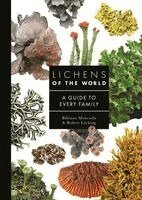
A magnificently illustrated guide to the world’s extraordinary diversity of lichensLichens are not autonomous organisms but a symbiotic partnership between fungi and photosynthetic algae or cyanobacteria. With more than 20,000 species found across the globe, they are an enormously successful life-form, capable of surviving in some of the harshest environments on the planet. This book provides a wide-ranging look at the 117 currently accepted families of lichen-forming fungi. The introductory section covers topics ranging from the biological structure of lichens to their lifecycle and symbiotic relationships with other organisms. This is followed by a fact-filled directory profiling at least one exemplar genus of each family and highlighting its unique characteristics. Lichens of the World is a self-contained reference for scientists, naturalists, and anyone interested in lichens.Features hundreds of stunning full-color photos and distribution maps showcasing the variety, exquisite beauty, and diverse habitats of the world’s lichensSheds light on the significant ecological roles of lichens and their function as bioindicators of environmental healthDiscusses the evolution, morphology, and classification of lichens, their role in ecosystems, and the conservation of lichens in the AnthropoceneWritten by two leading expertsAn essential guide for nature lovers everywhere
E-bok
PDF, Spanska, 2021251 kr
Läs direkt efter köp
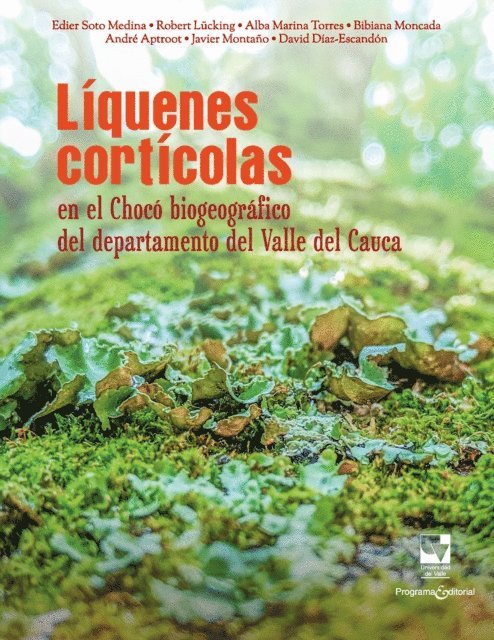
El objetivo de este trabajo fue documentar la diversidad de líquenes cortícolas en el Chocó biogeográfico del Valle del Cauca, con descripciones breves de especies encontradas a lo largo de un gradiente altitudinal (0-3650 m). Se recolectaron ca. 3000 ejemplares, pertenecientes a 39 familias, 126 géneros y 750 especies. Las formas dominantes fueron las costrosas (1963 ejemplares), seguidas por las foliosas (719 ejemplares), las fruticosas (328 ejemplares) y las escuamulosas (168 ejemplares), mientras que las menos frecuentes fueron las gelatinosas y las pulverulentas. Las familias con mayor número de especies fueron Graphidaceae (188 especies), Parmeliaceae (97 especies), Arthoniaceae (53 especies), Lobariaceae (43 especies), Pyrenulaceae (40 especies), Ramalinaceae (38 especies) y Trypetheliaceae (30 especies), mientras que ocho familias solo presentaron una especie. Se reportan por primera vez cuatro géneros para Colombia: Clypeopyrenis, Distopyrenis, Megalotremis y Myeloconis.