Bila-Isia Inogwabini – författare
806 kr
Skickas inom 10-15 vardagar
343 kr
Skickas inom 10-15 vardagar
360 kr
Läs direkt efter köp
This book considers the global question of climate change from local perspectives in the context of Central Africa.
Bila-Isia Inogwabini examines attempts made by the international community to respond to the global challenges posed by climate change in the Congo Basin and highlights that these attempts have so far produced limited results. Abject poverty and the lack of academic, technical, institutional and governance capacities have made it difficult for these solutions to take root in local conditions. Taking a novel perspective, Inogwabini argues that what is needed is not austerity in the use of natural resources but rather increased material affluence for these communities, which will enable individuals to create their own ways to survive through the tides of climate change. He considers factors including social inertia, climate skepticism and lack of political structure and presents a climate change action plan that is targeted at the local level in the Congo Basin.
Overall, this volume will be of great interest to students and scholars of climate change, global development and African studies more broadly.
357 kr
Läs direkt efter köp
This book considers the global question of climate change from local perspectives in the context of Central Africa.
Bila-Isia Inogwabini examines attempts made by the international community to respond to the global challenges posed by climate change in the Congo Basin and highlights that these attempts have so far produced limited results. Abject poverty and the lack of academic, technical, institutional and governance capacities have made it difficult for these solutions to take root in local conditions. Taking a novel perspective, Inogwabini argues that what is needed is not austerity in the use of natural resources but rather increased material affluence for these communities, which will enable individuals to create their own ways to survive through the tides of climate change. He considers factors including social inertia, climate skepticism and lack of political structure and presents a climate change action plan that is targeted at the local level in the Congo Basin.
Overall, this volume will be of great interest to students and scholars of climate change, global development and African studies more broadly.
7 755 kr
Kommande
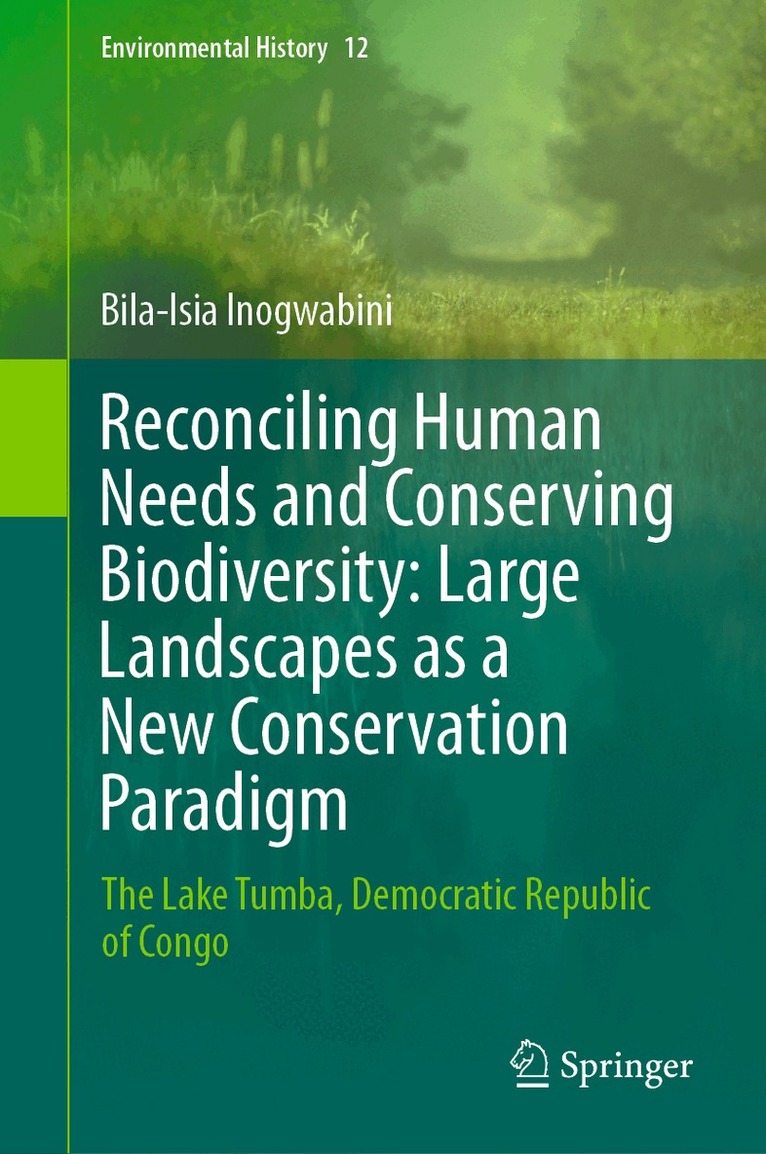
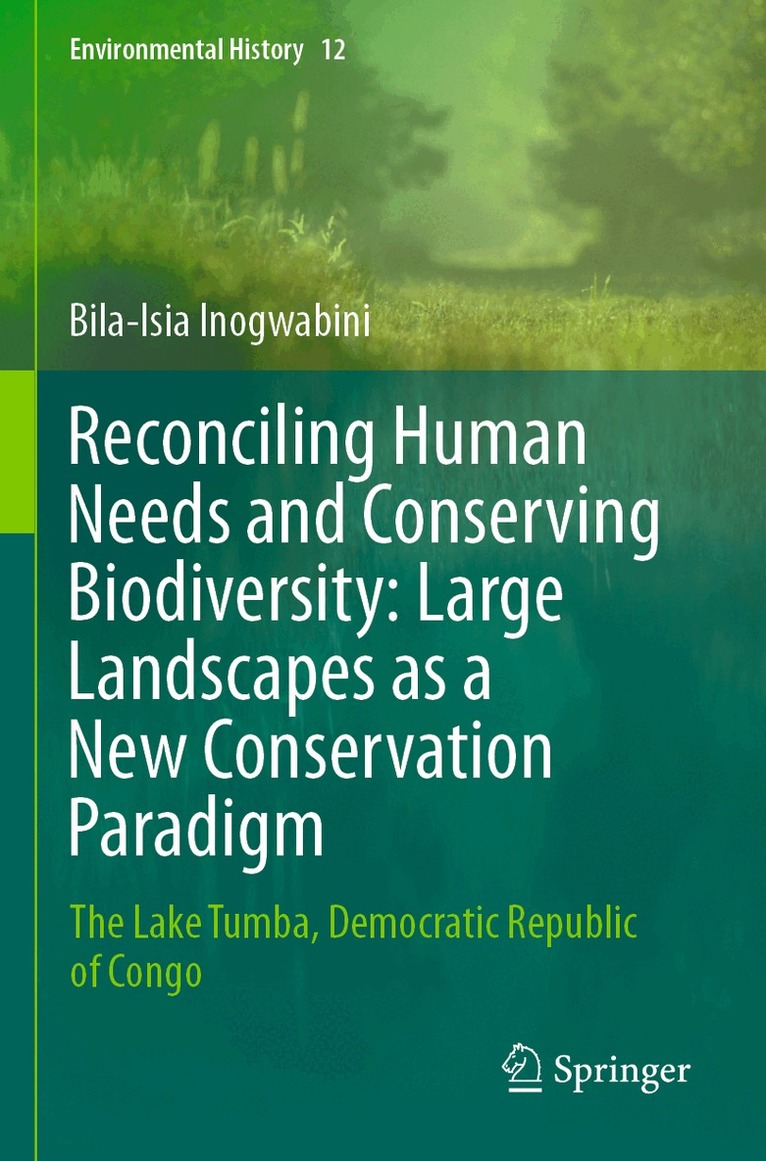
Reconciling Human Needs and Conserving Biodiversity: Large Landscapes as a New Conservation Paradigm
The Lake Tumba, Democratic Republic of Congo
1 633 kr
Skickas inom 10-15 vardagar
1 995 kr
Läs direkt efter köp
Protected areas have often been defined as the backbones of biodiversity conservation. Protected areas have often been defined as the backbones of biodiversity conservation. However, legitimate demands formulated by countries for their economic development, growing human populations, forest fragmentations, and needs of local communities for sustainable livelihoods are also pressing demands on protected areas, stringently pressuring conservation community to identify means to reconcile long term biodiversity conservation and communities’ livelihoods. Hence, integrating conservation activities within the global framework of economic development of countries with high biodiversity had become part of conservation paradigms. Integrated development as a route to conservation, strict protected areas, community managed areas, etc. have been tried but resulted in debatable outcomes in many ways. The lukewarm nature of these results brought ‘landscape approach’ at the front of biodiversity conservation in Central Africa. Since the late 1990s the landscape approach uses large areas with different functional attributes and shifts foundational biodiversity conservation paradigms. Changes are brought to the role traditionally attributed to local communities, aligning sustainable development with conservation and stretching conservation beyond the confines of traditional protected areas. These three shifts need a holistic approach to respond to different conservation questions. There are only a few instances where the landscape experience has been scientifically documented and lessons learnt drawn into a corpus of knowledge to guide future conservation initiatives across Central Africa. To subjugate one biodiversity conservation landscape as one case study emerged as a matter of urgency to present the potential knowledge acquired throughout the landscape experiment, including leadership and management, processes tried, results (at least partially) achieved, and why such and such other process or management arrangement were been chosen among many other alternatives, etc. The challenges of the implementation of the conservation landscape approach needed also to be documented. This book responds to the majority of these questions; drawing its content from the firsthand field knowledge, it discusses these shifts and documents what has been tried, how successful (unsuccessful) it was, and what lessons learnt from these trials. Theoretical questions such as threat index, and ecological services, etc. are also discussed and gaps in knowledge are identified.

Reconciling Human Needs and Conserving Biodiversity: Large Landscapes as a New Conservation Paradigm
The Lake Tumba, Democratic Republic of Congo
1 633 kr
Skickas inom 10-15 vardagar
1 310 kr
Läs direkt efter köp