Bill Guest – författare
Visar alla böcker från författaren Bill Guest. Handla med fri frakt och snabb leverans.
13 produkter
Stella Aurorae
Natal University College Volume 2: Natal University College: Natal University College (1949 to 1976)
Av Bill Guest
Häftad, 2017
1066 kr
Lägg i varukorg
Fine Band of Farmers are We!
A History of Agricultural Studies in Pietermaritzburg 1934-2009
Av Bill Guest
E-bok, 2010
630 kr
Lägg i varukorg
This history of agricultural studies in KwaZulu-Natal over a period of 75 years, from 1934 to 2009, gives a detailed overview of the establishment of formal agricultural studies in the province and focuses on the Faculty of Agriculture at the University of KwaZulu-Natal. Alumni of …
Stella Aurorae: Natal University College
Av Bill Guest
E-bok, 2015
960 kr
Lägg i varukorg
This is the first of a three-volume history by Bill Guest of a major South African university founded as the Natal University College in Pietermaritzburg in 1909. Despite trying conditions, including two world wars, the university expanded, developed a second campus (Howard College) in Durban and …
Guest: Stella Aurorae: Natal University College
Natal University College: Natal University College (1949 to 1976)
Av Bill Guest
E-bok, 2017
1243 kr
Lägg i varukorg
This is the second of a three-volume history by Bill Guest of a major South African university founded as the Natal University College in Pietermaritzburg in 1909. Despite trying conditions, including two world wars, the university expanded, developed a second campus (Howard College) in Durban and …
Stella Aurorae: The University of Natal
Av Bill Guest
E-bok, 2019
1463 kr
Lägg i varukorg
This is the last of a three-volume history by Bill Guest of a major South African university founded as the Natal University College in Pietermaritzburg in 1909. Despite trying conditions, including two world wars, the university expanded, developed a second campus (Howard College) in Durban and …
South Africa's Environmental History
Cases and Comparisons
Av Stephen Dovers, Stephen Dovers m. fl.
Häftad, 2003
411 kr
Tillfälligt slut
Environmental history in southern Africa has only recently come into its own as a distinct field of historical inquiry. While natural resources lie at the heart of all environmental history, the field opens the door to a wide range of inquiries, several of which are pioneered in this …
Enterprise and Exploitation in a Victorian Colony
Aspects of the Economic and Social History of Colonial Natal
Av Bill Guest, John M. Sellers
Häftad, 1996
151 kr
Tillfälligt slut
This pioneer economic and social history brings together specialised research in the form of twelve essays dealing with closely intermeshed themes: harbour and railway development, the ecology of Natal, ruthless exploitation of its human and natural resources, and the consequences of Indian …
Natal and Zululand from Earliest Times to 1910
A New History
Häftad, 1996
224 kr
Tillfälligt slut
Written by twelve historians and two archaeologists, this history of Natal for more than 20 years is edited by two professors of history in the University of Natal. This book deals with a number of myths about the colonial past and unseats the 'old' truths.
Receded Tides of Empire
Aspects of the Economic and Social History of Natal and Zululand Since 1910
Av Bill Guest, John M. Sellers
Häftad, 1994
195 kr
Tillfälligt slut
Features 12 essays on specific topics that explore the development of Natal and Zululand, within the wider South African economy. This title forms a companion volume to ""Enterprise and Exploitation in a Victorian Colony"".
Natal and Zululand from Earliest Times to 1910
A New History
Inbunden, 1989
325 kr
Tillfälligt slut
Since the 1960s the history of Natal and Zululand has been dramatically revised and this book reflects that explosion of research activity. The contributor demolish several popular myths in attempting to unravel the truth about such key issues as the origins of Nguni-speaking peoples, the growth of …
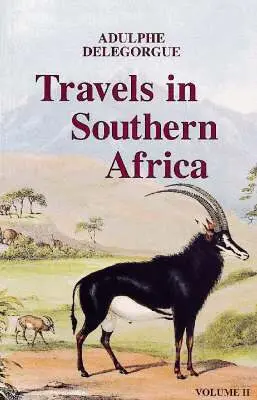
Adulphe Delegorgue's Travels in Southern Africa V. 2
Av Adulphe Delegorgue, Stephanie J. Alexander m. fl.
Häftad, 1998
281 kr
Tillfälligt slut
Gives a first-hand description of the conflict between the Boers and the British, at Port Natal, in 1842. After this, the author travels northwards to the Limpopo; and writes of birds and big game, and of peoples and customs.