Bing-Jie Ni - Böcker
Visar alla böcker från författaren Bing-Jie Ni. Handla med fri frakt och snabb leverans.
5 produkter
5 produkter
2 142 kr
Kommande
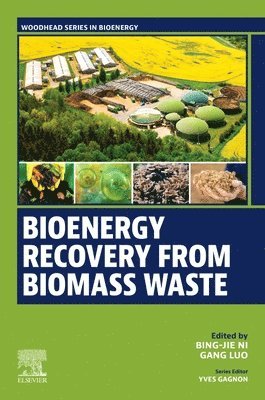
Bioenergy Recovery from Biomass Waste provides a new paradigm to gain insight into the technical management of biomass waste conversion into clean energy and products such as heat, electricity, gaseous and liquid biofuels, chemicals, and fertilizers. The book discusses chemical and biological treatment methods for sludge, food wastes, algae, lignocellulosic waste and livestock manure, providing a comprehensive understanding of biomass resource treatment. Detailed chapters consider the relevant environmental risks during the biomass conversion process, explore practical applications, and provide theoretical guidance for improving the sustainability of waste management, analyzing and comparing the impact of different types of treatment technologies in terms of greenhouse gas emissions and reductions. Finally, current policies, bottlenecks and opportunities for waste treatment technologies and high value products are addressed. This new volume in the Woodhead Series in Bioenergy is of interest to all those with an interest in biomass waste treatment, resource recovery, bioenergy, and clean energy, including graduate students, researchers, faculty, engineers, R&D, industry professionals, and policy makers.Offers in-depth coverage of characteristics, treatment methods, and high-value products derived from biomassCovers sources such as municipal wastewater, sludge, food wastes, agriculture wastes, algae, and animal wastesAssesses efficiency and advantages and disadvantages of various technologies for different biomass sourcesConsiders environmental risks, greenhouse gas emissions, and reductions and related sustainability issues
1 898 kr
Skickas inom 7-10 vardagar
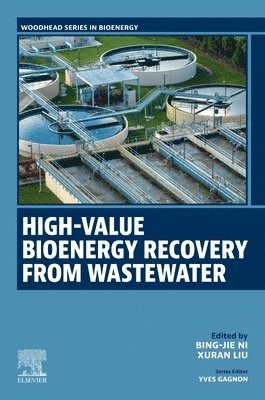
High-Value Bioenergy Recovery from Wastewater presents the science and technologies behind high-value liquid, colloid and solid bioenergy recovery in municipal sewage treatment plants, thus allowing for the easy collection, storage, and transportation of recovered bioenergy. Broken into four parts, the book addresses potential high-value bioenergy from sewage, the science behind and technical module related to high-value liquid bioenergy recovery and high-value colloid and solid bioenergy recovery, and concludes with integrated modules for high-value bioenergy recovery. Academic and industry researchers working in bioenergy, scientists and engineers working in the treatment of wastewater, and industry practitioners who are interested in adding value to the sewage and the sludge obtained in the treatment of wastewater will benefit from this reference, as will advanced graduate and post-graduate students interested in bioenergy and wastewater treatment.Provides a comprehensive overview of the science and technologies for high-value bioenergy recovery in municipal sewage treatment plantsDiscusses the endogenous and exogenous influencing factors and control strategies in high-value bioenergy production and recovery from sewage and sludgeSummarizes the relevant socioeconomic aspects and lifecycle assessments of high-value bioenergy recovery modules for integration into MSTPs
1 792 kr
Skickas inom 7-10 vardagar
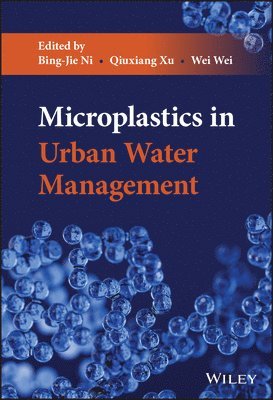
Microplastics in Urban Water Management Enables readers to understand the true occurrence and fate of microplastics in drinking water, wastewater and sludge, and receiving water Microplastics in Urban Water Management focuses on the occurrence, fate, effect, and removal of microplastics in the urban water management systems, summarizing relevant methods for enhancing microplastics removal and degradation, providing comprehensive data from source to sink (including occurrence and fate of microplastics in urban water management), and covering practical applications, which are expected to provide some theoretical guidance for controlling or mitigating microplastics pollution and its environmental risks. The work also includes detailed multidisciplinary information on the way in which microplastics behave in urban water management, plus recent advances of nanoplastics, i.e., nano-sized microplastics, in the aquatic environment. In Microplastics in Urban Water Management, readers can expect to find detailed information on sample topics such as: Techniques for microplastics detection, including sample collection, purification, identification, and quantitation, plus the definition, emergence, occurrence, and removal of microplasticsElements of microplastics in wastewater treatment plants; for instance, the ecotoxicological effect on the biological treatment of wastewater and sludgeWhy the discharge of microplastics from wastewater treatment plants is the important source of microplastics in the receiving watersPotential environmental risks of microplastic contamination in receiving water systems and evidence that microplastics can absorb, collect and transport environmental contaminants as vectorsFor practicing toxicologists, biologists, environmental and chemical engineers, and ecology professionals, as well as researchers and graduate students in these disciplines, Microplastics in Urban Water Management is an essential all-in-one guide to understanding the current state of microplastics in our world and potential solutions for the future.
Formation, characterization and mathematical modeling of the aerobic granular sludge
Inbunden, Engelska, 2012
1 064 kr
Skickas inom 10-15 vardagar
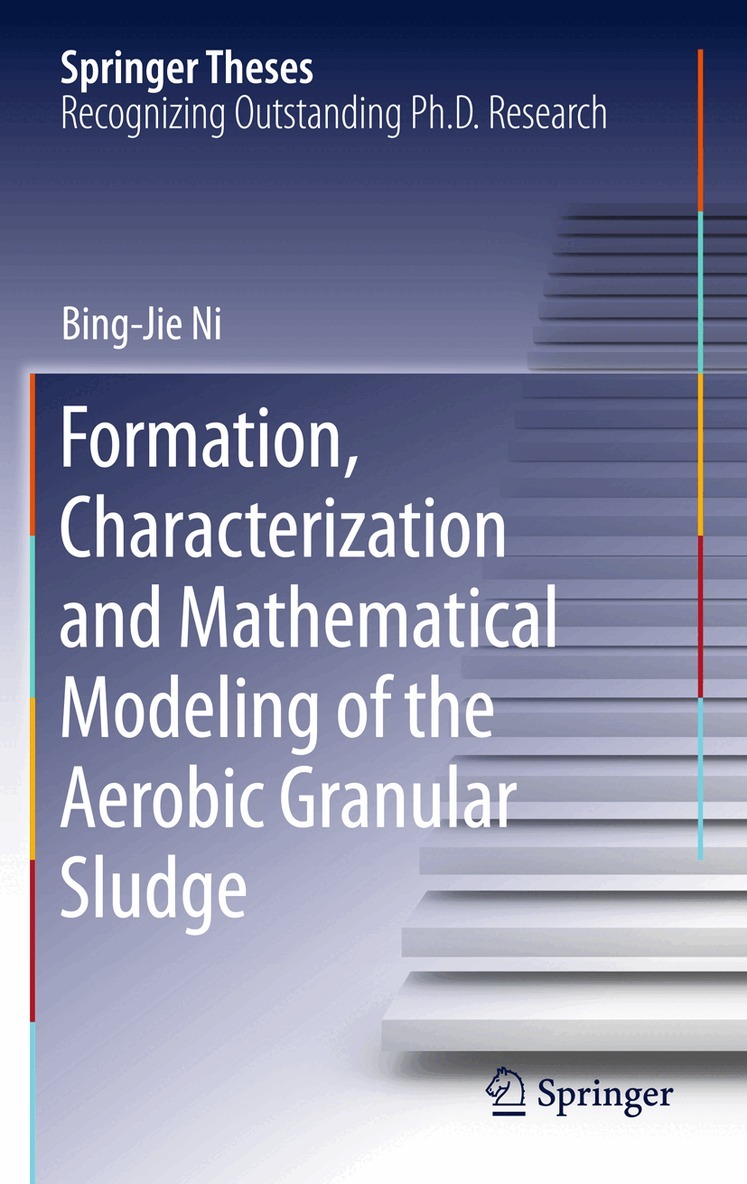
Aerobic granular sludge technology will play an important role as an innovative technology alternative to the present activated sludge process in industrial and municipal wastewater treatment in the near future. Intended to fill the gaps in the studies of aerobic granular sludge, this thesis comprehensively investigates the formation, characterization and mathematical modeling of aerobic granular sludge, through integrating the process engineering tools and advanced molecular microbiology. The research results of this thesis contributed significantly to the advance of understanding and optimization of the bacterial granulation processes, the next generation of technology for cost-effective biological wastewater treatment.Dr. Bing-Jie Ni works at Advanced Water Management Centre (AWMC) of The University of Queensland, Australia.
Formation, characterization and mathematical modeling of the aerobic granular sludge
Häftad, Engelska, 2014
1 064 kr
Skickas inom 10-15 vardagar
Aerobic granular sludge technology will play an important role as an innovative technology alternative to the present activated sludge process in industrial and municipal wastewater treatment in the near future. Intended to fill the gaps in the studies of aerobic granular sludge, this thesis comprehensively investigates the formation, characterization and mathematical modeling of aerobic granular sludge, through integrating the process engineering tools and advanced molecular microbiology. The research results of this thesis contributed significantly to the advance of understanding and optimization of the bacterial granulation processes, the next generation of technology for cost-effective biological wastewater treatment.Dr. Bing-Jie Ni works at Advanced Water Management Centre (AWMC) of The University of Queensland, Australia.