Birgitta König-Ries - Böcker
Visar alla böcker från författaren Birgitta König-Ries. Handla med fri frakt och snabb leverans.
3 produkter
3 produkter
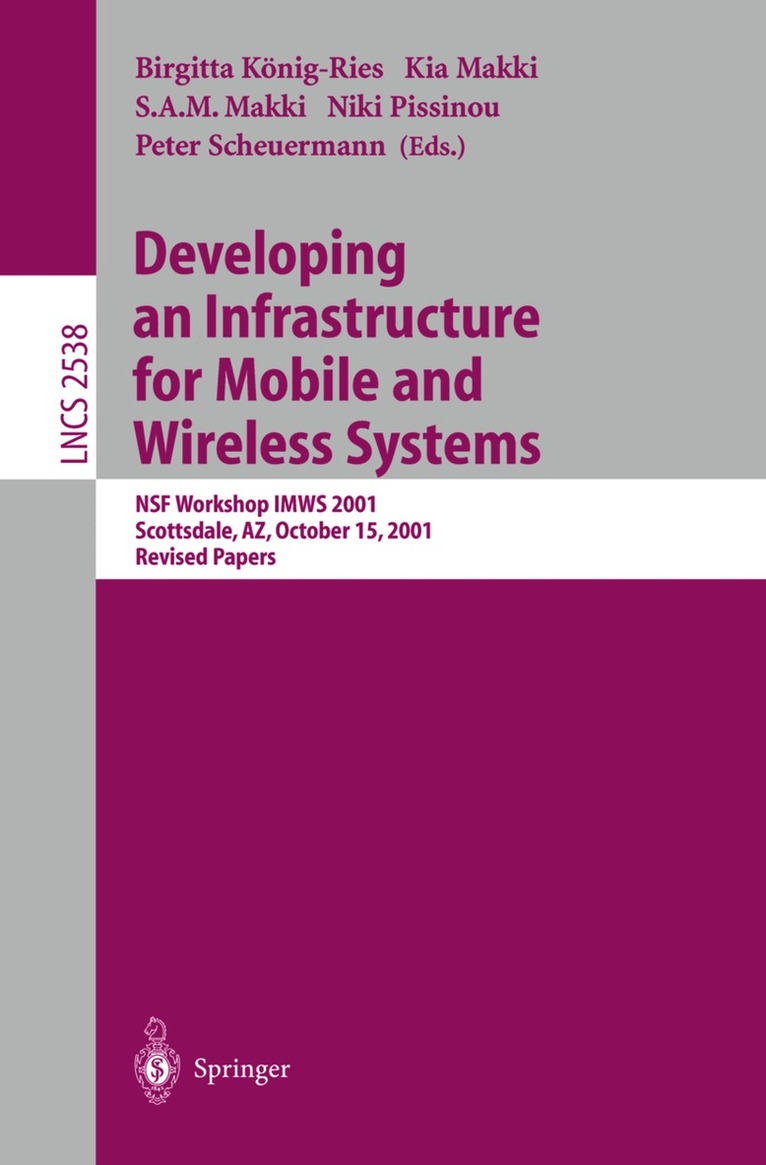
Developing an Infrastructure for Mobile and Wireless Systems
NSF Workshop IMWS 2001, Scottsdale, AZ, October 15, 2001, Revised Papers
Häftad, Engelska, 2002
536 kr
Skickas inom 10-15 vardagar
This book constitutes the thoroughly refereed post-proceedings of an International NSF Workshop on an Infrastructure for Mobile and Wireless Systems held in Scottsdale, Arizona in October 2001.The 11 revised full papers presented together with 4 invited contributions and a comprehensive consensus report for developing an infrastructure for mobile and wireless systems were carefully selected during two rounds of reviewing and improvement. The book assesses the state of the art in the area and provides a research agenda for future R&D work.
1 096 kr
Skickas inom 10-15 vardagar
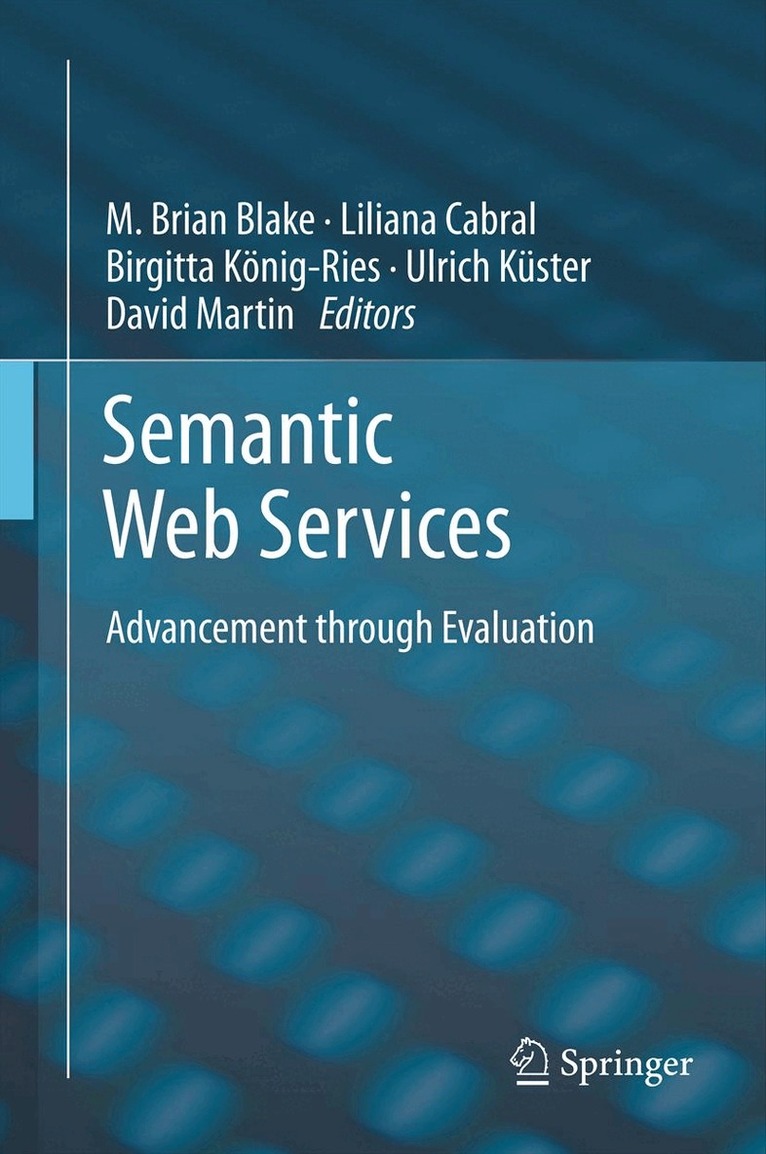
Over the last decade, a great amount of effort and resources have been invested in the development of Semantic Web Service (SWS) frameworks. Numerous description languages, frameworks, tools, and matchmaking and composition algorithms have been proposed. Nevertheless, when faced with a real-world problem, it is still very hard to decide which of these different approaches to use.In this book, the editors present an overall overview and comparison of the main current evaluation initiatives for SWS. The presentation is divided into four parts, each referring to one of the evaluation initiatives. Part I covers the long-established first two tracks of the Semantic Service Selection (S3) Contest – the OWL-S matchmaker evaluation and the SAWSDL matchmaker evaluation. Part II introduces the new S3 Jena Geography Dataset (JGD) cross evaluation contest. Part III presents the Semantic Web Service Challenge. Lastly, Part IV reports on the semantic aspects of the Web Service Challenge. The introduction to each part provides an overview of the evaluation initiative and overall results for its latest evaluation workshops. The following chapters in each part, written by the participants, detail their approaches, solutions and lessons learned.This book is aimed at two different types of readers. Researchers on SWS technology receive an overview of existing approaches in SWS with a particular focus on evaluation approaches; potential users of SWS technologies receive a comprehensive summary of the respective strengths and weaknesses of current systems and thus guidance on factors that play a role in evaluation.
1 096 kr
Skickas inom 10-15 vardagar
Over the last decade, a great amount of effort and resources have been invested in the development of Semantic Web Service (SWS) frameworks. Numerous description languages, frameworks, tools, and matchmaking and composition algorithms have been proposed. Nevertheless, when faced with a real-world problem, it is still very hard to decide which of these different approaches to use.In this book, the editors present an overall overview and comparison of the main current evaluation initiatives for SWS. The presentation is divided into four parts, each referring to one of the evaluation initiatives. Part I covers the long-established first two tracks of the Semantic Service Selection (S3) Contest – the OWL-S matchmaker evaluation and the SAWSDL matchmaker evaluation. Part II introduces the new S3 Jena Geography Dataset (JGD) cross evaluation contest. Part III presents the Semantic Web Service Challenge. Lastly, Part IV reports on the semantic aspects of the Web Service Challenge. The introduction to each part provides an overview of the evaluation initiative and overall results for its latest evaluation workshops. The following chapters in each part, written by the participants, detail their approaches, solutions and lessons learned.This book is aimed at two different types of readers. Researchers on SWS technology receive an overview of existing approaches in SWS with a particular focus on evaluation approaches; potential users of SWS technologies receive a comprehensive summary of the respective strengths and weaknesses of current systems and thus guidance on factors that play a role in evaluation.