Bjørn Lomborg - Böcker
Visar alla böcker från författaren Bjørn Lomborg. Handla med fri frakt och snabb leverans.
16 produkter
16 produkter
526 kr
Skickas inom 7-10 vardagar
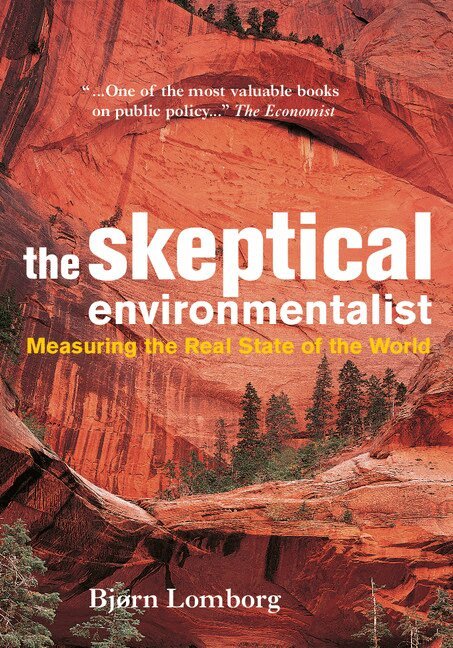
The Skeptical Environmentalist challenges widely held beliefs that the environmental situation is getting worse and worse. The author, himself a former member of Greenpeace, is critical of the way in which many environmental organisations make selective and misleading use of the scientific evidence. Using the best available statistical information from internationally recognised research institutes, Bjørn Lomborg systematically examines a range of major environmental problems that feature prominently in headline news across the world. His arguments are presented in non-technical, accessible language and are carefully backed up by over 2500 footnotes allowing readers to check sources for themselves. Concluding that there are more reasons for optimism than pessimism, Bjørn Lomborg stresses the need for clear-headed prioritisation of resources to tackle real, not imagined problems. The Skeptical Environmentalist offers readers a non-partisan stocktaking exercise that serves as a useful corrective to the more alarmist accounts favoured by campaign groups and the media.
410 kr
Skickas inom 7-10 vardagar
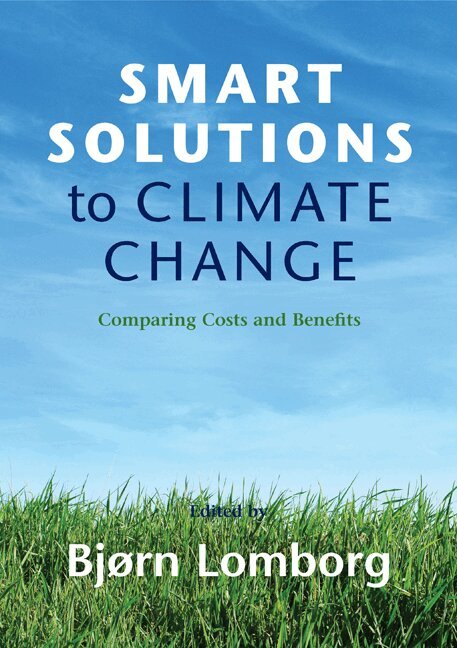
The failure of the Copenhagen climate conference in December 2009 revealed major flaws in the way the world's policymakers have attempted to prevent dangerous levels of increases in global temperatures. The expert authors in this specially commissioned collection focus on the likely costs and benefits of a very wide range of policy options, including geo-engineering, mitigation of CO2, methane and 'black carbon', expanding forest, research and development of low-carbon energy and encouraging green technology transfer. For each policy, authors outline all of the costs, benefits and likely outcomes, in fully referenced, clearly presented chapters accompanied by shorter, critical alternative perspectives. To further stimulate debate, a panel of economists, including three Nobel laureates, evaluate and rank the attractiveness of the policies. This authoritative and thought-provoking book will challenge readers to form their own conclusions about the best ways to respond to global warming.
1 472 kr
Skickas inom 7-10 vardagar
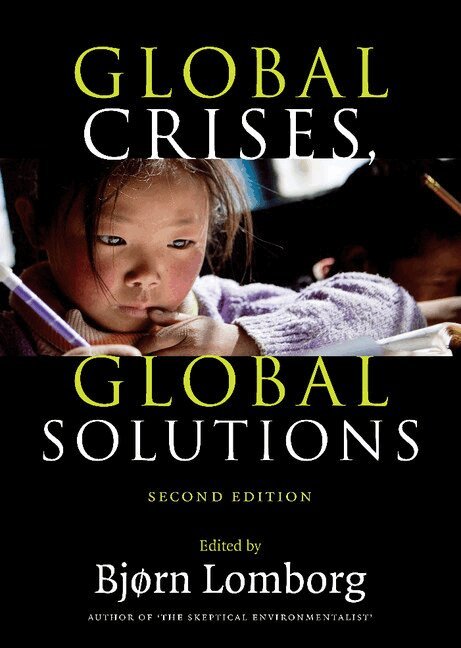
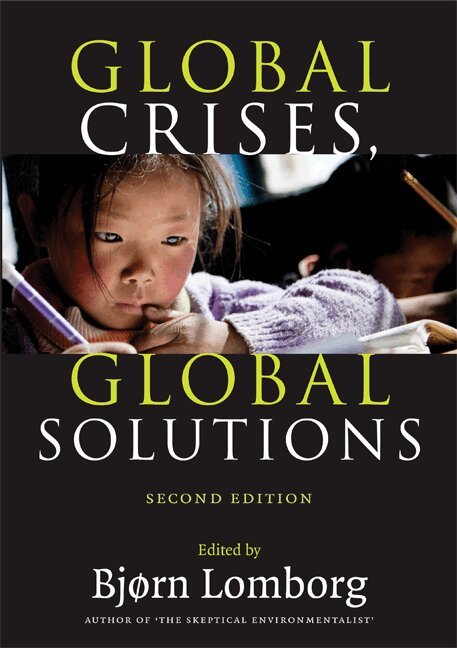
The first edition of Global Crises, Global Solutions was nominated as one of the books of the year by The Economist in 2004. This second edition asks: if we had more money to spend to help the world's poorest people, where could we spend it most effectively? Using a common framework of cost-benefit analysis a team of leading economists, including five Nobel prize winners, assess the attractiveness of a wide range of policy options for combating ten of the world's biggest problems: Air pollution, Conflicts, Diseases, Education, Global Warming, Malnutrition and Hunger, Sanitation and Clean Water, Subsidies and Trade Barriers, Terrorism, Women and Development. The arguments are clearly presented and fully referenced so that readers are encouraged to make their own evaluation of the menu of policy options on offer. Whether you agree or disagree with the economists' conclusions, there is a wealth of data and ideas to discuss and debate.
245 kr
Skickas inom 7-10 vardagar
Edited by Bjørn Lomborg, this abridged version of the highly acclaimed Global Crises, Global Solutions provides a serious yet accessible springboard for debate and discussion on the world's most serious problems, and what we can do to solve them. In a world fraught with problems and challenges, we need to gauge how to achieve the greatest good with our money. This unique book provides a rich set of dialogs examining ten of the most serious challenges facing the world today: climate change, the spread of communicable diseases, conflicts and arms proliferation, access to education, financial instability, governance and corruption, malnutrition and hunger, migration, sanitation and access to clean water, and subsidies and trade barriers. Each problem is introduced by a world-renowned expert who defines the scale of the issue and examines a range of policy options.
474 kr
Skickas inom 7-10 vardagar
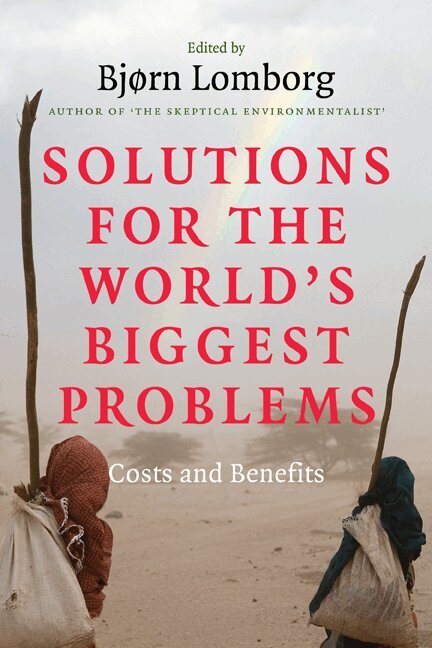
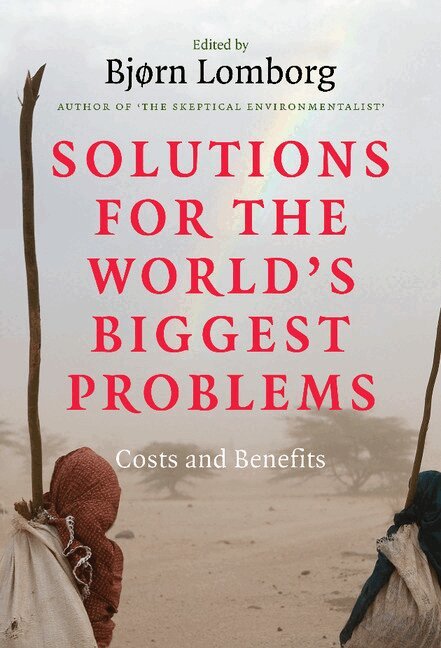
The world has many pressing problems. Thanks to the efforts of governments, NGOs, and individual activists there is no shortage of ideas for resolving them. However, even if all governments were willing to spend more money on solving the problems, we cannot do it all at once. We have to prioritize; and in order to do this we need a better sense of the costs and benefits of each 'solution'. This book offers a rigorous overview of twenty-three of the world's biggest problems relating to the environment, governance, economics, and health and population. Leading economists provide a short survey of the analysis and sketch out policy solutions for which they provide cost-benefit ratios. A unique feature is the provision of freely downloadable software which allows readers to make their own cost-benefit calculations for spending money to make the world a better place.
642 kr
Skickas inom 7-10 vardagar
The first edition of Global Crises, Global Solutions was nominated as one of the books of the year by The Economist in 2004. This second edition asks: if we had more money to spend to help the world's poorest people, where could we spend it most effectively? Using a common framework of cost-benefit analysis a team of leading economists, including five Nobel prize winners, assess the attractiveness of a wide range of policy options for combating ten of the world's biggest problems: Air pollution, Conflicts, Diseases, Education, Global Warming, Malnutrition and Hunger, Sanitation and Clean Water, Subsidies and Trade Barriers, Terrorism, Women and Development. The arguments are clearly presented and fully referenced so that readers are encouraged to make their own evaluation of the menu of policy options on offer. Whether you agree or disagree with the economists' conclusions, there is a wealth of data and ideas to discuss and debate.
642 kr
Skickas inom 7-10 vardagar
Many countries in Latin America and the Caribbean have achieved considerable economic growth, yet the region still faces many seemingly intractable problems. The conventional wisdom in development agencies - that prioritization is impossible and that everything must be done - is simply not effective. Latin American Development Priorities shows how limited resources could be used for the greatest benefit of the Latin American and Caribbean region. A panel of economists met over three days in San José to review proposals to tackle the ten most important challenges, which emerged from a survey by the Inter-American Development Bank. The expert panel was asked a question which appears simple but is actually very difficult to answer: What should Latin American governments do with an additional nominal $10 billion? Hard choices are needed if Latin America's problems are to be tackled effectively. This book provides the means to make those choices as objectively as possible.
784 kr
Skickas inom 7-10 vardagar
The failure of the Copenhagen climate conference in December 2009 revealed major flaws in the way the world's policymakers have attempted to prevent dangerous levels of increases in global temperatures. The expert authors in this specially commissioned collection focus on the likely costs and benefits of a very wide range of policy options, including geo-engineering, mitigation of CO2, methane and 'black carbon', expanding forest, research and development of low-carbon energy and encouraging green technology transfer. For each policy, authors outline all of the costs, benefits and likely outcomes, in fully referenced, clearly presented chapters accompanied by shorter, critical alternative perspectives. To further stimulate debate, a panel of economists, including three Nobel laureates, evaluate and rank the attractiveness of the policies. This authoritative and thought-provoking book will challenge readers to form their own conclusions about the best ways to respond to global warming.
1 350 kr
Skickas inom 7-10 vardagar
Many countries in Latin America and the Caribbean have achieved considerable economic growth, yet the region still faces many seemingly intractable problems. The conventional wisdom in development agencies - that prioritization is impossible and that everything must be done - is simply not effective. Latin American Development Priorities shows how limited resources could be used for the greatest benefit of the Latin American and Caribbean region. A panel of economists met over three days in San José to review proposals to tackle the ten most important challenges, which emerged from a survey by the Inter-American Development Bank. The expert panel was asked a question which appears simple but is actually very difficult to answer: What should Latin American governments do with an additional nominal $10 billion? Hard choices are needed if Latin America's problems are to be tackled effectively. This book provides the means to make those choices as objectively as possible.
1 290 kr
Skickas inom 7-10 vardagar
The world has many pressing problems. Thanks to the efforts of governments, NGOs, and individual activists there is no shortage of ideas for resolving them. However, even if all governments were willing to spend more money on solving the problems, we cannot do it all at once. We have to prioritize; and in order to do this we need a better sense of the costs and benefits of each 'solution'. This book offers a rigorous overview of twenty-three of the world's biggest problems relating to the environment, governance, economics, and health and population. Leading economists provide a short survey of the analysis and sketch out policy solutions for which they provide cost-benefit ratios. A unique feature is the provision of freely downloadable software which allows readers to make their own cost-benefit calculations for spending money to make the world a better place.
1 553 kr
Skickas inom 7-10 vardagar
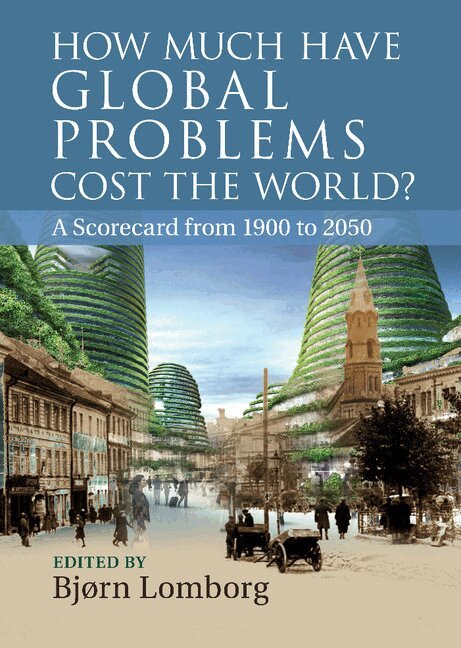
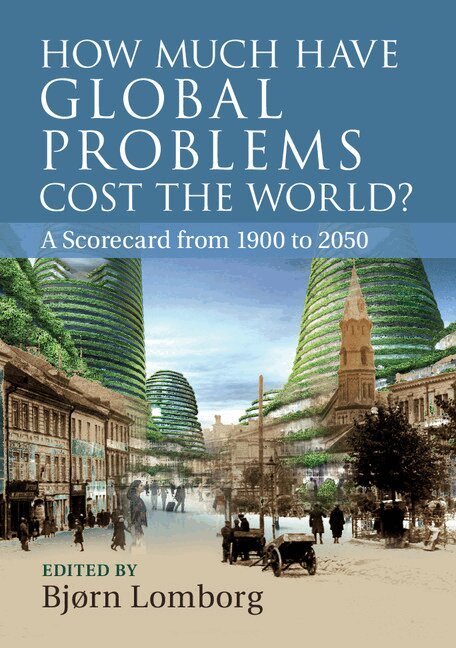
There are often blanket claims that the world is facing more problems than ever but there is a lack of empirical data to show where things have deteriorated or in fact improved. In this book, some of the world's leading economists discuss ten problems that have blighted human development, ranging from malnutrition, education, and climate change, to trade barriers and armed conflicts. Costs of the problems are quantified in percent of GDP, giving readers a unique opportunity to understand the development of each problem over the past century and the likely development into the middle of this century, and to compare the size of the challenges. For example: how bad was air pollution in 1900? How has it deteriorated and what about the future? Did climate change cost more than malnutrition in 2010? This pioneering initiative to provide answers to many of these questions will undoubtedly spark debate amongst a wide readership.
1 139 kr
Skickas inom 7-10 vardagar
Thirty years after the identification of the disease that became known as AIDS, humanitarian organizations warn that the fight against HIV/AIDS has slowed, amid a funding shortfall and donor fatigue. In this book, Bjørn Lomborg brings together research by world-class specialist authors, a foreword by UNAIDS founding director Peter Piot and perspectives from Nobel Laureates and African civil society leaders to identify the most effective ways to tackle the pandemic across sub-Saharan Africa. There remains an alarming lack of high-quality data evaluating responses to HIV. We still know too little about what works, where and how to replicate our successes. This book offers the first comprehensive attempt by teams of authors to analyze HIV/AIDS policy choices using cost-benefit analysis, across six major topics. This approach provides a provocative fresh look at the best ways to scale up the fight against this killer epidemic.
1 472 kr
Skickas inom 7-10 vardagar
Every four years since 2004, the Copenhagen Consensus Center has organized and hosted a high profile thought experiment about how a hypothetical extra $75 billion of development assistance money might best be spent to solve twelve of the major crises facing the world today. Collated in this specially commissioned book, a group of more than 50 experts make their cases for investment, discussing how to combat problems ranging from armed conflicts, corruption and trade barriers, to natural disasters, hunger, education and climate change. For each case, 'Alternative Perspectives' are also included to provide a critique and make other suggestions for investment. In addition, a panel of senior economists, including four Nobel Laureates, rank the attractiveness of each policy proposal in terms of its anticipated cost-benefit ratio. This thought-provoking book opens up debate, encouraging readers to come up with their own rankings and decide which solutions are smarter than others.
396 kr
Skickas inom 7-10 vardagar
Every four years since 2004, the Copenhagen Consensus Center has organized and hosted a high profile thought experiment about how a hypothetical extra $75 billion of development assistance money might best be spent to solve twelve of the major crises facing the world today. Collated in this specially commissioned book, a group of more than 50 experts make their cases for investment, discussing how to combat problems ranging from armed conflicts, corruption and trade barriers, to natural disasters, hunger, education and climate change. For each case, 'Alternative Perspectives' are also included to provide a critique and make other suggestions for investment. In addition, a panel of senior economists, including four Nobel Laureates, rank the attractiveness of each policy proposal in terms of its anticipated cost-benefit ratio. This thought-provoking book opens up debate, encouraging readers to come up with their own rankings and decide which solutions are smarter than others.
410 kr
Skickas inom 7-10 vardagar
Thirty years after the identification of the disease that became known as AIDS, humanitarian organizations warn that the fight against HIV/AIDS has slowed, amid a funding shortfall and donor fatigue. In this book, Bjørn Lomborg brings together research by world-class specialist authors, a foreword by UNAIDS founding director Peter Piot and perspectives from Nobel Laureates and African civil society leaders to identify the most effective ways to tackle the pandemic across sub-Saharan Africa. There remains an alarming lack of high-quality data evaluating responses to HIV. We still know too little about what works, where and how to replicate our successes. This book offers the first comprehensive attempt by teams of authors to analyze HIV/AIDS policy choices using cost-benefit analysis, across six major topics. This approach provides a provocative fresh look at the best ways to scale up the fight against this killer epidemic.
370 kr
Skickas inom 7-10 vardagar
There are often blanket claims that the world is facing more problems than ever but there is a lack of empirical data to show where things have deteriorated or in fact improved. In this book, some of the world's leading economists discuss ten problems that have blighted human development, ranging from malnutrition, education, and climate change, to trade barriers and armed conflicts. Costs of the problems are quantified in percent of GDP, giving readers a unique opportunity to understand the development of each problem over the past century and the likely development into the middle of this century, and to compare the size of the challenges. For example: how bad was air pollution in 1900? How has it deteriorated and what about the future? Did climate change cost more than malnutrition in 2010? This pioneering initiative to provide answers to many of these questions will undoubtedly spark debate amongst a wide readership.