
Bjarne Wernicke-Olesen – författare
Visar alla böcker från författaren . Handla med fri frakt och snabb leverans.
5 produkter
5 produkter
Inbunden, Engelska, 2026
2 306 kr
Kommande
This volume presents the first complete edition and English translation of the opening eight chapters of the Netratantra, one of early medieval South Asia's most influential yet understudied tantric texts.Likely composed in Kashmir during the eighth or ninth century and transmitted to Nepal by 1200 CE, the Netratantra – 'The Tantra of the Eye' – has been foundational in shaping South Asian religious thought for over a millennium. It positions itself as a universal tantra, claiming to transcend and synthesize diverse traditions within a unified theological framework centered on Śiva as Amṛteśa, the 'Lord of Immortality' and 'Conqueror of Death'. Based on the oldest surviving Nepalese palm-leaf manuscript, this volume offers a meticulously edited Sanskrit text with positive apparatus, a complete English translation, and extensive annotations. It also contextualizes the work historically and philosophically, examining its relationship to Śaiva Siddhānta, Bhairava and Kaula traditions, and the broader tantric landscape of medieval India and Nepal, establishing itself as an essential resource for understanding the complex religious world of medieval South Asia.The book will be of direct relevance to academics and postgraduate students in Indology, Asian religions, Tantric studies, and the study of religion more broadly. Scholarly practitioners of Tantra and Yoga may also find the volume of interest, offering them a window into the rich complexity of tantric thought and practice as it emerged in medieval Kashmir and Nepal.
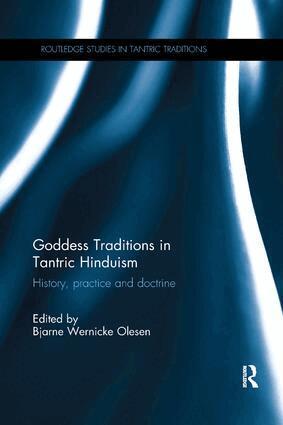
Häftad, Engelska, 2018
815 kr
Skickas inom 10-15 vardagar
Hinduism cannot be understood without the Great Goddess and the goddess-orientated Śākta traditions. The Goddess pervades Hinduism at all levels, from aniconic village deities to high-caste pan-Hindu goddesses to esoteric, tantric goddesses. Nevertheless, the highly influential tantric forms of South Asian goddess worship have only recently begun to draw scholarly attention. This book addresses the increasing interest in the Great Goddess and the tantric traditions of India by exploring the history, doctrine and practices of the Śākta tantric traditions. The highly influential tantric forms of South Asian goddess worship form a major part of what is known as ‘Śāktism’, and is often considered one of the major branches of Hinduism next to Śaivism, Vaiṣṇavism and Smārtism. Śāktism is, however, less clearly defined than the other major branches, and the book looks at the texts of the Śākta traditions that constitute the primary sources for gaining insights into the Śākta religious imaginative, ritual practices and history. It provides an historical exploration of distinctive Indian ways of imagining God as Goddess, and surveys the important origins and developments within Śākta history, practice and doctrine in its diversity. Bringing together contributions from some of the foremost scholars in the field of tantric studies, the book provides a platform for the continued research into Hindu goddesses, yoga, and tantra for those interested in understanding the religion and culture in South Asia.
Inbunden, Engelska, 2015
2 404 kr
Skickas inom 10-15 vardagar
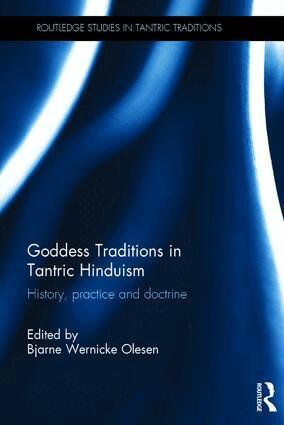
Hinduism cannot be understood without the Great Goddess and the goddess-orientated Śākta traditions. The Goddess pervades Hinduism at all levels, from aniconic village deities to high-caste pan-Hindu goddesses to esoteric, tantric goddesses. Nevertheless, the highly influential tantric forms of South Asian goddess worship have only recently begun to draw scholarly attention. This book addresses the increasing interest in the Great Goddess and the tantric traditions of India by exploring the history, doctrine and practices of the Śākta tantric traditions. The highly influential tantric forms of South Asian goddess worship form a major part of what is known as ‘Śāktism’, and is often considered one of the major branches of Hinduism next to Śaivism, Vaiṣṇavism and Smārtism. Śāktism is, however, less clearly defined than the other major branches, and the book looks at the texts of the Śākta traditions that constitute the primary sources for gaining insights into the Śākta religious imaginative, ritual practices and history. It provides an historical exploration of distinctive Indian ways of imagining God as Goddess, and surveys the important origins and developments within Śākta history, practice and doctrine in its diversity. Bringing together contributions from some of the foremost scholars in the field of tantric studies, the book provides a platform for the continued research into Hindu goddesses, yoga, and tantra for those interested in understanding the religion and culture in South Asia.
E-bok
Engelska, 2015975 kr
Läs direkt efter köp
Hinduism cannot be understood without the Great Goddess and the goddess-orientated Śākta traditions. The Goddess pervades Hinduism at all levels, from aniconic village deities to high-caste pan-Hindu goddesses to esoteric, tantric goddesses. Nevertheless, the highly influential tantric forms of South Asian goddess worship have only recently begun to draw scholarly attention. This book addresses the increasing interest in the Great Goddess and the tantric traditions of India by exploring the history, doctrine and practices of the Śākta tantric traditions. The highly influential tantric forms of South Asian goddess worship form a major part of what is known as ‘Śāktism’, and is often considered one of the major branches of Hinduism next to Śaivism, Vaiṣṇavism and Smārtism. Śāktism is, however, less clearly defined than the other major branches, and the book looks at the texts of the Śākta traditions that constitute the primary sources for gaining insights into the Śākta religious imaginative, ritual practices and history. It provides an historical exploration of distinctive Indian ways of imagining God as Goddess, and surveys the important origins and developments within Śākta history, practice and doctrine in its diversity. Bringing together contributions from some of the foremost scholars in the field of tantric studies, the book provides a platform for the continued research into Hindu goddesses, yoga, and tantra for those interested in understanding the religion and culture in South Asia.
E-bok
PDF, Engelska, 2015975 kr
Läs direkt efter köp
Hinduism cannot be understood without the Great Goddess and the goddess-orientated Śākta traditions. The Goddess pervades Hinduism at all levels, from aniconic village deities to high-caste pan-Hindu goddesses to esoteric, tantric goddesses. Nevertheless, the highly influential tantric forms of South Asian goddess worship have only recently begun to draw scholarly attention. This book addresses the increasing interest in the Great Goddess and the tantric traditions of India by exploring the history, doctrine and practices of the Śākta tantric traditions. The highly influential tantric forms of South Asian goddess worship form a major part of what is known as ‘Śāktism’, and is often considered one of the major branches of Hinduism next to Śaivism, Vaiṣṇavism and Smārtism. Śāktism is, however, less clearly defined than the other major branches, and the book looks at the texts of the Śākta traditions that constitute the primary sources for gaining insights into the Śākta religious imaginative, ritual practices and history. It provides an historical exploration of distinctive Indian ways of imagining God as Goddess, and surveys the important origins and developments within Śākta history, practice and doctrine in its diversity. Bringing together contributions from some of the foremost scholars in the field of tantric studies, the book provides a platform for the continued research into Hindu goddesses, yoga, and tantra for those interested in understanding the religion and culture in South Asia.