Bob Tadashi Wakabayashi – författare
Visar alla böcker från författaren Bob Tadashi Wakabayashi. Handla med fri frakt och snabb leverans.
6 produkter
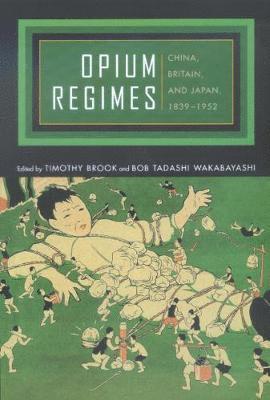
Opium Regimes
China, Britain, and Japan, 1839-1952
Av Timothy Brook, Bob Tadashi Wakabayashi
Häftad, 2000
312 kr
Lägg i varukorg
Opium is more than just a drug extracted from poppies. Over the past two centuries it has been a palliative medicine, an addictive substance, a powerful mechanism for concentrating and transferring wealth and power between nations, and the anchor for a now vanished sociocultural world in and around …
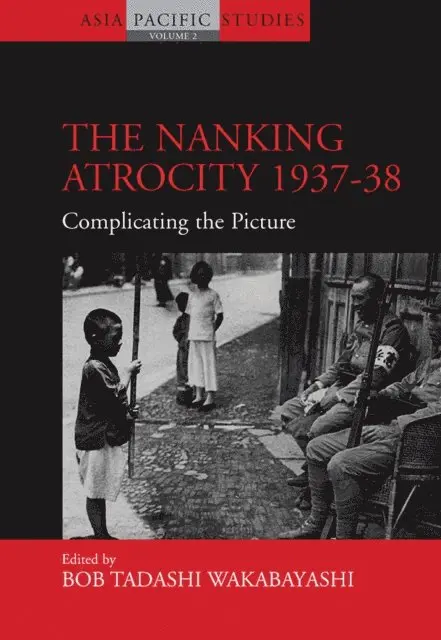
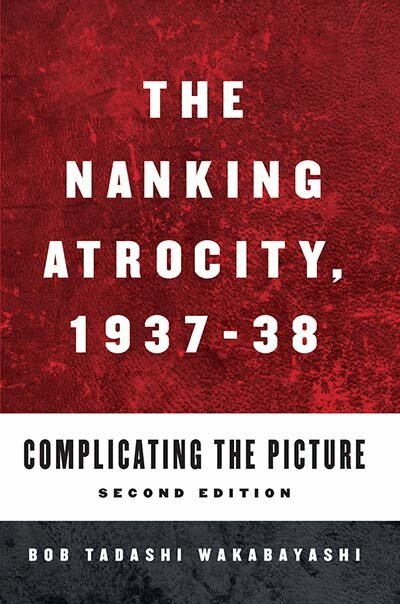
Nanking Atrocity, 1937-1938
Complicating the Picture
E-bok, 2007
370 kr
Lägg i varukorg
December 13, 2007 marks the 70th anniversary of the fall of the Chinese city of Nanking to the Japanese army. The "Nanking Atrocity" of winter 1937-8, also known as the "Nanking Massacre," lies at the core of bitter disputes over history, wartime victimization, and postwar restitution that preclude …
Nanking Atrocity, 1937-1938
Complicating the Picture
Häftad, 2017
695 kr
Lägg i varukorg
First published in 2007, The Nanking Atrocity remains an essential resource for understanding the massacre committed by Japanese soldiers in Nanking, China during the winter of 1937-38. Through a series of deeply considered and empirically rigorous essays, it provides a far more complex and …
Nanking Atrocity, 1937-1938
Complicating the Picture
E-bok, 2017
394 kr
Lägg i varukorg
First published in 2007, The Nanking Atrocity remains an essential resource for understanding the massacre committed by Japanese soldiers in Nanking, China during the winter of 1937-38. Through a series of deeply considered and empirically rigorous essays, it provides a far more complex and nuanced …
Nanking Atrocity, 1937-1938
Complicating the Picture
Inbunden, 2017
2621 kr
Lägg i varukorg
First published in 2007, The Nanking Atrocity remains an essential resource for understanding the massacre committed by Japanese soldiers in Nanking, China during the winter of 1937-38. Through a series of deeply considered and empirically rigorous essays, it provides a far more complex and nuanced …
Anti-Foreignism and Western Learning in Early Modern Japan
The New Theses of 1825
Häftad, 1992
250 kr
Tillfälligt slut
This study analyzes New Theses (Shinron), by Aizawa Seishisai (1781—1863), and its contribution to Japanese political thought and policy during the early–modern era. New Theses is found to be indispensable to our understanding of Japan's transformation from a feudal to a modern state.Focusing on …