Boman Desai – författare
Visar alla böcker från författaren Boman Desai. Handla med fri frakt och snabb leverans.
4 produkter
4 produkter
Häftad, Engelska, 2001
295 kr
Skickas inom 5-8 vardagar
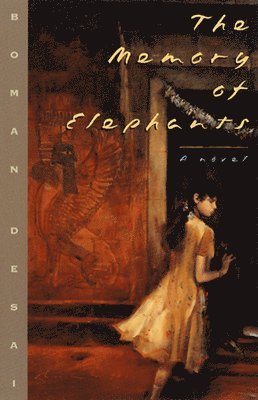
Spurned by his first love, Homi Seervai, the Parsi genius from Bombay, creates a machine that lets him scan his brain for memories of the time he spent with her. The machine malfunctions, propelling him instead into his collective unconscious where he encounters ancestors and relatives, both dead and alive. In this wildly inventive book—available for the first time in the United States—Homi, blessed with the memory of elephants, discovers the splendor of his heritage as well as hope for the future.
Häftad, Engelska, 2013
190 kr
Skickas inom 5-8 vardagar
51 kr
Läs direkt efter köp
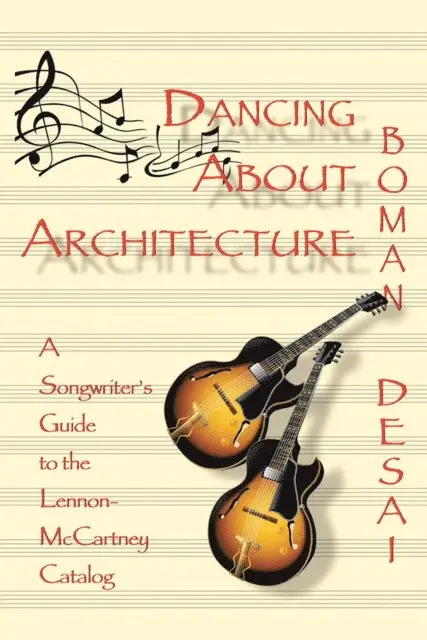
Dancing About Architecture reveals how J&P''s very first song, Love Me Do, showcased from the start their individual songwriting fingerprints; how John contributed to the quintessential Paulsong, Yesterday; what makes a Johnsong a Johnsong and a Paulsong a Paulsong; and, among other things, the DNA linking such different songs as She Said She Said and Good Day Sunshine, Lucy in the Sky with Diamonds and Shes Leaving Home, and Norwegian Wood and The Fool on the Hill among many others.Dancing About Architecture traces the individual fingerprints of J&P on each of their 162 collaborations from Love Me Do to The Long and Winding Road, from the simplest structures (Please Please Me and I Saw Her Standing There) to the more complex (Getting Better and Happiness Is a Warm Gun) to their culmination in the Abbey Road medley; and provides thumbnails for the structures of each song. Dancing About Architecture is about songwriting more than songwriters and for songwriters more than fans, tracking as it does the expansion of their repertoire through each musical discovery from song to song, album to album, and triumph to triumph until elanem were sitting on top of the world.
E-bok
Engelska, 201557 kr
Läs direkt efter köp
The trio comprises three musical geniuses: Robert and Clara Schumann and Johannes Brahms. Clara married Robert, with whom she fell in love when she was just sixteen, though it meant challenging the iron will of her father, who wished her to marry an earl or a count, certainly not an impoverished composer. The Schumanns had eight children, and Robert’s greatness as a composer was never in doubt, but he was also mentally ill, attempted suicide, and finally incarcerated himself in an asylum, where he died two and a half years later.Johannes Brahms entered the picture shortly before the incarceration and fell deeply in love with Clara but was just as deeply indebted to Robert for getting his first six opuses published within weeks of their meeting. Clara was forbidden to see Robert in the asylum because the doctors feared she would excite him too much. Brahms became a go-between for the couple, ferrying messages to and fro, but both loved Robert too well to abuse his trust. Brahms learned instead to associate deep love with deep renunciation—and, coupling this love with early experiences of playing dance music for sailors and prostitutes in Hamburg’s dockside bars, he became a victim to the Freudian conundrum: where he loves, he feels no passion, and where he feels passion, he cannot love.Germany grows in the hinterland of the story from four hundred-plus principalities to one nation under Bismarck. The great composers of the century (Mendelssohn, Chopin, Liszt, and Wagner among others) have their entrances and exits, and the ghosts of Bach, Mozart, Beethoven, and Schubert are never distant.Though firmly grounded in fact, the book unfolds like a novel, a narrative of love, insanity, suicide, revolution, politics, war, and of course, music.