Bonnie Steinbock - Böcker
Visar alla böcker från författaren Bonnie Steinbock. Handla med fri frakt och snabb leverans.
9 produkter
9 produkter
885 kr
Skickas inom 5-8 vardagar
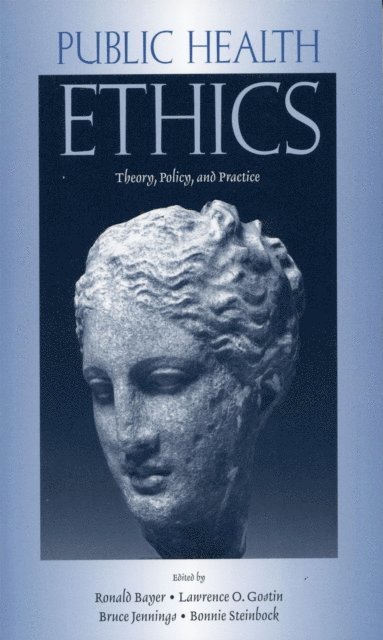
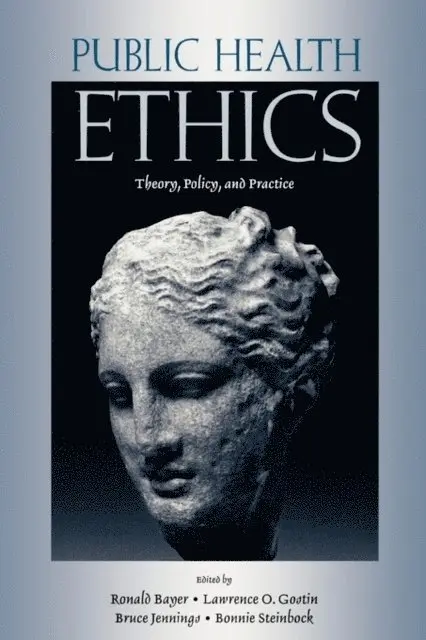
Most books about ethics and health focus on issues arising from individual patients and their relationships with doctors and other health professionals. More and more, however, the ethical issues of the future are challenges that face whole communities, not just individual patients. This book is an edited collection of readings that addresses these public health challenges. Many of the issues considered -- such as policy for alcohol and other drugs, newly emergent epidemics, and violence prevention -- are public health concerns beyond the purview of traditional bioethics. Others, such as access to health care, managed care, reproductive technologies, and genetic testing, are covered in bioethics texts, but here they are approached from the distinct viewpoint of public health. The book makes explicit the community perspective of public health, as well as the fields emphasis on prevention. It examines the conceptual issues raised by the public health perspective (i.e., what is meant by community, the common good, and individual autonomy) as well as the policies that can be developed when health problems are approached in population-based, preventive terms.
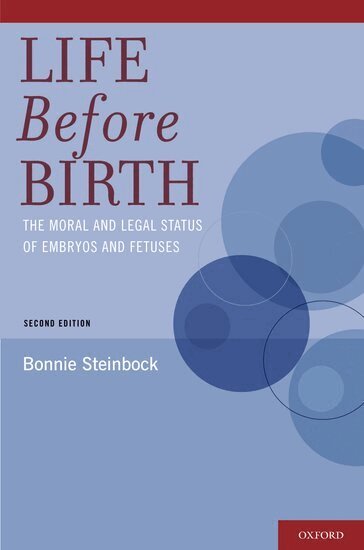
Life Before Birth
The Moral and Legal Status of Embryos and Fetuses, Second Edition
Häftad, Engelska, 2011
597 kr
Skickas inom 5-8 vardagar
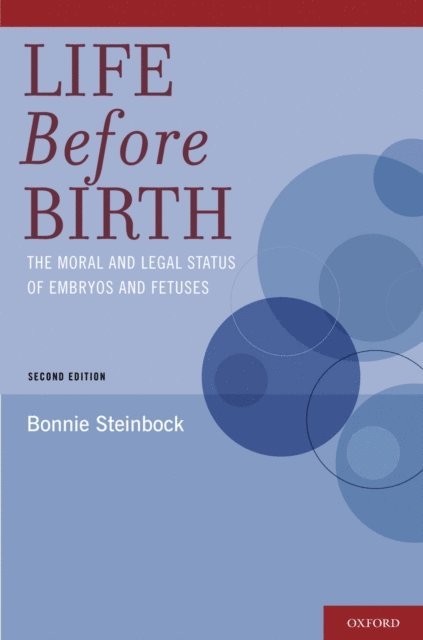
Life Before Birth provides a coherent framework for addressing bioethical issues in which the moral status of embryos and fetuses is relevant. It is based on the "interest view" which ascribes moral standing to beings with interests, and connects the possession of interests with the capacity for conscious awareness or sentience. The theoretical framework is applied to ethical and legal topics, including abortion, prenatal torts, wrongful life, the crime of feticide, substance abuse by pregnant women, compulsory cesareans, assisted reproduction, and stem cell research. Along the way, difficult philosophical problems, such as identity and the non-identity problem are thoroughly explored. The book will be of interest not only to philosophers, but also physicians, lawyers, policy makers, and anyone perplexed by the many difficulties surrounding the unborn."Bonnie Steinbock's excellent book is . . . consistent, thoroughgoing, and intelligible." --Nature"Steinbock's book is valuable for all interested in the ethical/legal issues surrounding abortion, prenatal injury and liability, maternal-fetal conflict, and fetal/embryo research. The author provides an excellent historical overview of these issues, but she also addresses the issues from the stance of a particular theory of moral status, namely, interest theory. This gives coherence to her discussion as well as allowing testing of the viability of interest theory." --Choice"A focused, lucid, analytically fine-grained discussion of a wide variety of problems. . . extremely useful as a survey of the current state of the debate." --Religious Studies Review"Merits serious consideration by physicians. Steinbock's interests-based approach treats all questions as open -- another and most welcome breath of fresh air." -New England Journal of Medicine"An extremely valuable contribution to the literature. The author carefully identifies the many bioethical issues to which the status of embryos and fetuses is relevant....She thoroughly reviews the extensive medical, bioethical, and legal literature on all of these issues, offering well-developed critiques of many standard positions. She articulates and thoughtfully defends interesting positions on all of theses topics. Anyone with an interest in these issues will learn a great deal from her knowledgeable and judicious treatment of them." -- The Journal of Clinical Ethics
138 kr
Skickas
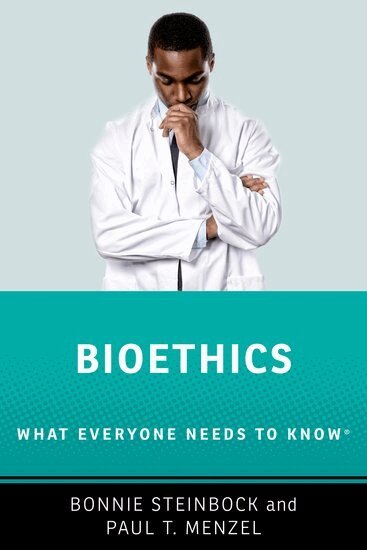
The questions and dilemmas of bioethics touch everyone. Should people who refuse to be vaccinated be treated for COVID-19, even if that displaces vaccinated patients with other serious conditions? What restrictions on abortion should there be, if any? Should women be paid to donate eggs? Bioethics: What Everyone Needs to Know ® discusses these and other similar questions facing the public today--as well as providing a way for thinking deeply about them.Steinbock and Menzel first examine major moral theories and how they can be used to analyze bioethical issues. They then provide historical background to the birth of bioethics and explain how it shifted from a paternalistic doctor knows best approach to respect for autonomy, a fundamental value in contemporary bioethics. Subsequent chapters cover advance directives, experimentation on human subjects, the definition of death, physician-assisted dying, abortion, disability, just healthcare systems, the allocation of scarce resources, pharmaceutical drug pricing, assisted reproductive technology, egg donation, surrogate motherhood, sex selection, and the genetic modification of humans. Race and gender are considered throughout, as are the ethical issues raised by pandemics. Steinbock and Menzel consider the controversial questions that surface in the public sphere, explaining the facts, and then evaluating different approaches to resolving them.
560 kr
Skickas
The questions and dilemmas of bioethics touch everyone. Should people who refuse to be vaccinated be treated for COVID-19, even if that displaces vaccinated patients with other serious conditions? What restrictions on abortion should there be, if any? Should women be paid to donate eggs? Bioethics: What Everyone Needs to Know ® discusses these and other similar questions facing the public today--as well as providing a way for thinking deeply about them.Steinbock and Menzel first examine major moral theories and how they can be used to analyze bioethical issues. They then provide historical background to the birth of bioethics and explain how it shifted from a paternalistic doctor knows best approach to respect for autonomy, a fundamental value in contemporary bioethics. Subsequent chapters cover advance directives, experimentation on human subjects, the definition of death, physician-assisted dying, abortion, disability, just healthcare systems, the allocation of scarce resources, pharmaceutical drug pricing, assisted reproductive technology, egg donation, surrogate motherhood, sex selection, and the genetic modification of humans. Race and gender are considered throughout, as are the ethical issues raised by pandemics. Steinbock and Menzel consider the controversial questions that surface in the public sphere, explaining the facts, and then evaluating different approaches to resolving them.
2 019 kr
Skickas inom 5-8 vardagar
Bonnie Steinbock presents The Oxford Handbook of Bioethics - an authoritative, state-of-the-art guide to current issues in bioethics. Thirty-four contributors reflect the interdisciplinarity that is characteristic of bioethics, and its increasingly international character. Thirty topics are covered in original essays written by some of the world's leading figures in the field, as well as by some newer 'up-and-comers'. The essays address both perennial issues, such as the methodology of bioethics, autonomy, justice, death, and moral status, and newer issues, such as biobanking, stem cell research, cloning, pharmacogenomics, and bioterrorism. Other topics concern mental illness and moral agency, the rule of double effect, justice and the elderly, the definition of death, organ transplantation, feminist approaches to commodification of the body, life extension, advance directives, physician-assisted death, abortion, genetic research, population screening, enhancement, research ethics, and the implications of public and global health for bioethics. Anyone who wants to know how the central debates in bioethics have developed in recent years, and where the debates are going, will want to consult this book. It will be an invaluable resource not only for scholars and graduate students in bioethics, but also for those in philosophy, medicine, law, theology, social science, public policy, and public health who wish to keep abreast of developments in bioethics.
859 kr
Skickas inom 7-10 vardagar
Bonnie Steinbock presents The Oxford Handbook of Bioethics - an authoritative, state-of-the-art guide to current issues in bioethics. Thirty-four contributors reflect the interdisciplinarity that is characteristic of bioethics, and its increasingly international character. Thirty topics are covered in original essays written by some of the world's leading figures in the field, as well as by some newer 'up-and-comers'. The essays address both perennial issues, such as the methodology of bioethics, autonomy, justice, death, and moral status, and newer issues, such as biobanking, stem cell research, cloning, pharmacogenomics, and bioterrorism. Other topics concern mental illness and moral agency, the rule of double effect, justice and the elderly, the definition of death, organ transplantation, feminist approaches to commodification of the body, life extension, advance directives, physician-assisted death, abortion, genetic research, population screening, enhancement, research ethics, and the implications of public and global health for bioethics. Anyone who wants to know how the central debates in bioethics have developed in recent years, and where the debates are going, will want to consult this book. It will be an invaluable resource not only for scholars and graduate students in bioethics, but also for those in philosophy, medicine, law, theology, social science, public policy, and public health who wish to keep abreast of developments in bioethics.
2 490 kr
Skickas inom 10-15 vardagar
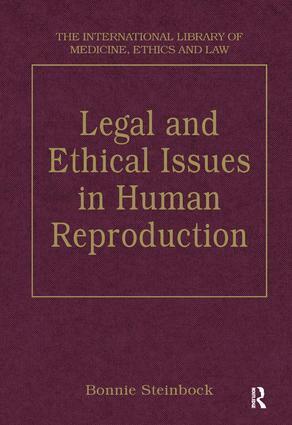
Whilst advances in reproductive medicine have enabled thousands of couples worldwide to have children, they also raise a plethora of ethical, philosophical and legal questions. This collection of essays by leading international scholars in bioethics, law, philosophy and public health, addresses many of the most difficult and intriguing issues. These include: the nature and scope of the right to reproduce, the meaning of parenthood and family, the significance of genetic connection to parenting, non-traditional families, sperm and egg donation, commercial surrogacy, prenatal genetic testing, reproductive cloning, obligations to children of reproductive technology and post mortem insemination. Legal and Ethical Issues in Human Reproduction is an important contribution to the growing literature on reproductive technology and one that will be of value to scholars, practitioners and students alike.
890 kr
Skickas inom 10-15 vardagar
Available in a new digital edition with reflowable text suitable for e-readersThis collection contains twenty-one thought-provoking essays on the controversies surrounding the moral and legal distinctions between euthanasia and "letting die." Since public awareness of this issue has increased this second edition includes nine entirely new essays which bring the treatment of the subject up-to-date. The urgency of this issue can be gauged in recent developments such as the legalization of physician-assisted suicide in the Netherlands, "how-to" manuals topping the bestseller charts in the United States, and the many headlines devoted to Dr. Jack Kevorkian, who has assisted dozens of patients to die. The essays address the range of questions involved in this issue pertaining especially to the fields of medical ethics, public policymaking, and social philosophy. The discussions consider the decisions facing medical and public policymakers, how those decisions will affect the elderly and terminally ill, and the medical and legal ramifications for patients in a permanently vegetative state, as well as issues of parent/infant rights. The book is divided into two sections. The first, "Euthanasia and the Termination of Life-Prolonging Treatment" includes an examination of the 1976 Karen Quinlan Supreme Court decision and selections from the 1990 Supreme Court decision in the case of Nancy Cruzan. Featured are articles by law professor George Fletcher and philosophers Michael Tooley, James Rachels, and Bonnie Steinbock, with new articles by Rachels, and Thomas Sullivan. The second section, "Philosophical Considerations," probes more deeply into the theoretical issues raised by the killing/letting die controversy, illustrating exceptionally well the dispute between two rival theories of ethics, consequentialism and deontology. It also includes a corpus of the standard thought on the debate by Jonathan Bennet, Daniel Dinello, Jeffrie Murphy, John Harris, Philipa Foot, Richard Trammell, and N. Ann Davis, and adds articles new to this edition by Bennett, Foot, Warren Quinn, Jeff McMahan, and Judith Lichtenberg.
430 kr
Skickas inom 7-10 vardagar
Available in a new digital edition with reflowable text suitable for e-readersThis collection contains twenty-one thought-provoking essays on the controversies surrounding the moral and legal distinctions between euthanasia and "letting die." Since public awareness of this issue has increased this second edition includes nine entirely new essays which bring the treatment of the subject up-to-date. The urgency of this issue can be gauged in recent developments such as the legalization of physician-assisted suicide in the Netherlands, "how-to" manuals topping the bestseller charts in the United States, and the many headlines devoted to Dr. Jack Kevorkian, who has assisted dozens of patients to die. The essays address the range of questions involved in this issue pertaining especially to the fields of medical ethics, public policymaking, and social philosophy. The discussions consider the decisions facing medical and public policymakers, how those decisions will affect the elderly and terminally ill, and the medical and legal ramifications for patients in a permanently vegetative state, as well as issues of parent/infant rights. The book is divided into two sections. The first, "Euthanasia and the Termination of Life-Prolonging Treatment" includes an examination of the 1976 Karen Quinlan Supreme Court decision and selections from the 1990 Supreme Court decision in the case of Nancy Cruzan. Featured are articles by law professor George Fletcher and philosophers Michael Tooley, James Rachels, and Bonnie Steinbock, with new articles by Rachels, and Thomas Sullivan. The second section, "Philosophical Considerations," probes more deeply into the theoretical issues raised by the killing/letting die controversy, illustrating exceptionally well the dispute between two rival theories of ethics, consequentialism and deontology. It also includes a corpus of the standard thought on the debate by Jonathan Bennet, Daniel Dinello, Jeffrie Murphy, John Harris, Philipa Foot, Richard Trammell, and N. Ann Davis, and adds articles new to this edition by Bennett, Foot, Warren Quinn, Jeff McMahan, and Judith Lichtenberg.