Boris Kolonitskii – författare
Visar alla böcker från författaren Boris Kolonitskii. Handla med fri frakt och snabb leverans.
5 produkter
5 produkter
Inbunden, Engelska, 2023
1 970 kr
Skickas inom 10-15 vardagar
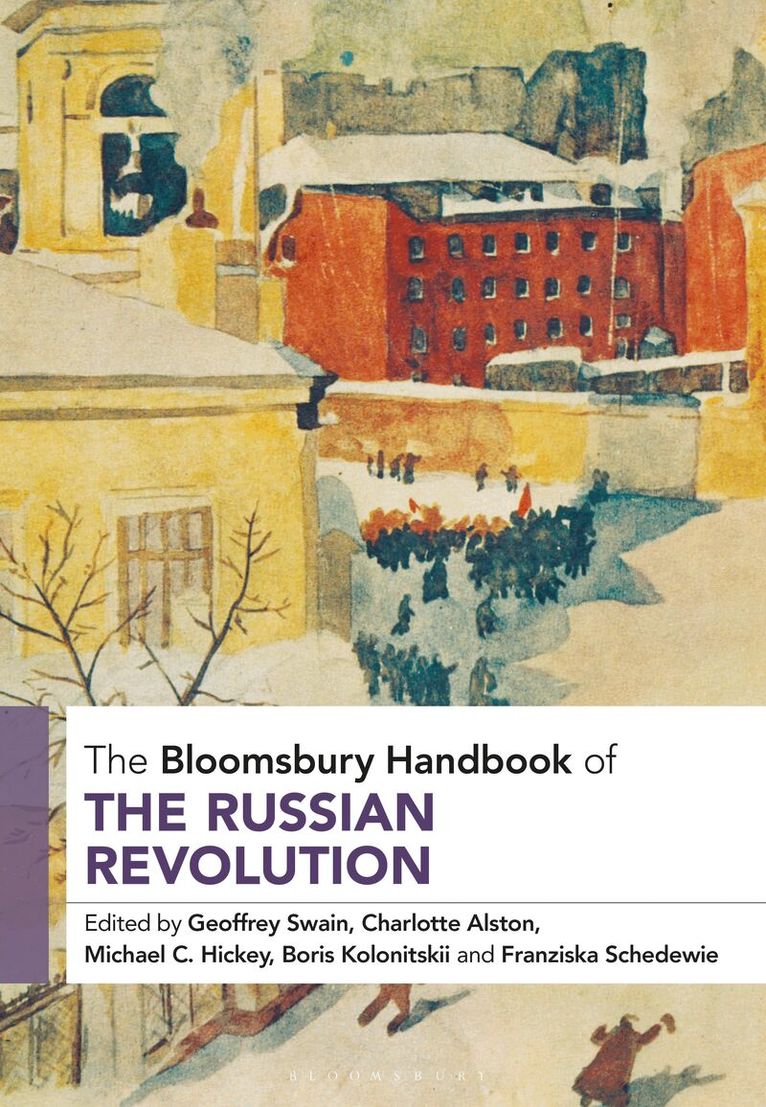
Through 30 interpretative essays, The Bloomsbury Handbook of the Russian Revolution sees an international team of leading scholars comprehensively examine Russia’s revolutionary years. In the wake of the 2017 centenary, this handbook is the first reference point for anyone wishing to learn more about the changes which took place in Russia between 1917 and 1921 and subsequently the 20th century. Split into six sections covering political crises, politicians and parties, social groups, identities, regions and peoples, and civil war, the volume covers the collapse of Tsarism and the February Revolution, the emergence of the Provisional Government, and major historical figures such as Lenin, Kerensky and the Socialist Revolutionary leader Viktor Chernov. It also explores the events surrounding the Bolshevik seizure of power in October 1917, the first year of Soviet Government until the Bolshevik dictatorship was established, and the impact on Russia of the subsequent civil war. The focus is broader than these issues of high politics, however, since this handbook also considers events in the provinces as well as revolutionary Petrograd, and examines the social impact of the revolution in terms of class, gender, age and culture.
E-bok
PDF, Engelska, 2022602 kr
Läs direkt efter köp
Through 30 interpretative essays, The Bloomsbury Handbook of the Russian Revolution sees an international team of leading scholars comprehensively examine Russia''s revolutionary years. In the wake of the 2017 centenary, this handbook is the first reference point for anyone wishing to learn more about the changes which took place in Russia between 1917 and 1921 and subsequently the 20th century. Split into six sections covering political crises, politicians and parties, social groups, identities, regions and peoples, and civil war, the volume covers the collapse of Tsarism and the February Revolution, the emergence of the Provisional Government, and major historical figures such as Lenin, Kerensky and the Socialist Revolutionary leader Viktor Chernov. It also explores the events surrounding the Bolshevik seizure of power in October 1917, the first year of Soviet Government until the Bolshevik dictatorship was established, and the impact on Russia of the subsequent civil war. The focus is broader than these issues of high politics, however, since this handbook also considers events in the provinces as well as revolutionary Petrograd, and examines the social impact of the revolution in terms of class, gender, age and culture.
E-bok
Engelska, 2022602 kr
Läs direkt efter köp
Through 30 interpretative essays, The Bloomsbury Handbook of the Russian Revolution sees an international team of leading scholars comprehensively examine Russia''s revolutionary years. In the wake of the 2017 centenary, this handbook is the first reference point for anyone wishing to learn more about the changes which took place in Russia between 1917 and 1921 and subsequently the 20th century. Split into six sections covering political crises, politicians and parties, social groups, identities, regions and peoples, and civil war, the volume covers the collapse of Tsarism and the February Revolution, the emergence of the Provisional Government, and major historical figures such as Lenin, Kerensky and the Socialist Revolutionary leader Viktor Chernov. It also explores the events surrounding the Bolshevik seizure of power in October 1917, the first year of Soviet Government until the Bolshevik dictatorship was established, and the impact on Russia of the subsequent civil war. The focus is broader than these issues of high politics, however, since this handbook also considers events in the provinces as well as revolutionary Petrograd, and examines the social impact of the revolution in terms of class, gender, age and culture.
Häftad, Engelska, 2025
568 kr
Skickas inom 10-15 vardagar
Through 30 interpretative essays, The Bloomsbury Handbook of the Russian Revolution sees an international team of leading scholars comprehensively examine Russia’s revolutionary years. In the wake of the 2017 centenary, this handbook is the first reference point for anyone wishing to learn more about the changes which took place in Russia between 1917 and 1921 and subsequently the 20th century. Split into six sections covering political crises, politicians and parties, social groups, identities, regions and peoples, and civil war, the volume covers the collapse of Tsarism and the February Revolution, the emergence of the Provisional Government, and major historical figures such as Lenin, Kerensky and the Socialist Revolutionary leader Viktor Chernov. It also explores the events surrounding the Bolshevik seizure of power in October 1917, the first year of Soviet Government until the Bolshevik dictatorship was established, and the impact on Russia of the subsequent civil war. The focus is broader than these issues of high politics, however, since this handbook also considers events in the provinces as well as revolutionary Petrograd, and examines the social impact of the revolution in terms of class, gender, age and culture.
E-bok
Engelska, 2020266 kr
Läs direkt efter köp
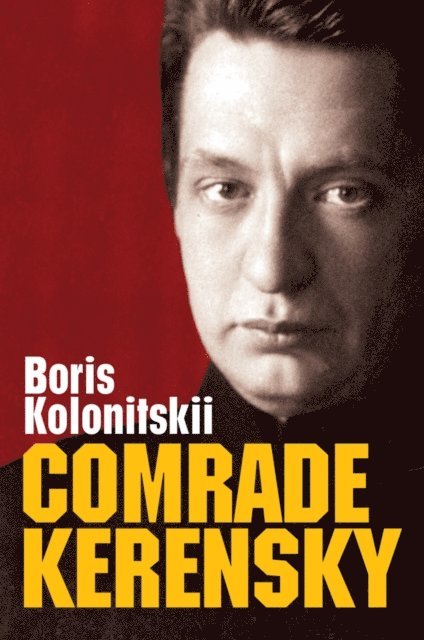
As one of the heroes of the 1917 February Revolution and then Prime Minister at the head of the Provisional Government, Alexander Kerensky was passionately, even fanatically, lauded as a leader during his brief political reign. Symbolic artefacts – sculptures, badges and medals - featuring his likeness abounded. Streets were renamed after him, his speeches were quoted on gravestones and literary odes dedicated to him proliferated in the major press. But, by October, Kerensky had been unceremoniously dethroned in the Bolshevik takeover and had fled to Paris and then to the US, where he would remain exiled and removed from his former glory until his death. The breakneck trajectory of his rise and fall and the intensity of his popularity were not merely a symptom of the chaos of those times but offer a window onto a much broader historical phenomenon which did not just begin with Lenin and Stalin – the cult of the leader. In this major new study of the Russian leadership cult, Boris Kolonitskii uses the figure of Kerensky to show how popular engagement with the idea of the leader became a key component of a cultural re-imagining of the political landscape after the fall of the monarchy. A parallel revolution was taking place on the level of creating a resonant political vocabulary where one had not existed before, and it was in the shared exercise of bestowing and dissolving authority that a politicised way of seeing began to emerge. Kolonitskii plots the unfurling of this symbolic revolution by examining the tapestry of images woven by Kerensky and those around him, and, in so doing, exposes his vital role in the development of nascent Soviet political culture. This highly original portrait of a revolutionary sheds new light on the cult of Kerensky that developed around this charismatic leader during the months following the overthrow of the tsar. It will be of value to students and scholars of Russian history and to those interested in political culture.