Brad Weiss – författare
Visar alla böcker från författaren Brad Weiss. Handla med fri frakt och snabb leverans.
7 produkter
7 produkter
Häftad, Engelska, 2009
265 kr
Skickas inom 5-8 vardagar
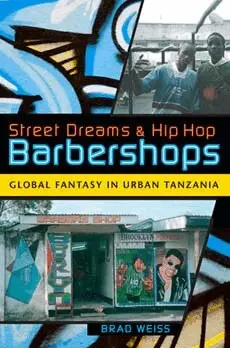
For young men in urban Tanzania, barbershops are sites of the struggle to earn a living amid economic crisis. With names like Brooklyn Barber House and Boyz II Men, these workplaces are also nodes in an explosion of popular culture that appropriates images drawn from the global circulation of hip hop music, fashion, and celebrity. Street Dreams and Hip Hop Barbershops grapples with the implications of globalization and neoliberalism for urban youth in Africa today, exploring urban Tanzanians' complex, new ways of understanding their place in the world.
Inbunden, Engelska, 2003
834 kr
Skickas inom 10-15 vardagar
Inbunden, Engelska, 2016
1 285 kr
Skickas inom 5-8 vardagar
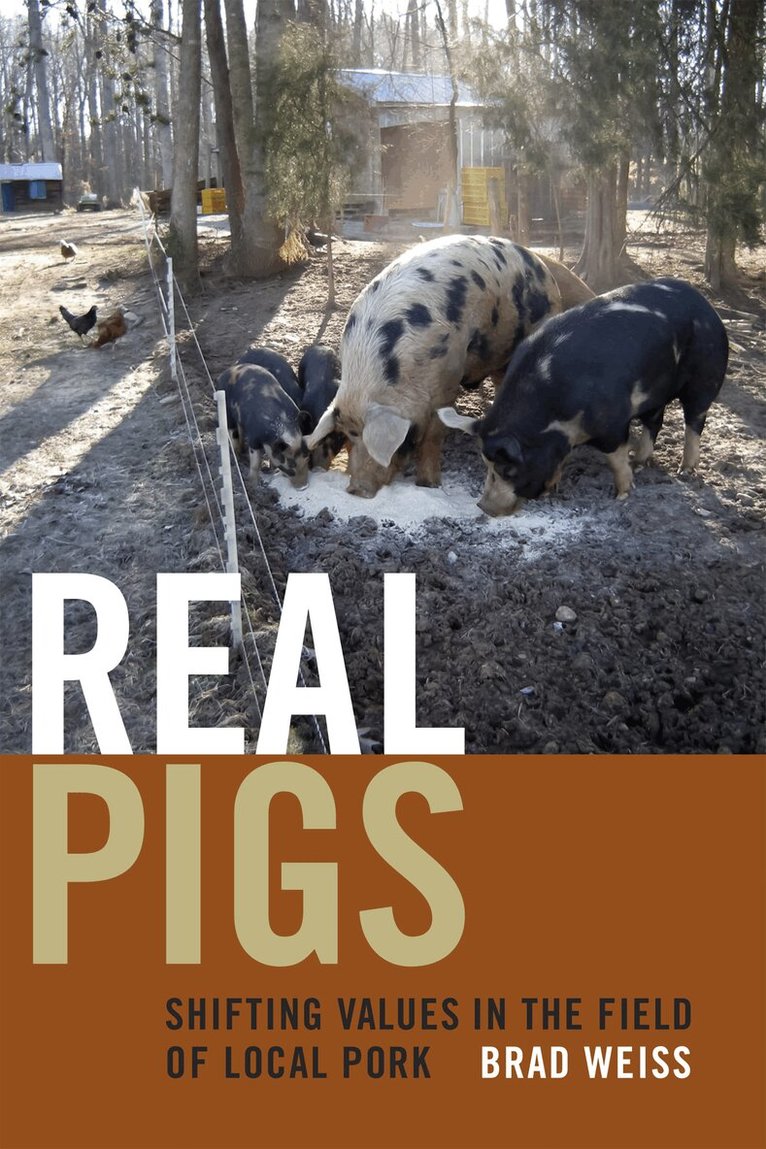
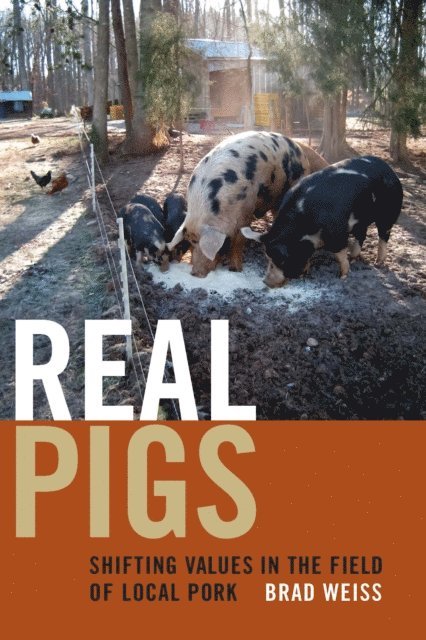
In addition to being one of the United States' largest pork producers, North Carolina is home to a developing niche market of pasture-raised pork. In Real Pigs Brad Weiss traces the desire for "authentic" local foods in the Piedmont region of central North Carolina as he follows farmers, butchers, and chefs through the process of breeding, raising, butchering, selling, and preparing pigs raised on pasture for consumption. Drawing on his experience working on Piedmont pig farms and at farmers’ markets, Weiss explores the history, values, social relations, and practices that drive the pasture-raised pork market. He shows how pigs in the Piedmont become imbued with notions of authenticity, illuminating the ways the region's residents understand local notions of place and culture. Full of anecdotes and interviews with the market's primary figures, Real Pigs reminds us that what we eat and why have implications that resonate throughout the wider social, cultural, and historical world.
Häftad, Engelska, 2016
374 kr
Skickas inom 5-8 vardagar
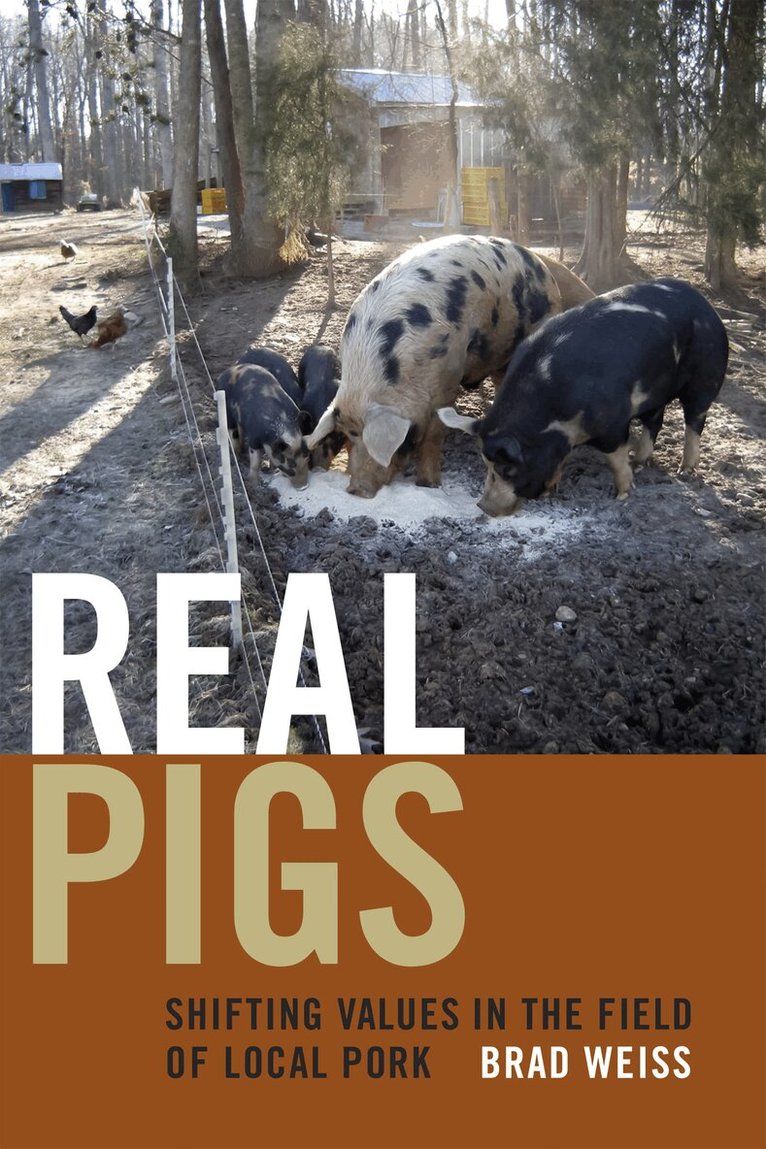
In addition to being one of the United States' largest pork producers, North Carolina is home to a developing niche market of pasture-raised pork. In Real Pigs Brad Weiss traces the desire for "authentic" local foods in the Piedmont region of central North Carolina as he follows farmers, butchers, and chefs through the process of breeding, raising, butchering, selling, and preparing pigs raised on pasture for consumption. Drawing on his experience working on Piedmont pig farms and at farmers’ markets, Weiss explores the history, values, social relations, and practices that drive the pasture-raised pork market. He shows how pigs in the Piedmont become imbued with notions of authenticity, illuminating the ways the region's residents understand local notions of place and culture. Full of anecdotes and interviews with the market's primary figures, Real Pigs reminds us that what we eat and why have implications that resonate throughout the wider social, cultural, and historical world.
E-bok
PDF, Engelska, 2016534 kr
Läs direkt efter köp
In addition to being one of the United States'' largest pork producers, North Carolina is home to a developing niche market of pasture-raised pork. In Real Pigs Brad Weiss traces the desire for "authentic" local foods in the Piedmont region of central North Carolina as he follows farmers, butchers, and chefs through the process of breeding, raising, butchering, selling, and preparing pigs raised on pasture for consumption. Drawing on his experience working on Piedmont pig farms and at farmers’ markets, Weiss explores the history, values, social relations, and practices that drive the pasture-raised pork market. He shows how pigs in the Piedmont become imbued with notions of authenticity, illuminating the ways the region''s residents understand local notions of place and culture. Full of anecdotes and interviews with the market''s primary figures, Real Pigs reminds us that what we eat and why have implications that resonate throughout the wider social, cultural, and historical world.
E-bok
PDF, Engelska, 1996550 kr
Läs direkt efter köp
At the center of this subtle ethnographic account of the Haya communities of Northwest Tanzania is the idea of a lived world as both the product and the producer of everyday practices. Drawing on his experience living with the Haya, Brad Weiss explores Haya ways of constructing and inhabiting their community, and examines the forces that shape and transform these practices over time. In particular, he shows how the Haya, a group at the fringe of the global economy, have responded to the processes and material aspects of money, markets, and commodities as they make and remake their place in a changing world.Grounded in a richly detailed ethnography of Haya practice, Weiss’s analysis considers the symbolic qualities and values embedded in goods and transactions across a wide range of cultural activity: agricultural practice and food preparation, the body’s experience of epidemic disease from AIDS to the infant affliction of “plastic teeth,” and long-standing forms of social movement and migration. Weiss emphasizes how Haya images of consumption describe the relationship between their local community and the global economy. Throughout, he demonstrates that particular commodities and more general market processes are always material and meaningful forces with the potential for creativity as well as disruption in Haya social life. By calling attention to the productive dimensions of this spatial and temporal world, his work highlights the importance of human agency in not only the Haya but any sociocultural order.Offering a significant contribution to the anthropological theories of practice, embodiment, and agency, and enriching our understanding of the lives of a rural African people, The Making and Unmaking of the Haya Lived World will interest historians, anthropologists, ethnographers, and scholars of cultural studies.
Del 26 - Studies of Religion in Africa
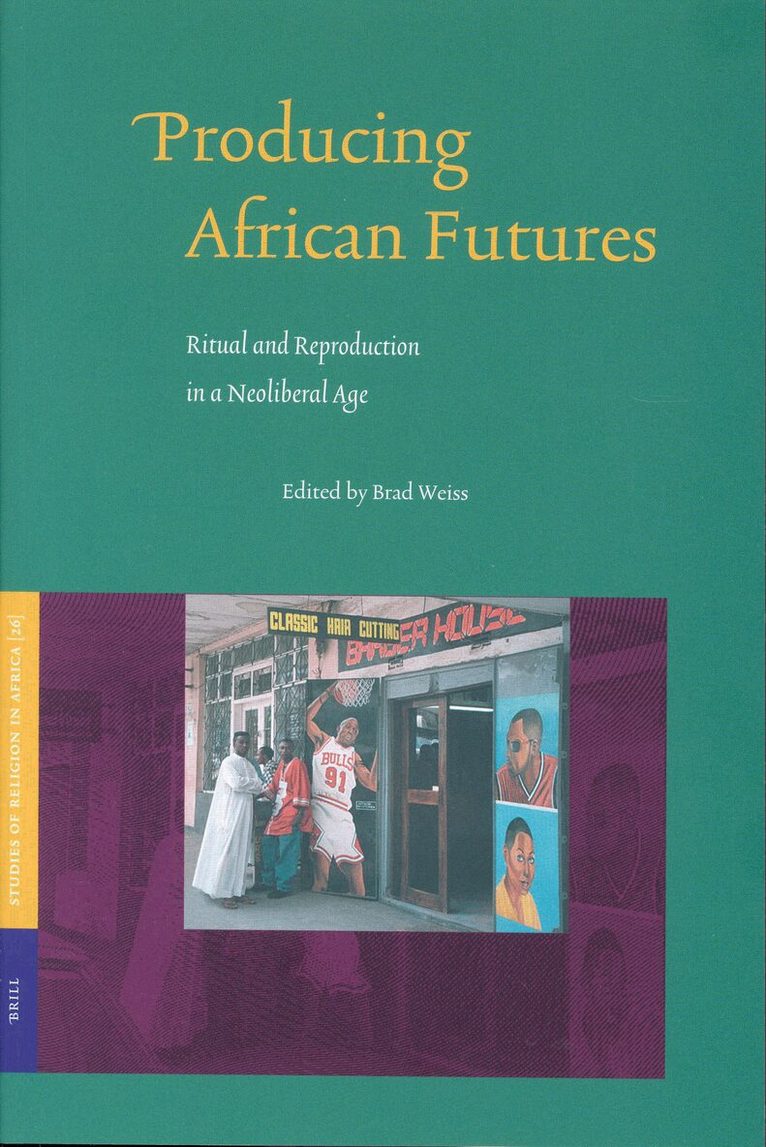
Producing African Futures
Ritual and Reproduction in a Neoliberal Age
Häftad, Engelska, 2004
1 309 kr
Skickas inom 5-8 vardagar
The cumulative implications for Africans of the neoliberal processes (market speculation, shifts in sites of production, new modes of consumption, redefinition of the relation between states and their citizenry) cannot be reduced to single parameters. Three themes are central: the neoliberal production of personhood, the crises of youth and the moral panic in which so many of the wider reforms are registered in experience. With contributions on marriage payments, Muslim saints, popular theatre, homosexuality, ritual haunts, domestic reproduction, masculine fantasy, poetic justice, spirit possession and corruption.