Bradley A. Thayer – författare
Visar alla böcker från författaren Bradley A. Thayer. Handla med fri frakt och snabb leverans.
17 produkter
America's 100 Years' War
How to Win Against Communism
Inbunden, 2026
266 kr
Kommande
The Cold War never ended—because Communism was never defeated.For more than a century, the United States has been locked in an ideological war most Americans do not perceive. In America’s Hundred Years’ War, Dr. Bradley A. Thayer argues that the struggle against Communism did not end with the fall …
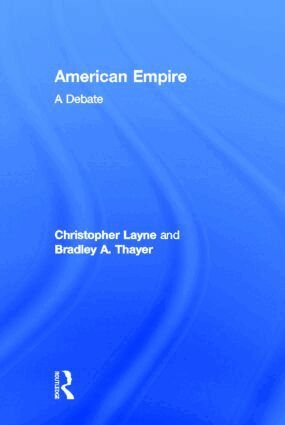
American Empire
A Debate
Av Christopher Layne, Bradley A. Thayer
Inbunden, 2006
3063 kr
Lägg i varukorg
In this short, accessible book Layne and Thayer argue the merits and demerits of an American empire. With few, if any, rivals to its supremacy, the United States has made an explicit commitment to maintaining and advancing its primacy in the world. But what exactly are the benefits of American …
American Empire
A Debate
Av Christopher Layne, Bradley A. Thayer
Häftad, 2006
749 kr
Lägg i varukorg
In this short, accessible book Layne and Thayer argue the merits and demerits of an American empire. With few, if any, rivals to its supremacy, the United States has made an explicit commitment to maintaining and advancing its primacy in the world. But what exactly are the benefits of American …
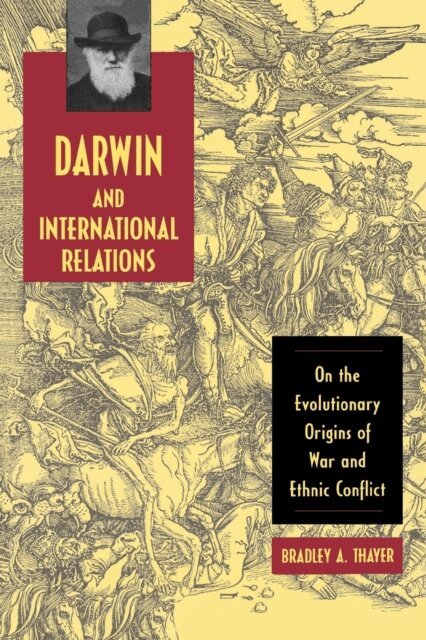
Darwin and International Relations
On the Evolutionary Origins of War and Ethnic Conflict
E-bok, 2014
673 kr
Lägg i varukorg
Pathbreaking and controversial, Darwin and International Relations offers the first comprehensive analysis of international affairs of state through the lens of evolutionary theory. Bradley A. Thayer provides a new method for investigating and explaining human and state behavior while generating …
Darwin and International Relations
On the Evolutionary Origins of War and Ethnic Conflict
Häftad, 2009
517 kr
Lägg i varukorg
Pathbreaking and controversial, Darwin and International Relations offers the first comprehensive analysis of international affairs of state through the lens of evolutionary theory. Bradley A. Thayer provides a new method for investigating and explaining human and state behavior while generating …
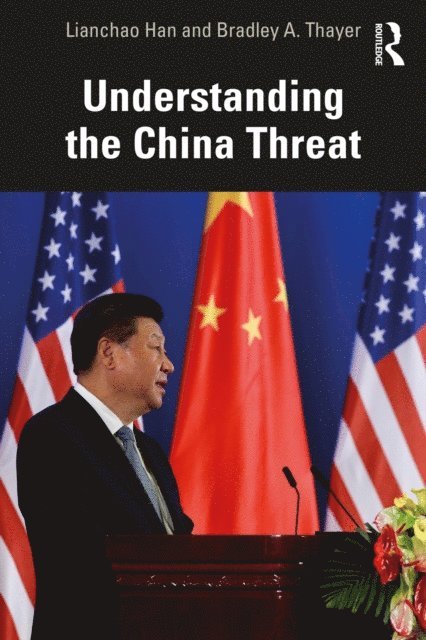
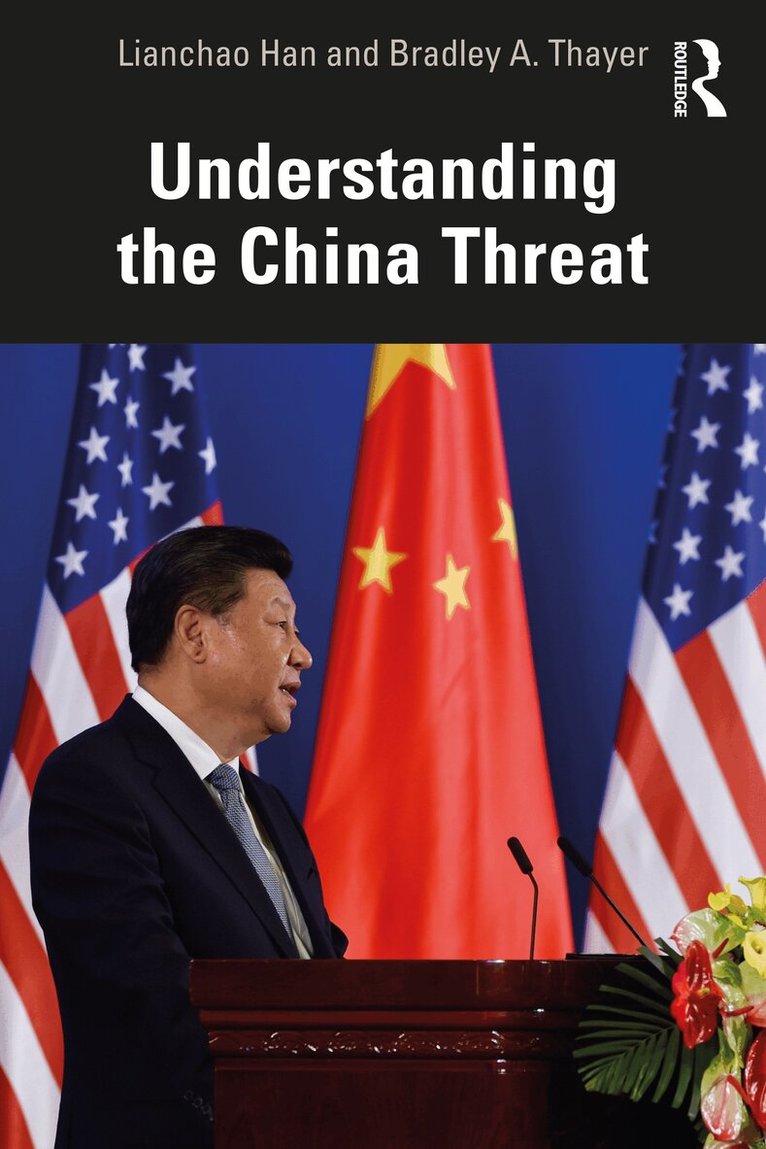
Understanding the China Threat
Av Bradley A. Thayer, Lianchao Han
E-bok, 2022
745 kr
Lägg i varukorg
This book examines the contours of the Sino-American confrontation and its future trajectories. It delineates the two major causes of the friction in Sino-American relations—change in the balance of power in China’s favor and the conf licting ideologies of the two states—and emphasizes why it is …
Understanding the China Threat
Av Bradley A. Thayer, Lianchao Han
E-bok, 2022
745 kr
Lägg i varukorg
This book examines the contours of the Sino-American confrontation and its future trajectories. It delineates the two major causes of the friction in Sino-American relations—change in the balance of power in China’s favor and the conf licting ideologies of the two states—and emphasizes why it is …
Understanding the China Threat
Av Lianchao Han, Bradley A. Thayer
Inbunden, 2022
2510 kr
Lägg i varukorg
This book examines the contours of the Sino-American confrontation and its future trajectories. It delineates the two major causes of the friction in Sino-American relations—change in the balance of power in China’s favor and the conf licting ideologies of the two states—and emphasizes why it is …
Understanding the China Threat
Av Lianchao Han, Bradley A. Thayer
Häftad, 2022
706 kr
Lägg i varukorg
This book examines the contours of the Sino-American confrontation and its future trajectories. It delineates the two major causes of the friction in Sino-American relations—change in the balance of power in China’s favor and the conf licting ideologies of the two states—and emphasizes why it is …
American Empire
A Debate
Av Bradley A. Thayer, Christopher Layne
E-bok, 2006
883 kr
Lägg i varukorg
In this short, accessible book Layne and Thayer argue the merits and demerits of an American empire. With few, if any, rivals to its supremacy, the United States has made an explicit commitment to maintaining and advancing its primacy in the world. But what exactly are the benefits of American …
American Empire
A Debate
Av Bradley A. Thayer, Christopher Layne
E-bok, 2006
883 kr
Lägg i varukorg
In this short, accessible book Layne and Thayer argue the merits and demerits of an American empire. With few, if any, rivals to its supremacy, the United States has made an explicit commitment to maintaining and advancing its primacy in the world. But what exactly are the benefits of American …
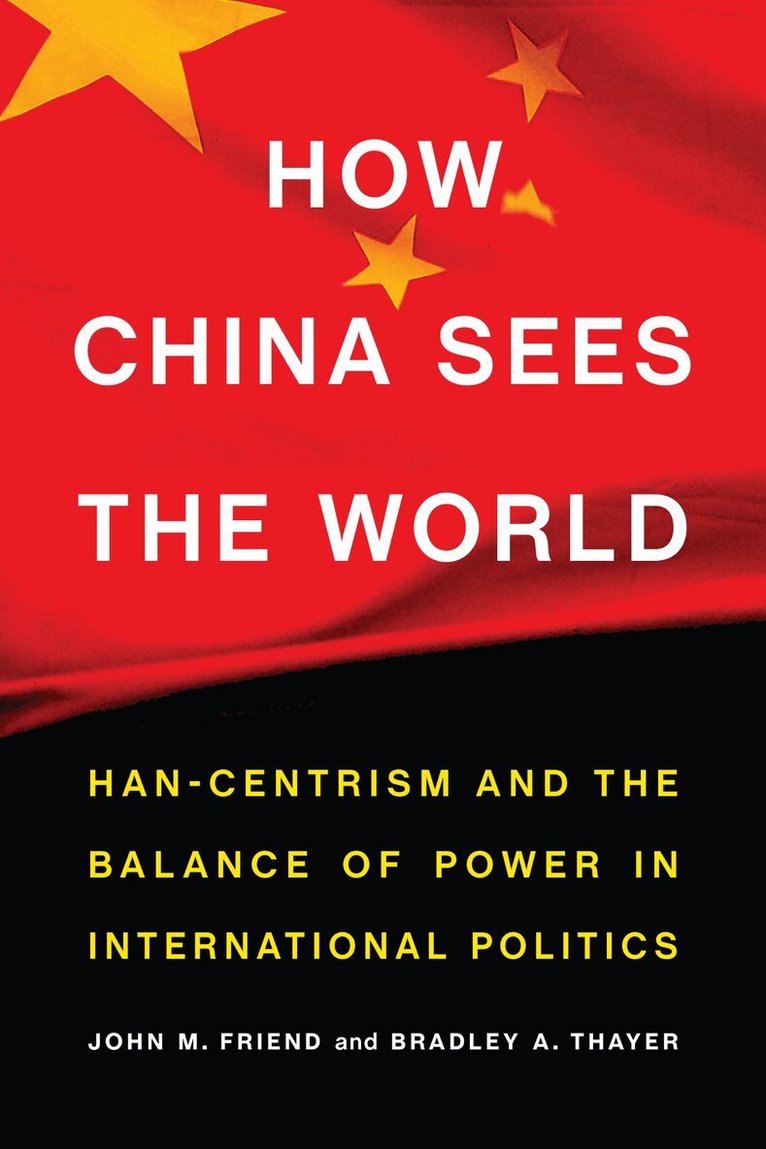
How China Sees the World
Han-Centrism and the Balance of Power in International Politics
Av John M. Friend, Bradley A. Thayer
Inbunden, 2018
436 kr
Lägg i varukorg
Han-centrism, a virulent form of Chinese nationalism, asserts that the Han Chinese are superior to other peoples and have a legitimate right to advance Chinese interests at the expense of other countries. Han nationalists have called for policies that will allow China to reclaim the prosperity …
How China Sees the World
Han-Centrism and the Balance of Power in International Politics
Av John M. Friend, Bradley A. Thayer
E-bok, 2018
408 kr
Lägg i varukorg
Han-centrism, a virulent form of Chinese nationalism, asserts that the Han Chinese are superior to other peoples and have a legitimate right to advance Chinese interests at the expense of other countries. Han nationalists have called for policies that will allow China to reclaim the prosperity …
How China Sees the World
Han-Centrism and the Balance of Power in International Politics
Av John M. Friend, Bradley A. Thayer
E-bok, 2018
399 kr
Lägg i varukorg
Han-centrism, a virulent form of Chinese nationalism, asserts that the Han Chinese are superior to other peoples and have a legitimate right to advance Chinese interests at the expense of other countries. Han nationalists have called for policies that will allow China to reclaim the prosperity …
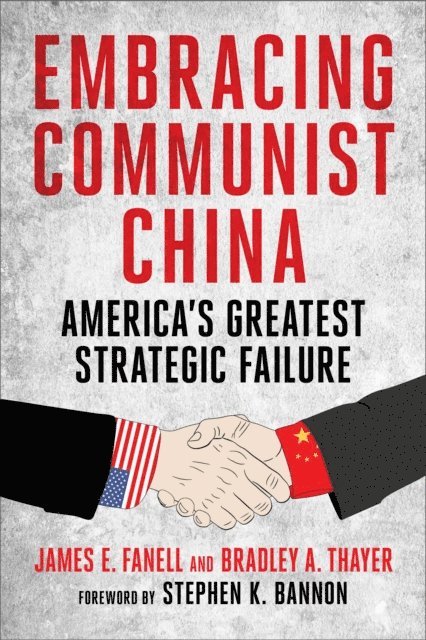
Embracing Communist China
America''s Greatest Strategic Failure
Av Bradley A. Thayer, James Fanell
E-bok, 2024
307 kr
Lägg i varukorg
For decades, the United States has underestimated the threat from the People’s Republic of China (PRC). In doing so, it has left our country vulnerable to their devious plans—a profound, strategic miscalculation. As a result of this carelessness, the United States is at risk of losing its dominant …
America's 100 Years' War
How to Win Against Communism
E-bok, 2026
281 kr
Lägg i varukorg
The Cold War never endedbecause Communism was never defeated.For more than a century, the United States has been locked in an ideological war most Americans do not perceive. In Americas Hundred Years War, Dr. Bradley A. Thayer argues that the struggle against Communism did not end with the fall of …
America's Achilles' Heel
Nuclear, Biological, and Chemical Terrorism and Covert Attack
Av Richard A Falkenrath, Robert D Newman m. fl.
Häftad, 1998
97 kr
Tillfälligt slut