Bradley W. Bateman – författare
Visar alla böcker från författaren Bradley W. Bateman. Handla med fri frakt och snabb leverans.
8 produkter
8 produkter
E-bok
PDF, Engelska, 2017979 kr
Läs direkt efter köp
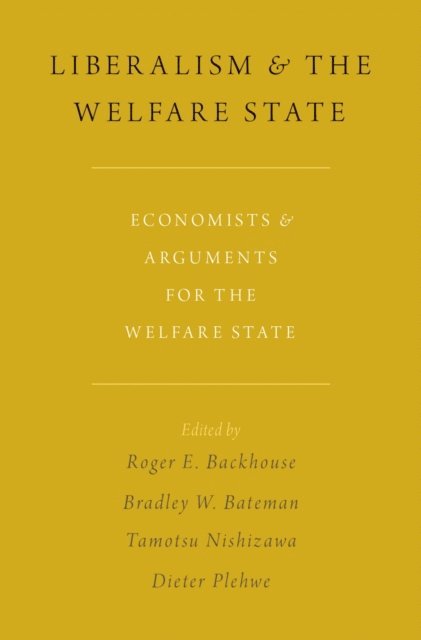
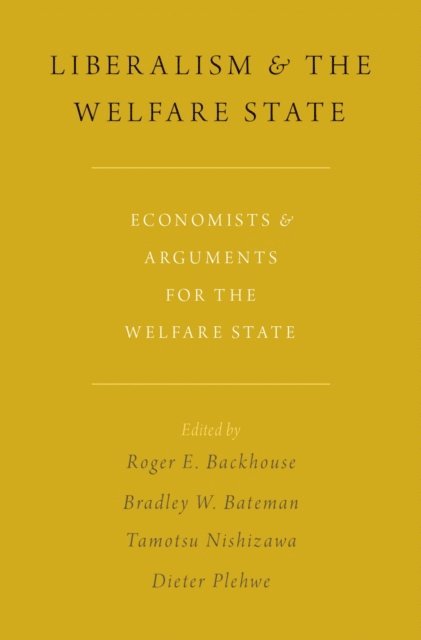
The welfare state has, over the past forty years, come under increasing attack from liberals who consider comprehensive welfare provision inimical to liberalism. Yet, many of the architects of the post-World War II welfare states were liberals, many of whom were economists as much as socialists. Liberalism and the Welfare State investigates the thinking of liberal economists about welfare, focusing on Britain, Germany and Japan, each of which had a different tradition of economic thinking and different institutions for welfare provision.This volume explores the early history of welfare thinking from the British New Liberals of the early twentieth century, German Ordoliberals and post-war Japanese Liberal economists. It delves into arguments about neoliberalism under British Conservative and New Labour governments, after German reunification, and under Koizumi in Japan. Given the importance of both international policy collaboration and international networks of neoliberal economists, this volume also explores neoliberal ideas on federalism and the responses of neoliberal think tanks to the global financial crisis.Liberalism and the Welfare State provides a comparative analysis of economists'' attitudes to the welfare state. Notwithstanding the differences, in each country support emerged very early on for social minimum standards, but strong disagreements within each country quickly developed. The result was divergence, as the debates shaped different welfare regimes. More recently, the strong impact of efficiency related critiques of welfare regimes has crowded out more nuanced and complex discussions of the past. This volume provides a reminder that neither liberalism nor economic ideas in general are inimical to well-designed welfare provision. The ongoing debate on economics and welfare can be greatly improved by way of stronger consideration of different lineages of both liberal and neoliberal lines of economic thought.
979 kr
Läs direkt efter köp
The welfare state has, over the past forty years, come under increasing attack from liberals who consider comprehensive welfare provision inimical to liberalism. Yet, many of the architects of the post-World War II welfare states were liberals, many of whom were economists as much as socialists. Liberalism and the Welfare State investigates the thinking of liberal economists about welfare, focusing on Britain, Germany and Japan, each of which had a different tradition of economic thinking and different institutions for welfare provision.This volume explores the early history of welfare thinking from the British New Liberals of the early twentieth century, German Ordoliberals and post-war Japanese Liberal economists. It delves into arguments about neoliberalism under British Conservative and New Labour governments, after German reunification, and under Koizumi in Japan. Given the importance of both international policy collaboration and international networks of neoliberal economists, this volume also explores neoliberal ideas on federalism and the responses of neoliberal think tanks to the global financial crisis.Liberalism and the Welfare State provides a comparative analysis of economists'' attitudes to the welfare state. Notwithstanding the differences, in each country support emerged very early on for social minimum standards, but strong disagreements within each country quickly developed. The result was divergence, as the debates shaped different welfare regimes. More recently, the strong impact of efficiency related critiques of welfare regimes has crowded out more nuanced and complex discussions of the past. This volume provides a reminder that neither liberalism nor economic ideas in general are inimical to well-designed welfare provision. The ongoing debate on economics and welfare can be greatly improved by way of stronger consideration of different lineages of both liberal and neoliberal lines of economic thought.
Häftad, Engelska, 2006
380 kr
Skickas inom 7-10 vardagar
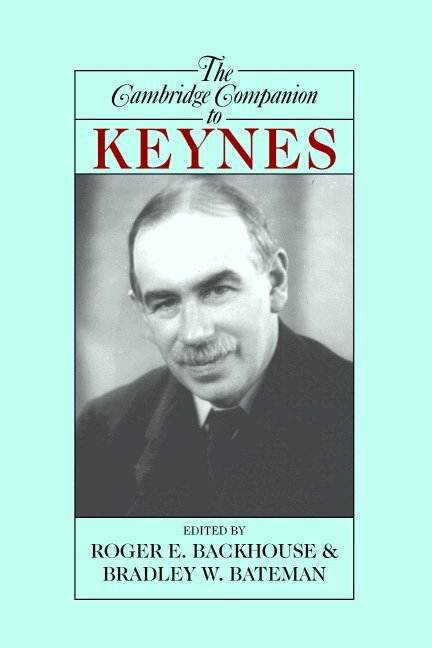
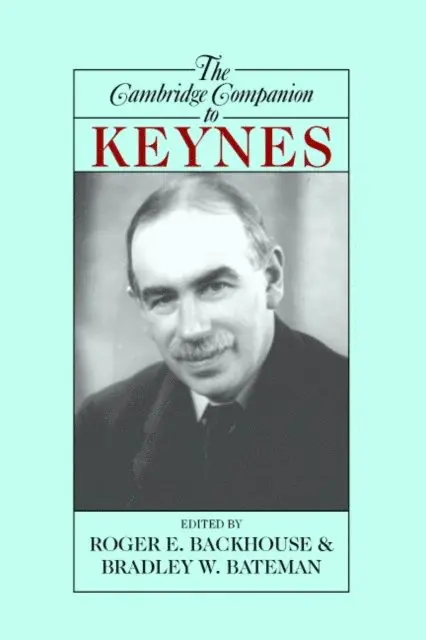
John Maynard Keynes (1883-1946) was the most important economist of the twentieth century. He was also a philosopher who wrote on ethics and the theory of probability and was a central figure in the Bloomsbury Group of writers and artists. In this volume contributors from a wide range of disciplines offer new interpretations of Keynes's thought, explain the links between Keynes's philosophy and his economics, and place his work and Keynesianism - the economic theory, the principles of economic policy, and the political philosophy - in their historical context. Chapter topics include Keynes's philosophical engagement with G. E. Moore and Franz Brentano, his correspondence, the role of his General Theory in the creation of modern macroeconomics, and the many meanings of Keynesianism. New readers will find this the most convenient, accessible guide to Keynes currently available. Advanced students and specialists will find a conspectus of recent developments in the interpretation of Keynes.
Inbunden, Engelska, 2006
1 101 kr
Skickas inom 7-10 vardagar
John Maynard Keynes (1883-1946) was the most important economist of the twentieth century. He was also a philosopher who wrote on ethics and the theory of probability and was a central figure in the Bloomsbury Group of writers and artists. In this volume contributors from a wide range of disciplines offer new interpretations of Keynes's thought, explain the links between Keynes's philosophy and his economics, and place his work and Keynesianism - the economic theory, the principles of economic policy, and the political philosophy - in their historical context. Chapter topics include Keynes's philosophical engagement with G. E. Moore and Franz Brentano, his correspondence, the role of his General Theory in the creation of modern macroeconomics, and the many meanings of Keynesianism. New readers will find this the most convenient, accessible guide to Keynes currently available. Advanced students and specialists will find a conspectus of recent developments in the interpretation of Keynes.
Inbunden, Engelska, 2010
712 kr
Skickas inom 10-15 vardagar
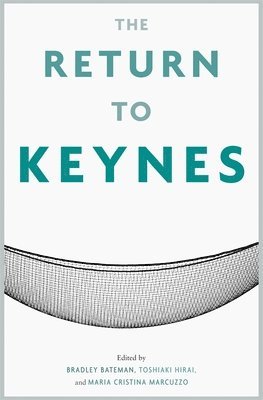
Keynesian economics, which proposed that the government could use monetary and fiscal policy to help the economy avoid the extremes of recession and inflation, held sway for thirty years after World War II. However, it was discredited after the stagflation of the 1970s, which not only proved resistant to traditional Keynesian policies but was actually thought to be caused by them. By the 1990s, the anti-Keynesian counter-revolution seemed to reach its pinnacle with the award of several Nobel Prizes in economics to its architects at the University of Chicago. However, with the collapse of the dot-com boom in 2000 and the attacks of 9/11 a year later, the nature of macroeconomic policy debate took a turn. The collapse prompted a major shift in macroeconomic policy, as the Bush administration and other governments around the world began to resort to Keynesian measures—both monetary and fiscal policies—to stabilize the economy. The Keynesian rebirth has been most dramatically illustrated during the past year when central banks have pumped billions of dollars of liquidity into the world’s financial system to address the crises of confidence, illiquidity, and insolvency that were triggered by the sub-prime lending crisis. The Return to Keynes puts Keynesian economics in a fresh perspective in order to assess this surprising new era in economic policy making.
Inbunden, Engelska, 2011
436 kr
Skickas inom 10-15 vardagar
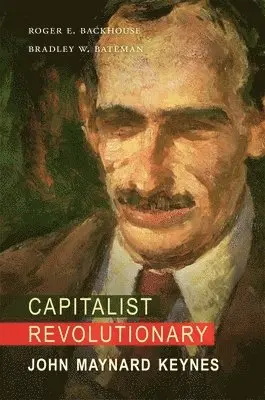
The Great Recession of 2008 restored John Maynard Keynes to prominence. After decades when the Keynesian revolution seemed to have been forgotten, the great British theorist was suddenly everywhere. The New York Times asked, “What would Keynes have done?” The Financial Times wrote of “the undeniable shift to Keynes.” Le Monde pronounced the economic collapse Keynes’s “revenge.” Two years later, following bank bailouts and Tea Party fundamentalism, Keynesian principles once again seemed misguided or irrelevant to a public focused on ballooning budget deficits. In this readable account, Backhouse and Bateman elaborate the misinformation and caricature that have led to Keynes’s repeated resurrection and interment since his death in 1946.Keynes’s engagement with social and moral philosophy and his membership in the Bloomsbury Group of artists and writers helped to shape his manner of theorizing. Though trained as a mathematician, he designed models based on how specific kinds of people (such as investors and consumers) actually behave—an approach that runs counter to the idealized agents favored by economists at the end of the century.Keynes wanted to create a revolution in the way the world thought about economic problems, but he was more open-minded about capitalism than is commonly believed. He saw capitalism as essential to a society’s well-being but also morally flawed, and he sought a corrective for its main defect: the failure to stabilize investment. Keynes’s nuanced views, the authors suggest, offer an alternative to the polarized rhetoric often evoked by the word “capitalism” in today’s political debates.
E-bok
PDF, Engelska, 2006443 kr
Läs direkt efter köp
John Maynard Keynes (1883–1946) was the most important economist of the twentieth century. He was also a philosopher who wrote on ethics and the theory of probability and was a central figure in the Bloomsbury Group of writers and artists. In this volume contributors from a wide range of disciplines offer new interpretations of Keynes''s thought, explain the links between Keynes''s philosophy and his economics, and place his work and Keynesianism - the economic theory, the principles of economic policy, and the political philosophy - in their historical context. Chapter topics include Keynes''s philosophical engagement with G. E. Moore and Franz Brentano, his correspondence, the role of his General Theory in the creation of modern macroeconomics, and the many meanings of Keynesianism. New readers will find this the most convenient, accessible guide to Keynes currently available. Advanced students and specialists will find a conspectus of recent developments in the interpretation of Keynes.
E-bok
Engelska, 2006459 kr
Läs direkt efter köp
John Maynard Keynes (1883–1946) was the most important economist of the twentieth century. He was also a philosopher who wrote on ethics and the theory of probability and was a central figure in the Bloomsbury Group of writers and artists. In this volume contributors from a wide range of disciplines offer new interpretations of Keynes''s thought, explain the links between Keynes''s philosophy and his economics, and place his work and Keynesianism - the economic theory, the principles of economic policy, and the political philosophy - in their historical context. Chapter topics include Keynes''s philosophical engagement with G. E. Moore and Franz Brentano, his correspondence, the role of his General Theory in the creation of modern macroeconomics, and the many meanings of Keynesianism. New readers will find this the most convenient, accessible guide to Keynes currently available. Advanced students and specialists will find a conspectus of recent developments in the interpretation of Keynes.