Brandon M. Greenwell – författare
Visar alla böcker från författaren Brandon M. Greenwell. Handla med fri frakt och snabb leverans.
6 produkter
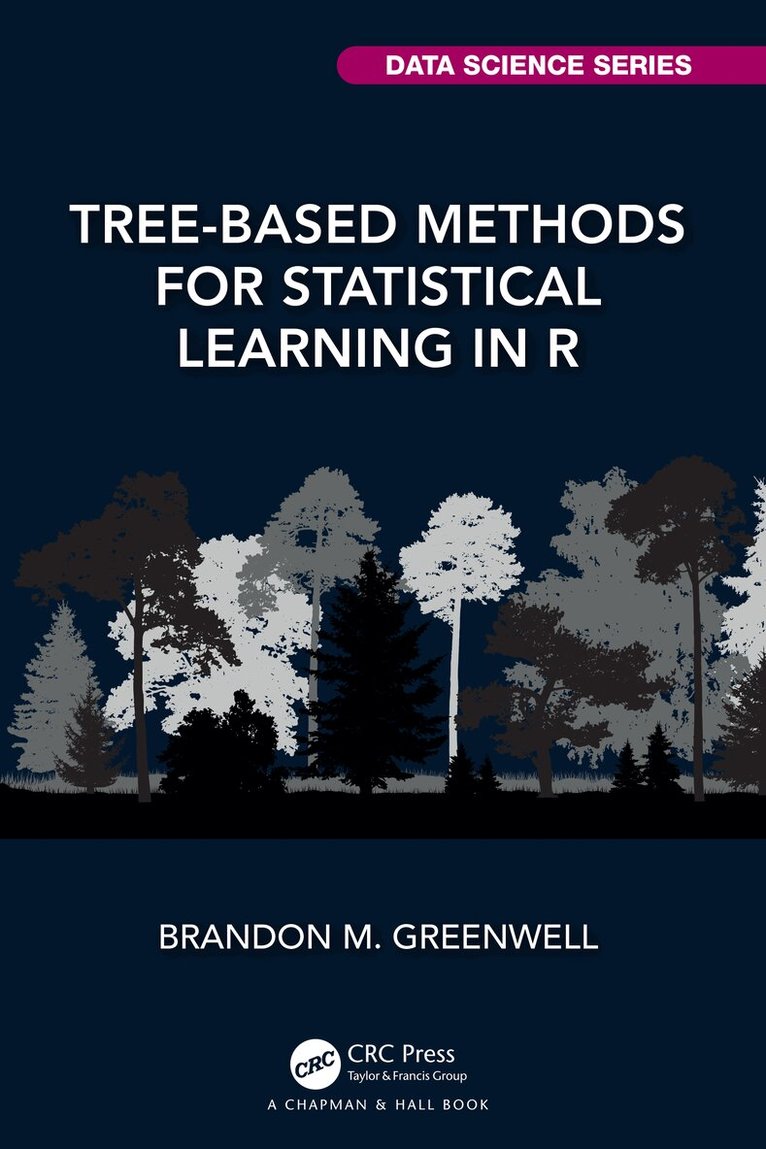
Tree-Based Methods for Statistical Learning in R
Inbunden, 2022
1517 kr
Lägg i varukorg
Tree-based Methods for Statistical Learning in R provides a thorough introduction to both individual decision tree algorithms (Part I) and ensembles thereof (Part II). Part I of the book brings several different tree algorithms into focus, both conventional and contemporary. Building a strong …
Tree-Based Methods for Statistical Learning in R
E-bok, 2022
1022 kr
Lägg i varukorg
Tree-based Methods for Statistical Learning in R provides a thorough introduction to both individual decision tree algorithms (Part I) and ensembles thereof (Part II). Part I of the book brings several different tree algorithms into focus, both conventional and contemporary. Building a strong …
Tree-Based Methods for Statistical Learning in R
E-bok, 2022
1022 kr
Lägg i varukorg
Tree-based Methods for Statistical Learning in R provides a thorough introduction to both individual decision tree algorithms (Part I) and ensembles thereof (Part II). Part I of the book brings several different tree algorithms into focus, both conventional and contemporary. Building a strong …
Hands-On Machine Learning with R
Av Brandon M. Greenwell, Brad Boehmke
E-bok, 2019
1675 kr
Lägg i varukorg
Hands-on Machine Learning with R provides a practical and applied approach to learning and developing intuition into today’s most popular machine learning methods. This book serves as a practitioner’s guide to the machine learning process and is meant to help the reader learn to apply the machine …
Hands-On Machine Learning with R
Av Brandon M. Greenwell, Brad Boehmke
E-bok, 2019
1675 kr
Lägg i varukorg
Hands-on Machine Learning with R provides a practical and applied approach to learning and developing intuition into today’s most popular machine learning methods. This book serves as a practitioner’s guide to the machine learning process and is meant to help the reader learn to apply the machine …
Hands-On Machine Learning with R
Av Brad Boehmke, Brandon M. Greenwell
Inbunden, 2019
1418 kr
Lägg i varukorg
Hands-on Machine Learning with R provides a practical and applied approach to learning and developing intuition into today’s most popular machine learning methods. This book serves as a practitioner’s guide to the machine learning process and is meant to help the reader learn to apply the machine …