Brdar Mario Brdar – författare
Visar alla böcker från författaren Brdar Mario Brdar. Handla med fri frakt och snabb leverans.
4 produkter
4 produkter
E-bok
Engelska, 20261 777 kr
Läs direkt efter köp
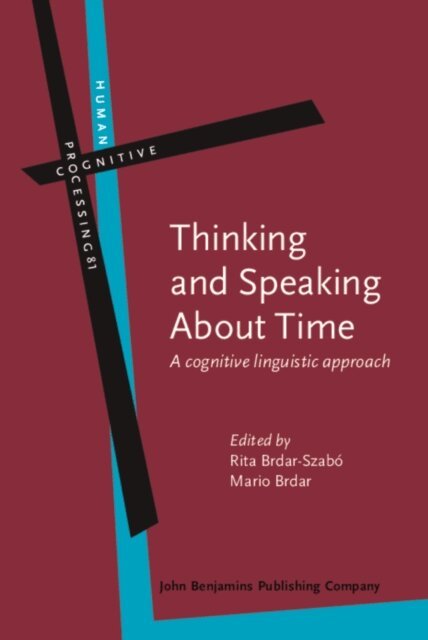
The last two decades have seen a series of publications focused on time. So, why another book? It now appears that a kairos moment has arrived to reconsider from a more holistic point of view the manifold ways in which we think about time and talk about it. The book is divided into four major parts: Fundamental issues; Conceptualization of temporality across languages and cultures; Metaphor, metonymy, and time conceptualization; and Time and grammar. Following the two chapters that prefigure the main topics of the volume, we move from chapters dealing with the cultural embeddedness of our conceptualizations of time to those discussing the instrumental role of figurativity in the conceptualization of time, finishing with a series of chapters focusing on a range of phenomena revolving around the grammatical reflexes of temporality.
E-bok
Engelska, 20221 305 kr
Läs direkt efter köp
The contents of the volume prove the vitality of cognitive linguistic studies of figuration when combined with new research methodologies, in tandem with other disciplines, and also when applied to an ever broader range of topics. Individual chapters are concerned not only with some fundamental issues of defining and delimiting metaphor and metonymy, with the impact of figuration on grammatical forms, but are also exemplary discussions of how figurative language is processed and understood, as well as studies of practical ramifications of the use of figurative language in various types of discourse (the language of media, politics and healthcare communication). Most of the volume assumes a synchronic perspective, but diachronic coverage of processes is not missing either. In short, the volume demonstrates how rewarding it is to return to the true origins of cognitive linguistics for new inspiration and take a fresh start promising a true cornucopia of future results.
E-bok
Engelska, 20191 258 kr
Läs direkt efter köp
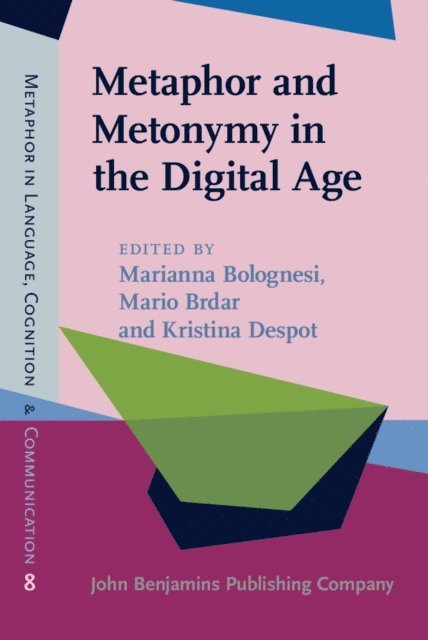
This book describes methods, risks, and challenges involved in the construction of metaphor and metonymy digital repositories. The first part of this volume showcases established and new projects around the world in which metaphors and metonymies are harvested and classified. The second part provides a series of cognitive linguistic studies focused on highlighting and discussing theoretical and methodological risks and challenges involved in building these digital resources. The volume is a result of an interdisciplinary collaboration between cognitive linguists, psychologists, and computational scientists supporting an overarching idea that metaphor and metonymy play a central role in human cognition, and that they are deeply entrenched in recurring patterns of bodily experience. Throughout the volume, a variety of methods are proposed to collect and analyze both conceptual metaphors and metonymies and their linguistic and visual expressions.
E-bok
PDF, Engelska, 20111 258 kr
Läs direkt efter köp
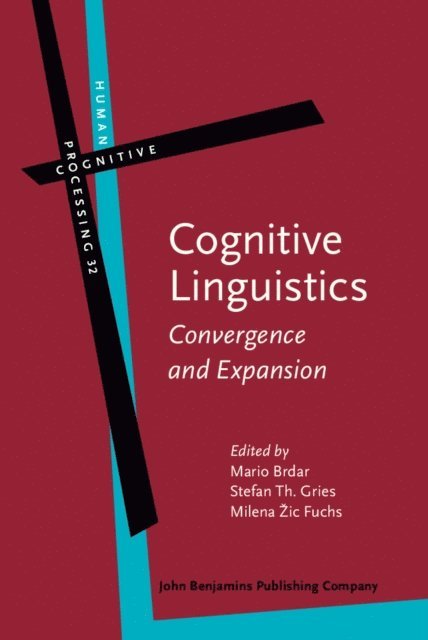
Cognitive Linguistics is not a unified theory of language but rather a set of flexible and mutually compatible theoretical frameworks. Whether these frameworks can or should stabilize into a unified theory is open to debate. One set of contributions to the volume focuses on evidence that strengthens the basic tenets of CL concerning e.g. non-modularity, meaning, and embodiment. A second set of chapters explores the expansion of the general CL paradigm and the incorporation of theoretical insights from other disciplines and their methodologies – a development that could lead to competing and mutually exclusive theories within the CL paradigm itself. The authors are leading experts in cognitive grammar, cognitive pragmatics, metaphor and metonymy theory, quantitative corpus linguistics, functional linguistics, and cognitive psychology. This volume is therefore of great interest to scholars and students wishing to inform themselves about the current state and possible future developments of Cognitive Linguistics.