Brenda S. Gardenour Walter – författare
Visar alla böcker från författaren . Handla med fri frakt och snabb leverans.
3 produkter
3 produkter
Häftad, Engelska, 2015
385 kr
Skickas inom 5-8 vardagar
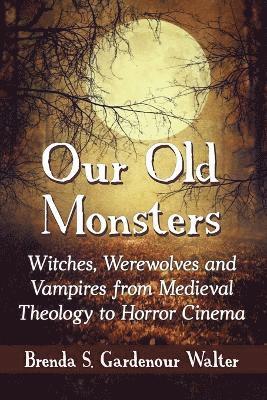
The witch, the vampire and the werewolf endure in modern horror. These "old monsters" have their origins in Aristotle as studied in the universities of medieval Europe, where Christian scholars reconciled works of natural philosophy and medicine with theological precepts. They codified divine perfection as warm, light, male and associated with the ethereal world beyond the moon, while evil imperfection was cold, dark, female and bound to the corrupt world below the moon. All who did not conform to divine goodness--including un-holy women and Jews--were considered evil and ascribed a melancholic, blood hungry and demonic physiology. This construct was the basis for anti-woman and anti-Jewish discourse that has persisted through modern Western culture. Nowhere is this more evident than in horror films, where the witch, the vampire and the werewolf represent our fear of the inverted other.
Häftad, Engelska, 2022
276 kr
Skickas inom 11-20 vardagar
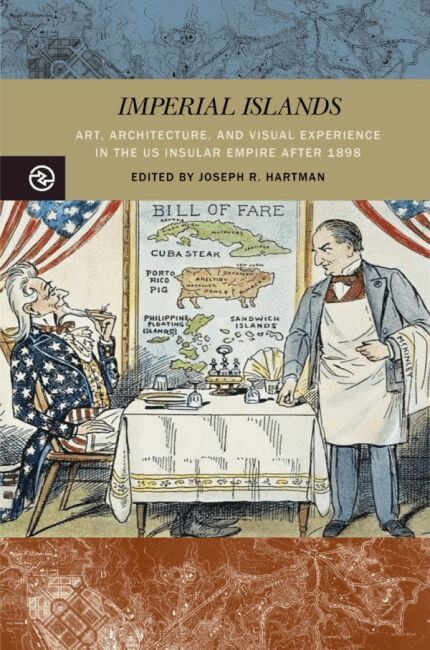
When the USS Maine mysteriously exploded in Havana’s harbor on February 15, 1898, the United States joined local rebel forces to avenge the Maine and "liberate" Cuba from the Spanish empire. "Remember the Maine! To Hell with Spain!" So went the popular slogan. Little did the Cubans know that the United States was not going to give them freedom—in less than a year the American flag replaced the Spanish flag over the various island colonies of Cuba, Guam, Puerto Rico, and the Philippines. Spurred by military successes and dreams of an island empire, the US annexed Hawai‘i that same year, even establishing island colonies throughout Micronesia and the Antilles.With the new governmental orders of creating new art, architecture, monuments, and infrastructure from the United States, the island cultures of the Caribbean and Pacific were now caught in a strategic scope of a growing imperial power. These spatial and visual objects created a visible confrontation between local indigenous, African, Asian, Spanish, and US imperial expressions. These material and visual histories often go unacknowledged, but serve as uncomplicated "proof" for the visible confrontation between the US and the new island territories. The essays in this volume contribute to an important art-historical, visual cultural, architectural, and materialist critique of a growing body of scholarship on the US Empire and the War of 1898. Imperial Islands seeks to reimagine the history and cultural politics of art, architecture, and visual experience in the US insular context. The authors of this volume propose a new direction of visual culture and spatial experience through nuanced terrains for writing, envisioning, and revising US-American, Caribbean, and Pacific histories. These original essays address the role of art and architecture in expressions of state power; racialized and gendered representations of the United States and its island colonies; and forms of resistance to US cultural presence. Featuring interdisciplinary approaches, Imperial Islands offers readers a new way of learning the ongoing significance of vision and experience in the US empire today, particularly for Caribbean, Latinx, Pilipinx, and Pacific Island communities.
Inbunden, Engelska, 2020
895 kr
Skickas inom 5-8 vardagar