Brendon Murphy – författare
Visar alla böcker från författaren Brendon Murphy. Handla med fri frakt och snabb leverans.
12 produkter
12 produkter
E-bok
Engelska, 20201 335 kr
Läs direkt efter köp
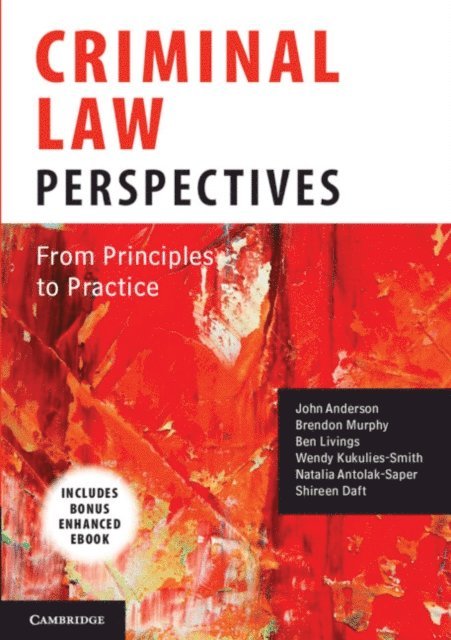
Criminal Law Perspectives: From Principles to Practice is an engaging introduction to the criminal law in New South Wales, Victoria, the Australian Capital Territory and the Commonwealth Criminal Code. It takes a comparative approach to the law in these jurisdictions, focusing on prevalent summary offences, substantive federal offences and criminal procedure. Complex concepts are explained and contextualised by linking them to practical applications. Each chapter is supported by tools for self-assessment: review questions; case boxes summarising and extracting key historical and contemporary cases; and longer, narrative end-of-chapter problems that promote student engagement and help students develop problem-solving skills and independent thinking. Criminal Law Perspectives explores the development of criminal law principles in Australia, and provides a comprehensive and accessible overview of criminal law for students studying in the area for the first time.
E-bok
Engelska, 2026408 kr
Läs direkt efter köp
E-bok
PDF, Engelska, 2026408 kr
Läs direkt efter köp
E-bok
PDF, Engelska, 20261 264 kr
Läs direkt efter köp
Häftad, Engelska, 2026
1 065 kr
Skickas inom 7-10 vardagar
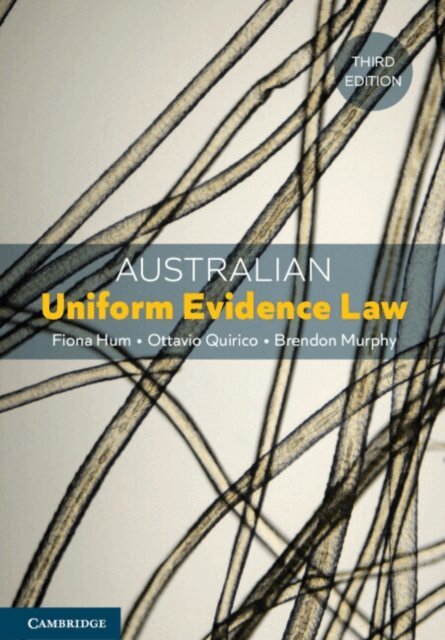
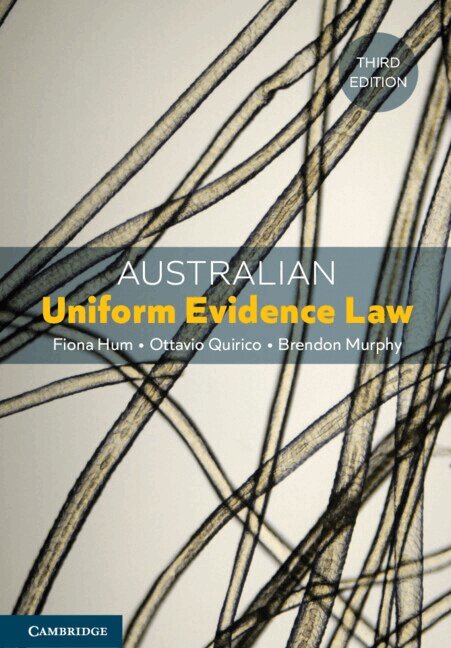
Australian Uniform Evidence Law is an essential textbook for students and emerging practitioners. Providing a practical and clear introduction to this complex subject, the text covers the Evidence Act 1995 (Cth) and its operation across uniform Evidence Act jurisdictions. The textbook highlights the legislative extracts for each uniform evidence jurisdiction and discusses cases that inform the application of these provisions. The third edition includes updated cases and changes to the law, guiding students through the application of the Act and providing opportunities to apply new knowledge of evidence law in its ever-changing context. Chapters are written in an accessible style, featuring a summary of key points, a list of key terms and definitions, and further readings. Practice questions with guided solutions ensure students effectively apply their learnt knowledge to real-world examples. The final chapter, 'Putting it all together', comprises complex practice problems that test students' understanding of the concepts and rules covered.
E-bok
Engelska, 20261 456 kr
Läs direkt efter köp
1 395 kr
Kommande
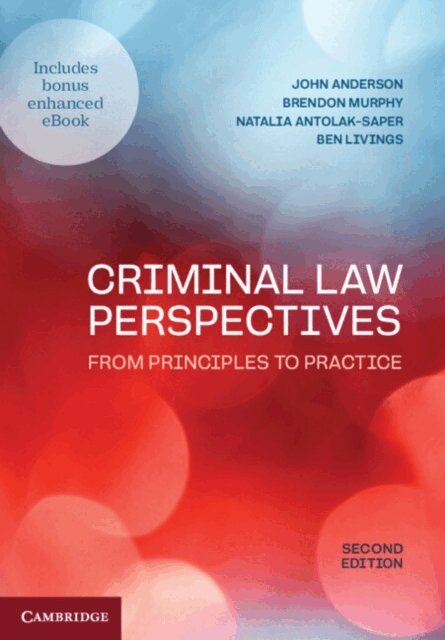
Criminal Law Perspectives: From Principles to Practice provides a comprehensive and accessible introduction to criminal law for undergraduate and postgraduate students. It takes a comparative approach to the law, focusing on New South Wales, Victoria, the Australian Capital Territory and the Commonwealth Criminal Code, as well as the South Australian jurisdiction. Now in its second edition, Criminal Law Perspectives maintains its logical structure and clear explanations of complex concepts. It has been updated to include major developments in the law, including affirmative consent reforms, the criminalisation of coercive control and industrial manslaughter offences. Comprehensive jurisdictional extracts and relevant case examples are used to illustrate key principles of criminal law explored throughout the book. Students are encouraged to reflect and develop their problem-solving skills by engaging with the various features in each chapter, including review questions, case questions, hints and tips, and long-form end-of-chapter problem questions.
Häftad, Engelska, 2026
348 kr
Skickas inom 7-10 vardagar
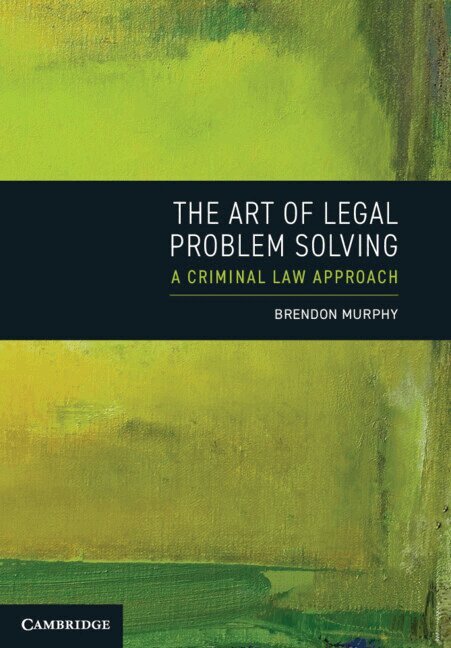
The Art of Legal Problem Solving: A Criminal Law Approach is a sophisticated skills book designed to help students develop the problem-solving techniques necessary for their legal careers. This succinct yet comprehensive book provides the perfect mix of general instruction and specific examples to encourage students to think about problems both in depth and broadly. It follows a clear roadmap presented in a logical progression, beginning with the fundamentals, fact finding and statutory interpretation before turning to the advanced areas of analysing and writing answers to problem questions. While written primarily for criminal law students, the skills imparted are generic and can be applied equally in any area of the law and in any jurisdiction. The Art of Legal Problem Solving is an indispensable work for law students who want to not only improve their problem-solving skills but master them.
Inbunden, Engelska, 2021
1 305 kr
Skickas inom 10-15 vardagar
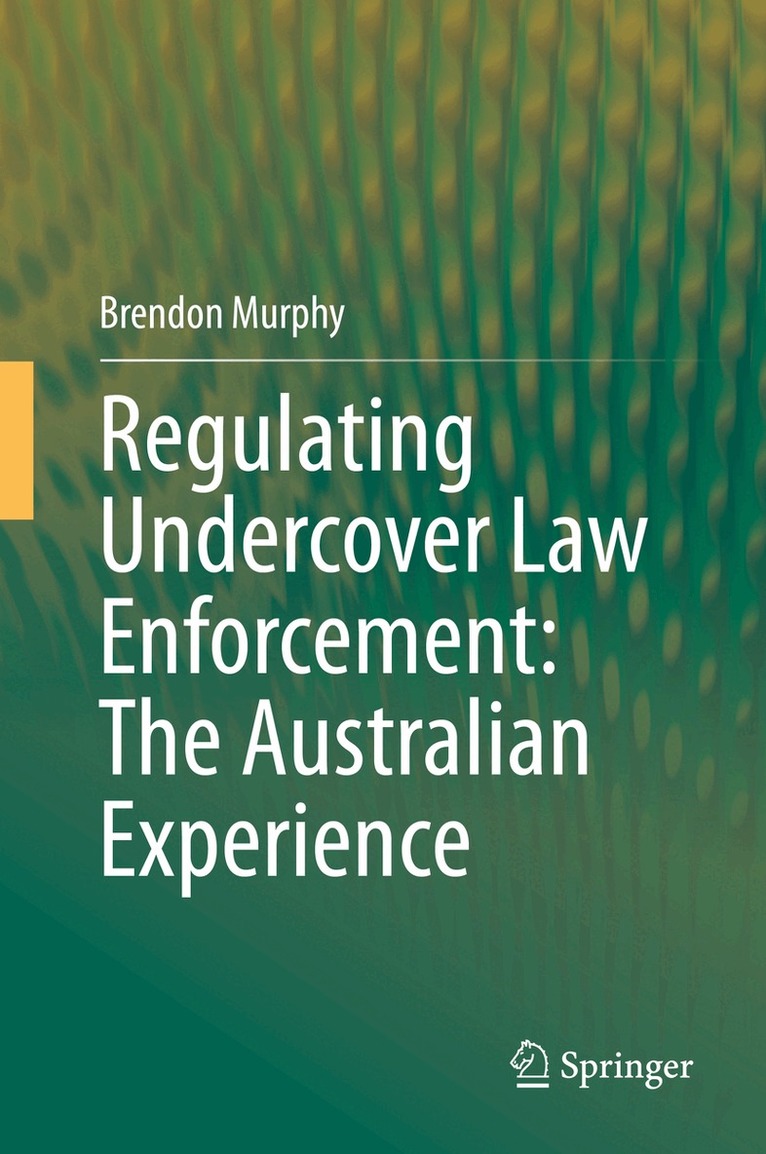
This book examines the way in which undercover police investigation has come to be regulated in Australia. Drawing on documentary and doctrinal legal analysis, this book investigates how, in the space of a single decade, Australian law makers set out to regulate one of the most difficult aspects of police: undercover investigation. In so doing, the Australian experience represents a paradigm model. And yet despite its success, it is a system of law and practice that has a dark side – a model of investigation to relies heavily on activities that are unlawful in the absence of authorisation. It is a model that is as much concerned with the surveillance and control of police as it is with suspected criminal conduct.The book aims to locate the Australian experience in comparative perspective with other major common law jurisdictions (the United Kingdom, Canada and New Zealand), with a view to contrast strengths, similarities and weaknesses of these models. It is arguedthat the Australian model, at the pragmatic level, offers a highly successful model for regulatory structure and practice, providing a significant model for successful regulation. At the same time, the model that has been introduced raises important questions about how and why the Australian experience evolved in the way that it did, and the implications this has for the relationship between citizen and state, the judiciary and the executive, and broader questions about the protections offered by rights discourse and jurisprudence. This book aims to document the law, policy and practices that shape undercover investigations. In so doing, it aims to not only articulate the way in which the law regulates these activities, but also to move on to consider some of the fundamental questions linked to undercover investigations: how did regulation happen? By what means of regulation? What are the driving policy issues that give this field of law its particular complexion? What are the implications? Who gains, and who loses, by which means of power?The book offers unique insights into a largely unknown aspect of modern covert policing, identifying a range of practices, the legal framework, controversies and powers. By locating these practices in a rich theoretical context, informed by risk and governmentality scholarship, this book offers a legal and theoretical explanation of one of the most controversial forms of policing.
E-bok
Engelska, 20211 117 kr
Läs direkt efter köp
This book examines the way in which undercover police investigation has come to be regulated in Australia. Drawing on documentary and doctrinal legal analysis, this book investigates how, in the space of a single decade, Australian law makers set out to regulate one of the most difficult aspects of police: undercover investigation. In so doing, the Australian experience represents a paradigm model. And yet despite its success, it is a system of law and practice that has a dark side – a model of investigation to relies heavily on activities that are unlawful in the absence of authorisation. It is a model that is as much concerned with the surveillance and control of police as it is with suspected criminal conduct.The book aims to locate the Australian experience in comparative perspective with other major common law jurisdictions (the United Kingdom, Canada and New Zealand), with a view to contrast strengths, similarities and weaknesses of these models. It is arguedthat the Australian model, at the pragmatic level, offers a highly successful model for regulatory structure and practice, providing a significant model for successful regulation. At the same time, the model that has been introduced raises important questions about how and why the Australian experience evolved in the way that it did, and the implications this has for the relationship between citizen and state, the judiciary and the executive, and broader questions about the protections offered by rights discourse and jurisprudence. This book aims to document the law, policy and practices that shape undercover investigations. In so doing, it aims to not only articulate the way in which the law regulates these activities, but also to move on to consider some of the fundamental questions linked to undercover investigations: how did regulation happen? By what means of regulation? What are the driving policy issues that give this field of law its particular complexion? What are the implications? Who gains, and who loses, by which means of power?The book offers unique insights into a largely unknown aspect of modern covert policing, identifying a range of practices, the legal framework, controversies and powers. By locating these practices in a rich theoretical context, informed by risk and governmentality scholarship, this book offers a legal and theoretical explanation of one of the most controversial forms of policing.
Häftad, Engelska, 2022
905 kr
Skickas inom 10-15 vardagar
This book examines the way in which undercover police investigation has come to be regulated in Australia. Drawing on documentary and doctrinal legal analysis, this book investigates how, in the space of a single decade, Australian law makers set out to regulate one of the most difficult aspects of police: undercover investigation. In so doing, the Australian experience represents a paradigm model. And yet despite its success, it is a system of law and practice that has a dark side – a model of investigation to relies heavily on activities that are unlawful in the absence of authorisation. It is a model that is as much concerned with the surveillance and control of police as it is with suspected criminal conduct.The book aims to locate the Australian experience in comparative perspective with other major common law jurisdictions (the United Kingdom, Canada and New Zealand), with a view to contrast strengths, similarities and weaknesses of these models. It is arguedthat the Australian model, at the pragmatic level, offers a highly successful model for regulatory structure and practice, providing a significant model for successful regulation. At the same time, the model that has been introduced raises important questions about how and why the Australian experience evolved in the way that it did, and the implications this has for the relationship between citizen and state, the judiciary and the executive, and broader questions about the protections offered by rights discourse and jurisprudence. This book aims to document the law, policy and practices that shape undercover investigations. In so doing, it aims to not only articulate the way in which the law regulates these activities, but also to move on to consider some of the fundamental questions linked to undercover investigations: how did regulation happen? By what means of regulation? What are the driving policy issues that give this field of law its particular complexion? What are the implications? Who gains, and who loses, by which means of power?The book offers unique insights into a largely unknown aspect of modern covert policing, identifying a range of practices, the legal framework, controversies and powers. By locating these practices in a rich theoretical context, informed by risk and governmentality scholarship, this book offers a legal and theoretical explanation of one of the most controversial forms of policing.
1 381 kr
Tillfälligt slut
Criminal Law Perspectives: From Principles to Practice is an engaging introduction to the criminal law in New South Wales, Victoria, the Australian Capital Territory and the Commonwealth Criminal Code. It takes a comparative approach to the law in these jurisdictions, focusing on prevalent summary offences, substantive federal offences and criminal procedure. Complex concepts are explained and contextualised by linking them to practical applications. Each chapter is supported by tools for self-assessment: review questions; case boxes summarising and extracting key historical and contemporary cases; and longer, narrative end-of-chapter problems that promote student engagement and help students develop problem-solving skills and independent thinking. Criminal Law Perspectives explores the development of criminal law principles in Australia, and provides a comprehensive and accessible overview of criminal law for students studying in the area for the first time.