Brent Davis – författare
Visar alla böcker från författaren Brent Davis. Handla med fri frakt och snabb leverans.
20 produkter
20 produkter
Inbunden, Engelska, 2019
1 877 kr
Skickas inom 10-15 vardagar
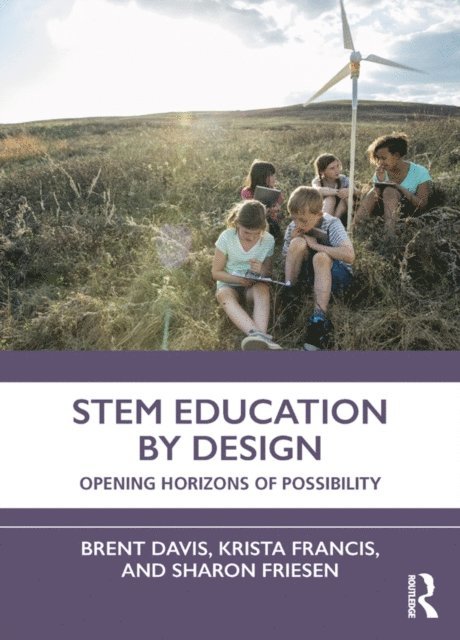
An accessible text that assumes no prior knowledge, this book is grounded in the realization that "STEM" and "STEM Education" have not yet evolved into fully coherent fields of study, and fills this gap by offering an original model and strategy for developing coherences in a way that both honors the integrity of each of STEM’s constituent disciplines and explores the ways they can amplify one another when used together to address complex contemporary issues. This book demonstrates how STEM can and should be understood as more than a collection of disciplines; it is a transdisciplinary, possibility-rich domain that is much more than the sum of its parts. Building on the actual work of scientists, engineers, and other professionals, the authors disrupt preconceptions about STEM domains, and provide the tools and evidence-based approaches to create new possibilities for all learners. Covering historical influences, theoretical frameworks, and current debates and challenges, this book positions teachers and students as agents of change. Each chapter features In Brief openers to introduce the topic; Opening Anecdotes to reflect the chapter’s key themes; Sidebars to put core principles in context; Consolidating Key Points activities to summarize and highlight important details; and Challenges to build upon and extend topics explored in the chapter from different angles.
Häftad, Engelska, 2019
608 kr
Skickas inom 10-15 vardagar
An accessible text that assumes no prior knowledge, this book is grounded in the realization that "STEM" and "STEM Education" have not yet evolved into fully coherent fields of study, and fills this gap by offering an original model and strategy for developing coherences in a way that both honors the integrity of each of STEM’s constituent disciplines and explores the ways they can amplify one another when used together to address complex contemporary issues. This book demonstrates how STEM can and should be understood as more than a collection of disciplines; it is a transdisciplinary, possibility-rich domain that is much more than the sum of its parts. Building on the actual work of scientists, engineers, and other professionals, the authors disrupt preconceptions about STEM domains, and provide the tools and evidence-based approaches to create new possibilities for all learners. Covering historical influences, theoretical frameworks, and current debates and challenges, this book positions teachers and students as agents of change. Each chapter features In Brief openers to introduce the topic; Opening Anecdotes to reflect the chapter’s key themes; Sidebars to put core principles in context; Consolidating Key Points activities to summarize and highlight important details; and Challenges to build upon and extend topics explored in the chapter from different angles.
Inbunden, Engelska, 2013
2 292 kr
Skickas inom 10-15 vardagar
What sorts of mathematics competencies must teachers have in order to teach the discipline well? This book offers a novel take on the question. Most research is focused on explicit knowledge–that is, on the sorts of insights that might be specified, catalogued, taught, and tested. In contrast, this book focuses on the tacit dimensions of teachers’ mathematics knowledge that precede and enable their competencies with formal mathematics. It highlights the complexity of this knowledge and offers strategies to uncover it, analyze it, and re-synthesize it in ways that will make it more available for teaching. Emerging from 10 years of collaborative inquiry with practicing teachers, it is simultaneously informed by the most recent research and anchored to the realities of teachers’ lives in classrooms.
Häftad, Engelska, 2013
612 kr
Skickas inom 10-15 vardagar
What sorts of mathematics competencies must teachers have in order to teach the discipline well? This book offers a novel take on the question. Most research is focused on explicit knowledge–that is, on the sorts of insights that might be specified, catalogued, taught, and tested. In contrast, this book focuses on the tacit dimensions of teachers’ mathematics knowledge that precede and enable their competencies with formal mathematics. It highlights the complexity of this knowledge and offers strategies to uncover it, analyze it, and re-synthesize it in ways that will make it more available for teaching. Emerging from 10 years of collaborative inquiry with practicing teachers, it is simultaneously informed by the most recent research and anchored to the realities of teachers’ lives in classrooms.
Häftad, Engelska, 2006
528 kr
Skickas inom 10-15 vardagar
This book explores the contributions, actual and potential, of complexity thinking to educational research and practice. While its focus is on the theoretical premises and the methodology, not specific applications, the aim is pragmatic--to present complexity thinking as an important and appropriate attitude for educators and educational researchers. Part I is concerned with global issues around complexity thinking, as read through an educational lens. Part II cites a diversity of practices and studies that are either explicitly informed by or that might be aligned with complexity research, and offers focused and practiced advice for structuring projects in ways that are consistent with complexity thinking. Complexity thinking offers a powerful alternative to the linear, reductionist approaches to inquiry that have dominated the sciences for hundreds of years and educational research for more than a century. It has captured the attention of many researchers whose studies reach across traditional disciplinary boundaries to investigate phenomena such as: How does the brain work? What is consciousness? What is intelligence? What is the role of emergent technologies in shaping personalities and possibilities? How do social collectives work? What is knowledge? Complexity research posits that a deep similarity among these phenomena is that each points toward some sort of system that learns. The authors’ intent is not to offer a complete account of the relevance of complexity thinking to education, not to prescribe and delimit, but to challenge readers to examine their own assumptions and theoretical commitments--whether anchored by commonsense, classical thought or any of the posts (such as postmodernism, poststructuralism, postcolonialism, postpositivism, postformalism, postepistemology) that mark the edges of current discursive possibility. Complexity and Education is THE introduction to the emerging field of complexity thinking for the education community. It is specifically relevant for educational researchers, graduate students, and inquiry-oriented teacher practitioners.
Inbunden, Engelska, 1996
2 206 kr
Skickas inom 10-15 vardagar
This book presents an approach to the teaching of mathematics that departs radically from conventional prescription-oriented and management-based methods. It brings together recent developments in such diverse fields as continental and pragmatist philosophy, enactivist thought, critical discourses, cognitive theory, evolution, ecology, and mathematics, and challenges the assumptions that permeate much of mathematics teaching. The discussion focuses on the language used to frame the role of the teacher and is developed around the commonsense distinctions drawn between thought and action, subject and object, individual and collective, fact and fiction, teacher and student, and classroom tasks and real life. The discussion also addresses the question of how mathematics teaching can be reformed to better suit current academic and social climates. Making use of the theoretical framework of enactivism, the book explores the subject through an account of a middle school teacher's appreciation and understanding of her role. Teaching mathematics, as both the report of this teacher's experience and the discussion make clear, demands an embracing of ambiguity, uncertainty, complexity, and moral responsibility. Courses for Adoption Education: Mathematics for Elementary Teachers, Methods for Teaching Elementary Schools, Methods for Teaching Secondary Schools, Curriculum Studies, Critical Pedagogy Special Features *Elucidates the importance and relationship between theory and practice. Employs reflective teaching techniques to focus students on their own learning, knowledge, and understanding of mathematics.Details a collaborative venture that traces the development of new thinking and insights about math teaching and learning. *A fine blending of theory with practice.
Häftad, Engelska, 1996
804 kr
Skickas inom 10-15 vardagar
This book presents an approach to the teaching of mathematics that departs radically from conventional prescription-oriented and management-based methods. It brings together recent developments in such diverse fields as continental and pragmatist philosophy, enactivist thought, critical discourses, cognitive theory, evolution, ecology, and mathematics, and challenges the assumptions that permeate much of mathematics teaching. The discussion focuses on the language used to frame the role of the teacher and is developed around the commonsense distinctions drawn between thought and action, subject and object, individual and collective, fact and fiction, teacher and student, and classroom tasks and real life. The discussion also addresses the question of how mathematics teaching can be reformed to better suit current academic and social climates. Making use of the theoretical framework of enactivism, the book explores the subject through an account of a middle school teacher's appreciation and understanding of her role. Teaching mathematics, as both the report of this teacher's experience and the discussion make clear, demands an embracing of ambiguity, uncertainty, complexity, and moral responsibility. Courses for Adoption Education: Mathematics for Elementary Teachers, Methods for Teaching Elementary Schools, Methods for Teaching Secondary Schools, Curriculum Studies, Critical Pedagogy Special Features *Elucidates the importance and relationship between theory and practice. Employs reflective teaching techniques to focus students on their own learning, knowledge, and understanding of mathematics.Details a collaborative venture that traces the development of new thinking and insights about math teaching and learning. *A fine blending of theory with practice.
Inbunden, Engelska, 2026
1 678 kr
Skickas inom 7-10 vardagar
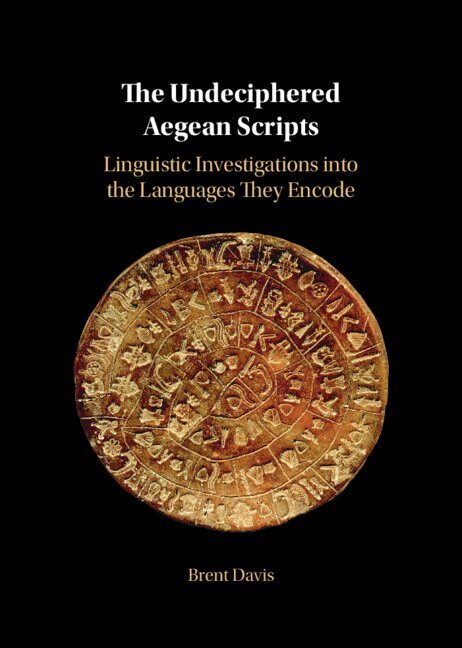
The decipherment of Linear B, an early form of Greek used by the Myceneans, by Michael Ventris and John Chadwick has long been celebrated. But five other scripts from the Bronze-Age Aegean remain undeciphered. In this book, Brent Davis provides a thorough introduction to these scripts and uses statistical techniques drawn from linguistics to provide insights into the languages lying behind them. He deals most extensively with the script of the Minoan civilization on Crete ("Linear A"), whose decipherment remains one of the Holy Grails of archaeology. He discusses linguistic topics in clear language and explains linguistic terms in a comprehensive glossary. The book also includes all data on which the various analyses of the scripts are based. It will therefore be of great interest and use not just to experts in the undeciphered Aegean scripts, but to novices and aficionados of decipherment as well.
Häftad, Engelska, 2022
781 kr
Skickas inom 10-15 vardagar
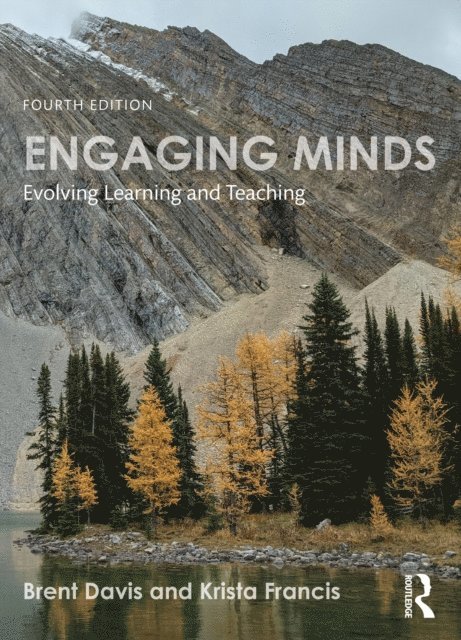
Engaging Minds: Evolving Learning and Teaching explores the diverse beliefs and practices that define the current landscape of formal education. The revised, updated, and expanded fourth edition of this groundbreaking introduction to current interdisciplinary studies of teaching and teacher education is structured around five prominent "frames" of formal education, together offering an overview of the historical and conceptual influences on educational practice: Early Formal Education – likely emerged alongside the creation of origin myths and the invention of symbol-based writing systems, presenting needs for individuals charged with communicating, interpreting, and maintaining such knowledge; Standardized Education – began to unfold in the 1600s, when public education was invented as a response to the cultural convulsions of industrialization, urbanization, and imperialism; Authentic Education – rose to prominence over the last century as researchers began to untangle the complexity of human cognition; Democratic Citizenship Education – fuelled by civil rights movements of the 1960s, with the realization that schools often contribute to (or at least help to perpetuate) inequities and injustices; Systemic Sustainability Education – an emerging trend, as schools and other cultural institutions find themselves out of step with the transition from a mechanization-focused industrialized society to an ecologically-minded and information-based society.These frames serve as the foci of the five chapters of the book, each with three sections that deal, respectively, with history, epistemology, and pedagogy within the frame. Richly illustrated and designed, additional pedagogical features include multiple strategies to highlight and distinguish important vocabulary in the text, as well as suggestions for delving deeper into a given topic. The fourth edition is also complemented by an online resource, learningdiscourses.com, that provides analyses of more than two thousand discourses on learning in education – including summaries and critiques, along with details on their authorship, their imagery, and their associated discourses.
Inbunden, Engelska, 2022
2 077 kr
Skickas inom 10-15 vardagar
Engaging Minds: Evolving Learning and Teaching explores the diverse beliefs and practices that define the current landscape of formal education. The revised, updated, and expanded fourth edition of this groundbreaking introduction to current interdisciplinary studies of teaching and teacher education is structured around five prominent "frames" of formal education, together offering an overview of the historical and conceptual influences on educational practice: Early Formal Education – likely emerged alongside the creation of origin myths and the invention of symbol-based writing systems, presenting needs for individuals charged with communicating, interpreting, and maintaining such knowledge; Standardized Education – began to unfold in the 1600s, when public education was invented as a response to the cultural convulsions of industrialization, urbanization, and imperialism; Authentic Education – rose to prominence over the last century as researchers began to untangle the complexity of human cognition; Democratic Citizenship Education – fuelled by civil rights movements of the 1960s, with the realization that schools often contribute to (or at least help to perpetuate) inequities and injustices; Systemic Sustainability Education – an emerging trend, as schools and other cultural institutions find themselves out of step with the transition from a mechanization-focused industrialized society to an ecologically-minded and information-based society.These frames serve as the foci of the five chapters of the book, each with three sections that deal, respectively, with history, epistemology, and pedagogy within the frame. Richly illustrated and designed, additional pedagogical features include multiple strategies to highlight and distinguish important vocabulary in the text, as well as suggestions for delving deeper into a given topic. The fourth edition is also complemented by an online resource, learningdiscourses.com, that provides analyses of more than two thousand discourses on learning in education – including summaries and critiques, along with details on their authorship, their imagery, and their associated discourses.
Häftad, Engelska, 2024
608 kr
Skickas inom 10-15 vardagar
This updated edition of Inventions of Teaching: A Genealogy presents an examination of the many and varied metaphors of teaching in English. These metaphors serve as sites to excavate conflicting historical, con-ceptual, and philosophical influences that have contributed to modern teaching practices.Though the Eurocentric perspectives of the first edition remain a focus, they are placed in a broader context that acknowledges their, as the authors coin it, ‘WEIRDness’ (i.e., western, educated, industrialized, rich, democratic nature). In this revised and expanded edition, these perspectives are accompanied by multiple case studies of non-Western and Indigenous educational traditions. Chapter discussions are organized as a genealogy around key conceptual bifurcations in thought rather than case-by-case analysis or a chronology. This structure allows the authors to examine the origins of distinctions that are often taken for granted, such as cognitivism vs. behaviorism, or constructivism vs. positivism. The genealogy develops around breaks in opinion that gave or are giving rise to diverse interpretations of knowledge, learning, and teaching--highlighting historical moments in which vibrant new figurative understandings of teaching emerged. A new chapter has been added, addressing the habits of interpretation needed to render the ‘WEIRD’ world sensible; alongside a much elaborated closing discussion, intended to bring WEIRD inventions of teaching into sharper relief by contrasting them with non-WEIRD cultures and some of their approaches to teaching.Inventions of Teaching: A Genealogy is an informative text for senior undergraduate and graduate courses in curriculum studies and foundations of teaching, It is also relevant for students, faculty, and researchers across the field of education who want to explore the consequences of diversities of opinion, belief, and practice concerning teaching and closely related topics of learning, knowing and formal education.
Inbunden, Engelska, 2024
2 077 kr
Skickas inom 10-15 vardagar
This updated edition of Inventions of Teaching: A Genealogy presents an examination of the many and varied metaphors of teaching in English. These metaphors serve as sites to excavate conflicting historical, con-ceptual, and philosophical influences that have contributed to modern teaching practices.Though the Eurocentric perspectives of the first edition remain a focus, they are placed in a broader context that acknowledges their, as the authors coin it, ‘WEIRDness’ (i.e., western, educated, industrialized, rich, democratic nature). In this revised and expanded edition, these perspectives are accompanied by multiple case studies of non-Western and Indigenous educational traditions. Chapter discussions are organized as a genealogy around key conceptual bifurcations in thought rather than case-by-case analysis or a chronology. This structure allows the authors to examine the origins of distinctions that are often taken for granted, such as cognitivism vs. behaviorism, or constructivism vs. positivism. The genealogy develops around breaks in opinion that gave or are giving rise to diverse interpretations of knowledge, learning, and teaching--highlighting historical moments in which vibrant new figurative understandings of teaching emerged. A new chapter has been added, addressing the habits of interpretation needed to render the ‘WEIRD’ world sensible; alongside a much elaborated closing discussion, intended to bring WEIRD inventions of teaching into sharper relief by contrasting them with non-WEIRD cultures and some of their approaches to teaching.Inventions of Teaching: A Genealogy is an informative text for senior undergraduate and graduate courses in curriculum studies and foundations of teaching, It is also relevant for students, faculty, and researchers across the field of education who want to explore the consequences of diversities of opinion, belief, and practice concerning teaching and closely related topics of learning, knowing and formal education.
Inbunden, Engelska, 2015
2 144 kr
Skickas inom 10-15 vardagar
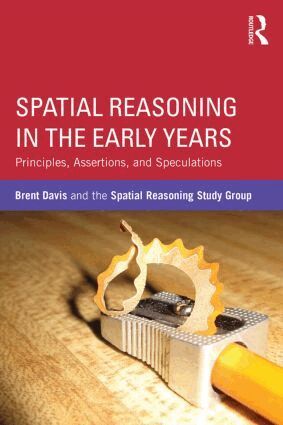
Over the past several years, "spatial reasoning" has gained renewed prominence among mathematics educators, as spatial skills are proving to be not just essential to mathematical understanding but also strong predictors of future success beyond the classroom in fields such as science, technology, and engineering. By exploring both primary and emergent dimensions, Spatial Reasoning in the Early Years helps define the concept of spatial reasoning and provides compelling evidence of the need for a clear focus within early education specifically. The authors review the research, look across current theories, and investigate implications for contemporary school mathematics pedagogy as they identify areas of inquiry necessary to bring a stronger spatial reasoning emphasis into the classroom. The book contains many classroom- or workshop-based vignettes, highlighting the complexity of spatial reasoning in educational practice, providing an in-depth analysis of spatial reasoning as it applies to classroom practice, and offering new ways of framing lessons to help young students hone their spatial reasoning abilities. The book concludes with a forward-looking agenda that contributes to developing a greater understanding of the role spatial reasoning plays in educational contexts and beyond. Supported by plentiful visual representations, Spatial Reasoning in the Early Years skillfully integrates the conceptual and the concrete, making this text a dynamic and accessible resource.
Häftad, Engelska, 2015
648 kr
Skickas inom 10-15 vardagar
Over the past several years, "spatial reasoning" has gained renewed prominence among mathematics educators, as spatial skills are proving to be not just essential to mathematical understanding but also strong predictors of future success beyond the classroom in fields such as science, technology, and engineering. By exploring both primary and emergent dimensions, Spatial Reasoning in the Early Years helps define the concept of spatial reasoning and provides compelling evidence of the need for a clear focus within early education specifically. The authors review the research, look across current theories, and investigate implications for contemporary school mathematics pedagogy as they identify areas of inquiry necessary to bring a stronger spatial reasoning emphasis into the classroom. The book contains many classroom- or workshop-based vignettes, highlighting the complexity of spatial reasoning in educational practice, providing an in-depth analysis of spatial reasoning as it applies to classroom practice, and offering new ways of framing lessons to help young students hone their spatial reasoning abilities. The book concludes with a forward-looking agenda that contributes to developing a greater understanding of the role spatial reasoning plays in educational contexts and beyond. Supported by plentiful visual representations, Spatial Reasoning in the Early Years skillfully integrates the conceptual and the concrete, making this text a dynamic and accessible resource.
Inbunden, Engelska, 2015
2 478 kr
Skickas inom 10-15 vardagar
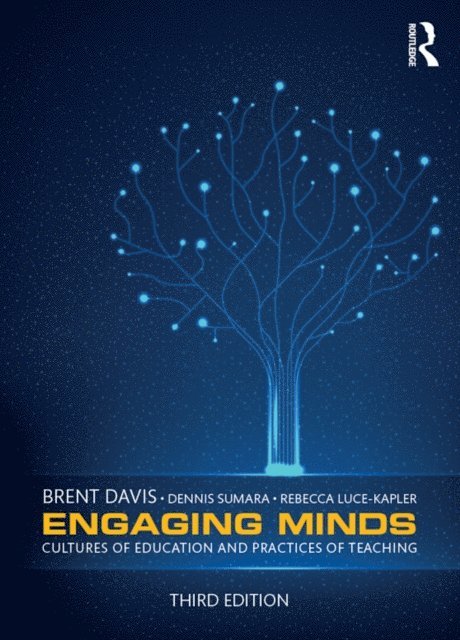
Engaging Minds: Cultures of Education and Practices of Teaching explores the diverse beliefs and practices that define the current landscape of formal education. The 3rd edition of this introduction to interdisciplinary studies of teaching and learning to teach is restructured around four prominent historical moments in formal education: Standardized Education, Authentic Education, Democratic Citizenship Education, Systemic Sustainability Education. These moments serve as the foci of the four sections of the book, each with three chapters dealing respectively with history, epistemology, and pedagogy within the moment. This structure makes it possible to read the book in two ways – either "horizontally" through the four in-depth treatments of the moments or "vertically" through coherent threads of history, epistemology, and pedagogy. Pedagogical features include suggestions for delving deeper to get at subtleties that can’t be simply stated or appreciated through reading alone, several strategies to highlight and distinguish important vocabulary in the text, and more than 150 key theorists and researchers included among the search terms and in the Influences section rather than a formal reference list.
Häftad, Engelska, 2015
995 kr
Skickas inom 10-15 vardagar
Engaging Minds: Cultures of Education and Practices of Teaching explores the diverse beliefs and practices that define the current landscape of formal education. The 3rd edition of this introduction to interdisciplinary studies of teaching and learning to teach is restructured around four prominent historical moments in formal education: Standardized Education, Authentic Education, Democratic Citizenship Education, Systemic Sustainability Education. These moments serve as the foci of the four sections of the book, each with three chapters dealing respectively with history, epistemology, and pedagogy within the moment. This structure makes it possible to read the book in two ways – either "horizontally" through the four in-depth treatments of the moments or "vertically" through coherent threads of history, epistemology, and pedagogy. Pedagogical features include suggestions for delving deeper to get at subtleties that can’t be simply stated or appreciated through reading alone, several strategies to highlight and distinguish important vocabulary in the text, and more than 150 key theorists and researchers included among the search terms and in the Influences section rather than a formal reference list.
Inbunden, Engelska, 2004
994 kr
Tillfälligt slut
Häftad, Engelska, 2004
391 kr
Tillfälligt slut
Inbunden, Engelska, 2007
391 kr
Tillfälligt slut
Häftad, Engelska, 2004
208 kr
Tillfälligt slut
Here is a herbal reference guide for holistic health care professionals and informed consumers alike. It is designed to enable on-the-spot choices of herbs which are likely to facilitate healing based on individual characteristics or 'keynotes.' Written by an ethnobotanist and clinical practitioner of herbalism it was born out of an appreciation for the work of naturally oriented physicians of the 19th and 20th centuries - as well as the distilled practical wisdom of grandmothers woman elders and North and South American shamans. Most importantly it represents the author's own 'peak' experiences during travels taken expressly for the purpose of studying and harvesting herbs in their native habitats.