Brett A. Friedman – författare
Visar alla böcker från författaren Brett A. Friedman. Handla med fri frakt och snabb leverans.
5 produkter
5 produkter
Häftad, Engelska, 2024
239 kr
Skickas inom 5-8 vardagar
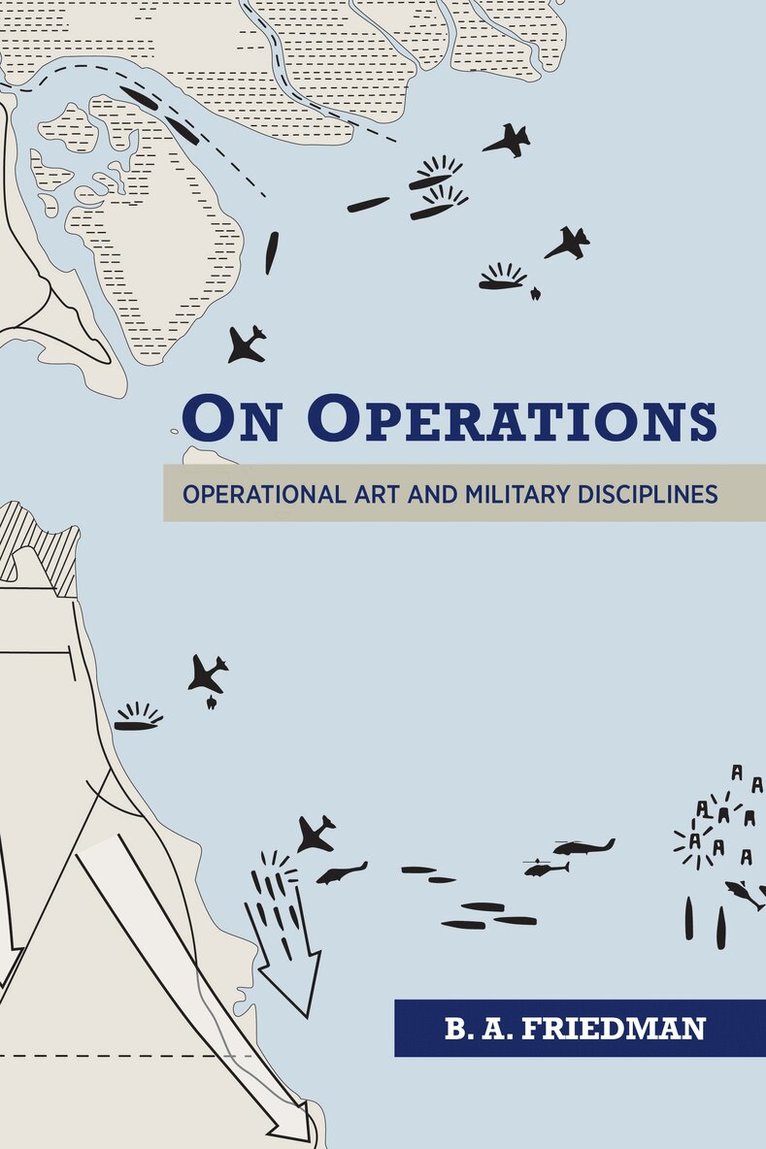
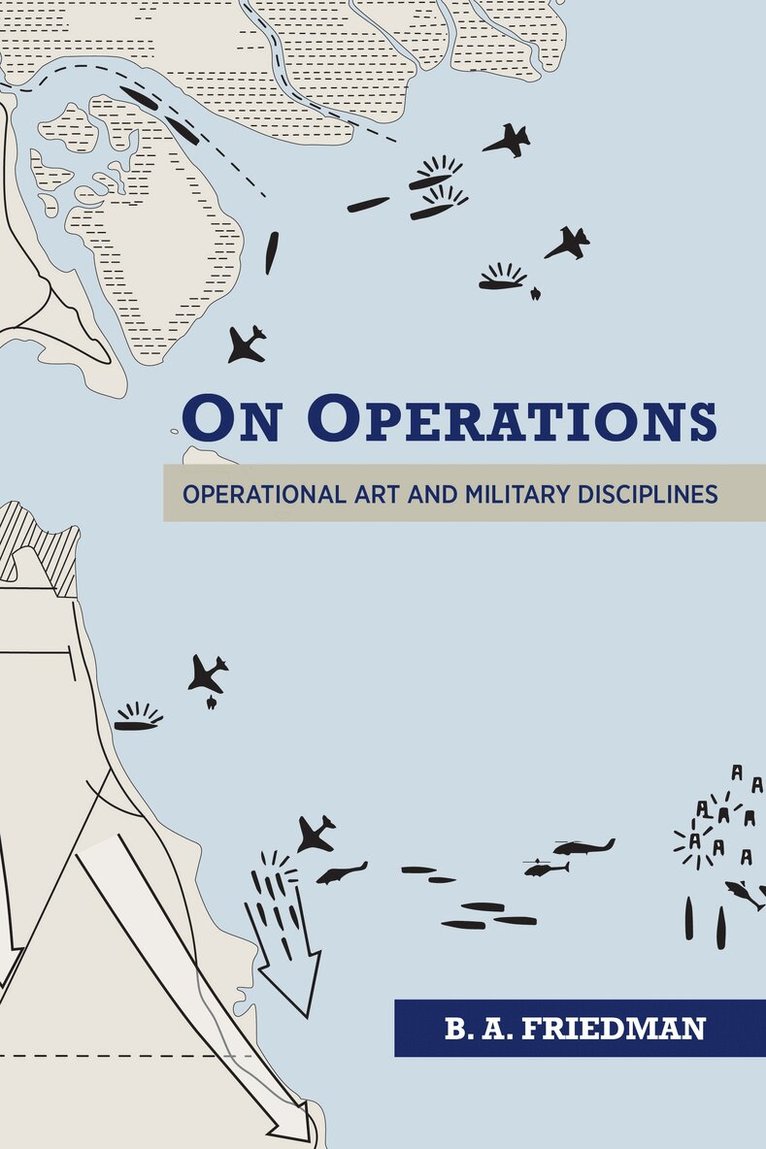
On Operations: Operational Art and Military Disciplines traces the history of the development of military staffs and ideas on the operational level of war and operational art from the Napoleonic Wars to today, viewing them through the lens of Prussia/Germany, the Soviet Union, and the United States. B. A. Friedman concludes that the operational level of war should be rejected as fundamentally flawed, but that operational art is an accurate description of the activities of the military staff, an organization developed to provide the brainpower necessary to manage the complexity of modern military operations. Rather than simply serve as an intercession between levels, the military staff exists as an enabler and supporting organization to tacticians and strategists alike.On Operations examines the organization of military staffs, which has changed little since Napoleon's time. Historical examinations of the functions staffs provided to commanders, and the disciplines of the staff officers themselves, leads to conclusions about how best to organize staffs in the future. Friedman demonstrates these ideas through case studies of historical campaigns based on the military discipline system developed.
Häftad, Engelska, 2020
251 kr
Skickas inom 5-8 vardagar
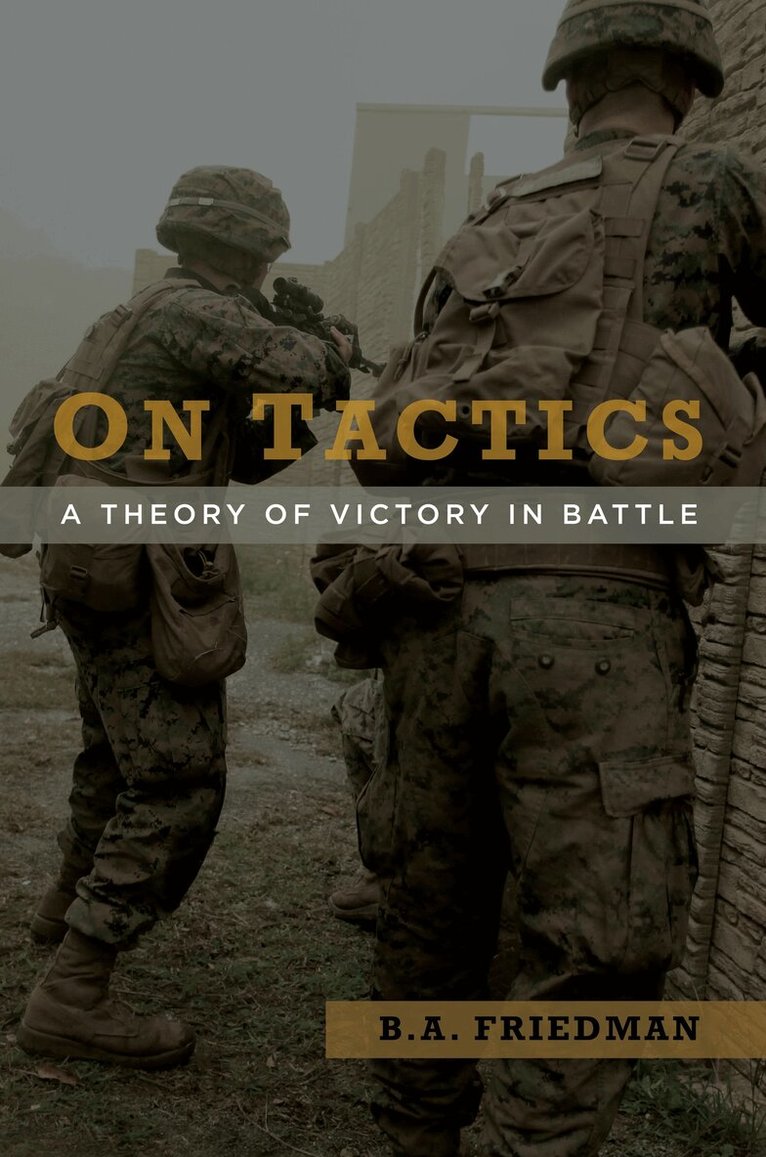
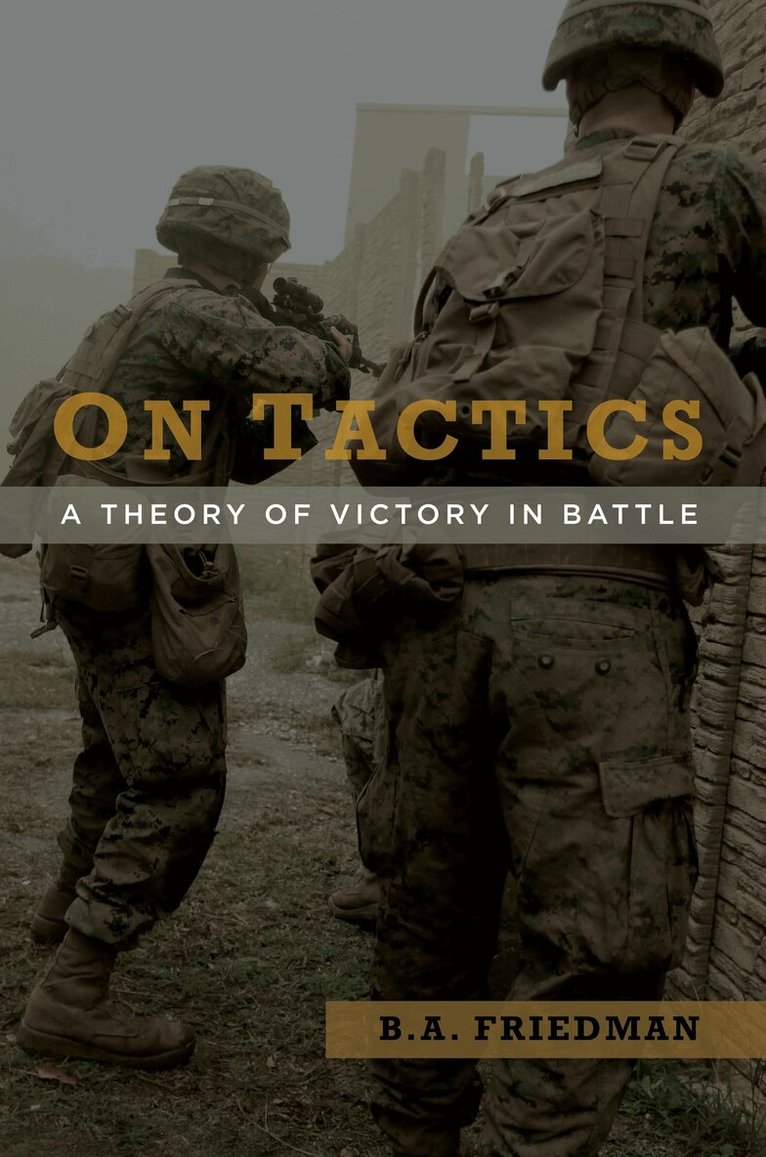
Originally setting out to write the very book that he would have wanted to own as a young infantryman, the author penned On Tactics as a remedy for navigating the chaotic and inchoate realm of tactical theory. Challenging centuries-old conventional wisdom regarding the principles of war, tactics, and the roles of strategy, doctrine, experiential learning, and military history, Friedman's work offers a striking synthesis of thinking on tactics as well as strategy.
Häftad, Engelska, 2015
239 kr
Skickas inom 5-8 vardagar
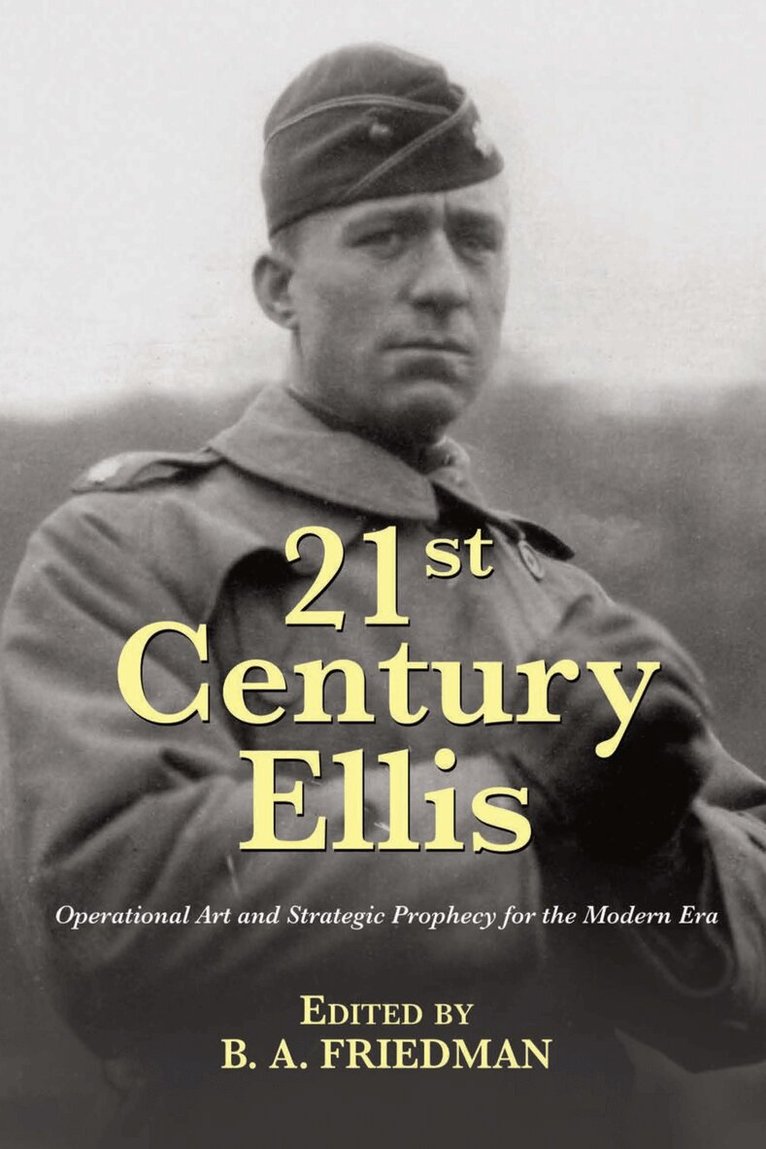
For years, the Marine Corps has touted the prescience of Lieutenant Colonel “Pete” Ellis, USMC, who predicted in 1921 that the United States would fight Japan and how the Pacific Theater would be won. Now, for the first time, those predictions and other works by the “amphibious prophet” are available in print.Included is two works by Ellis on naval and amphibious operations, including Advanced Base Operations in Micronesia, the study of tactics and operations in the Pacific Ocean that the United States Navy and Marine Corps would use to win the war against Imperial Japan. Ellis describes the form and functions of a modern Marine Corps designed to win its Nation’s battles. Ellis’ ideas about how the Marine Corps should fight are still in use throughout the world today.Ellis’ ideas on amphibious operations are well known, but his ideas on counterinsurgency and conventional war have been overshadowed and forgotten. Ellis wrote two articles based on his warfighting experiences in the Philippines and as part of the American Expeditionary Force in Europe during World War I. These articles, last published in the early 1920’s, are both republished in this book and show Ellis as a prescient thinker who was ahead of his time. Ellis identifies concepts that the US military struggles with even today, and that other thinkers would not identify for decades after Ellis’ death.Also included are six essays by the editor, introducing the ideas of Pete Ellis and putting them in a modern context. As the United States turns its focus to the Pacific, Ellis’ ideas can inform policymakers on the dynamics of strategy and warfare in the vast reaches of the Pacific Ocean. Edited by Captain B. A. Friedman, USMC, 21st Century Ellis reveals the strategic insights of Pete Ellis for then and now.
Inbunden, Engelska, 2021
333 kr
Skickas inom 5-8 vardagar
On Operations: Operational Art and Military Disciplines traces the history of the development of military staffs and ideas on the operational level of war and operational art from the Napoleonic Wars to today, viewing them through the lens of Prussia/Germany, the Soviet Union, and the United States. B. A. Friedman concludes that the operational level of war should be rejected as fundamentally flawed, but that operational art is an accurate description of the activities of the military staff, an organization developed to provide the brainpower necessary to manage the complexity of modern military operations. Rather than simply serve as an intercession between levels, the military staff exists as an enabler and supporting organization to tacticians and strategists alike. On Operations examines the organization of military staffs, which has changed little since Napoleon's time. Historical examinations of the functions staffs provided to commanders, and the disciplines of the staff officers themselves, leads to conclusions about how best to organize staffs in the future. Friedman demonstrates these ideas through case studies of historical campaigns based on the military discipline system developed.
Inbunden, Engelska, 2017
288 kr
Tillfälligt slut
On Tactics is intended to be the remedy to the chaotic and thus far unformed realm of tactical theory and to answer questions like the one above. Part One of the book will establish a tactical system meant to replace the Principles of War checklist. First, the contextual role of tactics with regards to strategy and war will be established. This will necessarily lean on major strategic theories in order to illuminate the role of tactics. This section will be formed around the Physical, Mental, and Moral planes of battlefield interaction used by theorists such as J.F.C Fuller and John Boyd. Each plane will then be examined in turn, and many of the classic Principles of War will be discussed along with some new ones. It will present some standard methods that tacticians can use to gain an advantage on the battlefield using historical examples that illustrate each concept. These “tactical tenants” include maneuver, mass, firepower, tempo, surprise, deception, confusion, shock, and the role of the moral aspects of combat. Finally, Part One will circle back around by discussing the role of tactical victory- once achieved- in contributed to a strategy. Part One is short by design. It is intended to be both compelling and easily mastered for junior non-commissioned officers and company grade officers, while still rich enough to be interesting to both specialist and non-specialist academics. It is a book meant not just for bookshelves but also for ruck sacks and cargo pockets.Part Two will build on Part One by exploring concepts with which the tactician must be familiar with such as the culminating point of victory, mission tactics and decentralized command and control, offensive and defensive operations, and the initiative. Part Three will conclude the book examining implications of the presented tactical systems to a variety of other issues in strategic studies.