Brian Daizen Victoria - Böcker
Visar alla böcker från författaren Brian Daizen Victoria. Handla med fri frakt och snabb leverans.
2 produkter
2 produkter
576 kr
Skickas
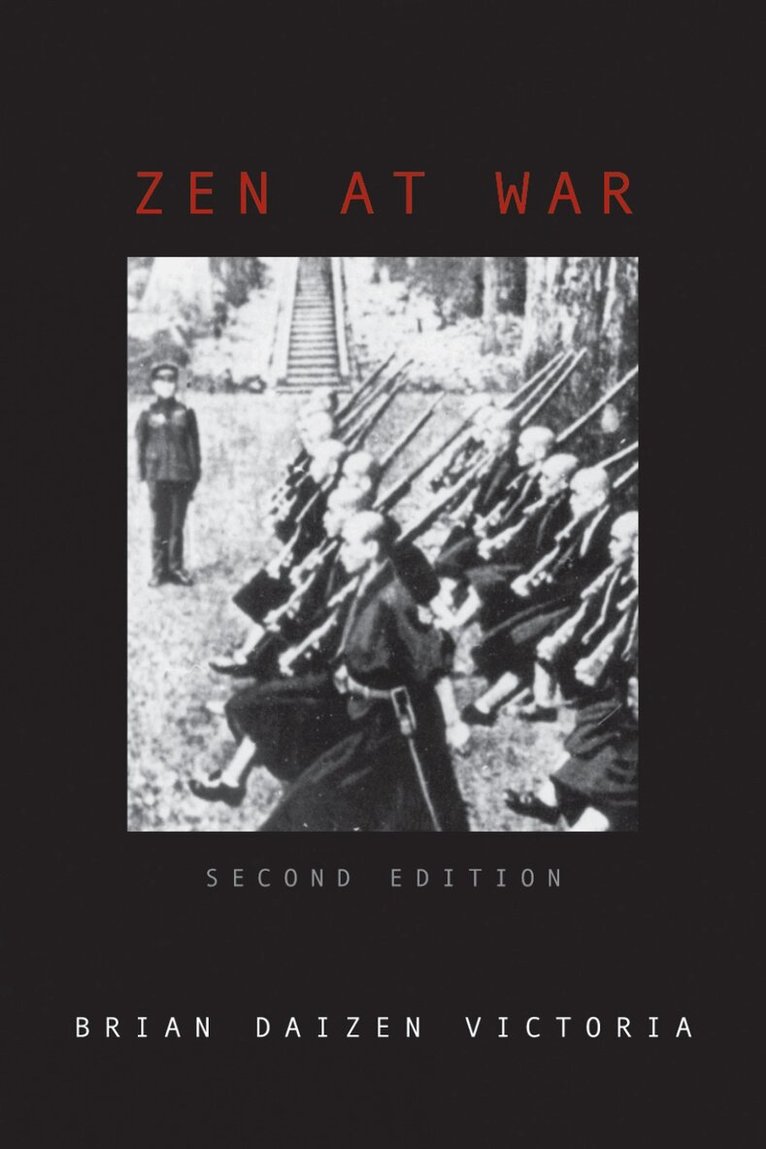
A compelling history of the contradictory, often militaristic, role of Zen Buddhism, this book meticulously documents the close and previously unknown support of a supposedly peaceful religion for Japanese militarism throughout World War II. Drawing on the writings and speeches of leading Zen masters and scholars, Brian Victoria shows that Zen served as a powerful foundation for the fanatical and suicidal spirit displayed by the imperial Japanese military. At the same time, the author recounts the dramatic and tragic stories of the handful of Buddhist organizations and individuals that dared to oppose Japan's march to war. He follows this history up through recent apologies by several Zen sects for their support of the war and the way support for militarism was transformed into 'corporate Zen' in postwar Japan. The second edition includes a substantive new chapter on the roots of Zen militarism and an epilogue that explores the potentially volatile mix of religion and war. With the increasing interest in Buddhism in the West, this book is as timely as it is certain to be controversial.
435 kr
Skickas inom 10-15 vardagar
Written by a Zen priest, this book explodes the myth of Zen Buddhism as a peaceful religion.Can Buddhism, widely regarded as a religion of peace, also contribute to acts of terrorism? Through an insider’s view of right-wing ultranationalism in prewar Japan, this powerful book follows a band of Zen Buddhist–trained adherents who ardently believed so. Brian Victoria, himself a Zen priest, tells the story of a group of terrorists who were responsible for the assassination of three leading political and economic figures in 1932. Victoria provides a detailed introduction to the religious as well as political significance of the group’s terrorist beliefs and acts, focusing especially on the life and times of the band’s leader, Inoue Nissho. A deeply troubled youth, Inoue became a spy in Manchuria for the Japanese Army in 1909, where he encountered Zen for the first time. When he returned to Japan in 1921, he determined to resolve his deep spiritual discontent through meditation practice, which culminated in an enlightenment experience that resolved his long-term doubts.After engaging in “post-enlightenment training” under the guidance of Rinzai Zen master Yamamoto Gempo, Inoue began a program of training the “patriotic youth” who formed the nucleus of his terrorist band. After the assassinations, Inoue and his band were sentenced to life imprisonment, only to be released just a few years later in 1940. Almost unbelievably, Inoue then became the live-in confidant of Prime Minister Konoe Fumimaro, a position he held through the end of WWII. In the postwar era, Inoue reinvented himself again as the founder and head of yet another band of ultranationalists known as the “National Protection Corps.” His eventful life came to an end in 1967.Victoria concludes with an assessment of the profound impact of the assassinations, which culminated in Japan’s transformation into a totalitarian state and set the stage for Pearl Harbor. The author also examines the connection of Buddhism to terrorism more broadly, considering the implications for today’s Islamic-related terrorism.