Brian Eyden - Böcker
Visar alla böcker från författaren Brian Eyden. Handla med fri frakt och snabb leverans.
3 produkter
3 produkter
Diagnostic Electron Microscopy
A Practical Guide to Interpretation and Technique
Inbunden, Engelska, 2012
1 146 kr
Skickas inom 7-10 vardagar
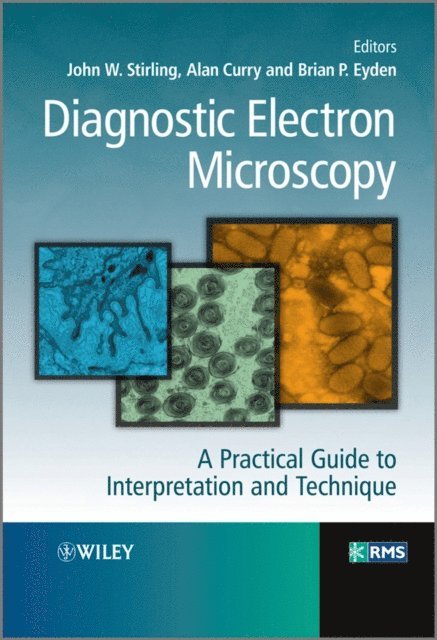
Diagnostic Electron MicroscopyDiagnostic Electron Microscopy: A Practical Guide to Interpretation and Technique summarises the current interpretational applications of TEM in diagnostic pathology. This concise and accessible volume provides a working guide to the main, or most useful, applications of the technique including practical topics of concern to laboratory scientists, brief guides to traditional tissue and microbiological preparation techniques, microwave processing, digital imaging and measurement uncertainty.The text features both a screening and interpretational guide for TEM diagnostic applications and current TEM diagnostic tissue preparation methods pertinent to all clinical electron microscope units worldwide. Containing high-quality representative images, this up-to-date text includes detailed information on the most important diagnostic applications of transmission electron microscopy as well as instructions for specific tissues and current basic preparative techniques.The book is relevant to trainee pathologists and practising pathologists who are expected to understand and evaluate/screen tissues by TEM. In addition, technical and scientific staff involved in tissue preparation and diagnostic tissue evaluation/screening by TEM will find this text useful.
1 637 kr
Skickas inom 10-15 vardagar
The Ultrastructure of Human Tumours: Applications in Diagnosis and Research describes the core features as seen by transmission electron microscopy, defining the different types of cellular differentiation in tumours; this is relevant for tumour nomenclature and diagnosis, which, in turn, are important for tumour pathologists in their collaboration with oncologists for the treatment of cancer patients. The book is divided into 8 chapters. Following an introduction on technique and procedure, there are chapters on epithelial tumours, melanocytic lesions, soft-tissue and related tumours, lymphoma and leukaemia, CNS neoplasms and neuroendocrine and neuronal tumours. Each chapter includes an introductory text that puts the ultrastructural features in the context of classical pathology. The book includes many new findings and interpretations from well-known tumours, as well as ultrastructural information on several newly described tumour entities not dealt with in existing tumour ultrastructure monographs. The book will especially be of value to tumour pathologists who need to solve problem cases with the aid of electron microscopy, but also to cancer research and tissue engineering scientists working to develop anti-cancer and stem-cell-based therapies. However, even those without access to electron microscopy may also benefit from this book, since many of the images provide an ‘explanation’ of the appearances of cells, tissues and tumours familiar to pathologists and scientists from light microscopy. In this respect, it is hoped that this book will stimulate the wider use of electron microscopy in pathology. The book is comprehensively referenced, 680 pages long and lavishly illustrated with 757 figures.Dr. Brian Eyden is Consultant Clinical Scientist and Dr. S. Sankar Banerjee Consultant Histopathologist in the Department of Histopathology, Christie NHS Foundation Trust, Manchester, UK; Dr. Yongxin Ru is Director of theDepartment of Electron Microscopy, Institute of Hematology and Blood Diseases Hospital, Tianjin, China; Paweł Liberski is Professor in the Department of Molecular Pathology and Neuropathology, Medical University Łódź, Poland.
1 637 kr
Skickas inom 10-15 vardagar
The Ultrastructure of Human Tumours: Applications in Diagnosis and Research describes the core features as seen by transmission electron microscopy, defining the different types of cellular differentiation in tumours; this is relevant for tumour nomenclature and diagnosis, which, in turn, are important for tumour pathologists in their collaboration with oncologists for the treatment of cancer patients. The book is divided into 8 chapters. Following an introduction on technique and procedure, there are chapters on epithelial tumours, melanocytic lesions, soft-tissue and related tumours, lymphoma and leukaemia, CNS neoplasms and neuroendocrine and neuronal tumours. Each chapter includes an introductory text that puts the ultrastructural features in the context of classical pathology. The book includes many new findings and interpretations from well-known tumours, as well as ultrastructural information on several newly described tumour entities not dealt with in existing tumour ultrastructure monographs. The book will especially be of value to tumour pathologists who need to solve problem cases with the aid of electron microscopy, but also to cancer research and tissue engineering scientists working to develop anti-cancer and stem-cell-based therapies. However, even those without access to electron microscopy may also benefit from this book, since many of the images provide an ‘explanation’ of the appearances of cells, tissues and tumours familiar to pathologists and scientists from light microscopy. In this respect, it is hoped that this book will stimulate the wider use of electron microscopy in pathology. The book is comprehensively referenced, 680 pages long and lavishly illustrated with 757 figures.Dr. Brian Eyden is Consultant Clinical Scientist and Dr. S. Sankar Banerjee Consultant Histopathologist in the Department of Histopathology, Christie NHS Foundation Trust, Manchester, UK; Dr. Yongxin Ru is Director of theDepartment of Electron Microscopy, Institute of Hematology and Blood Diseases Hospital, Tianjin, China; Paweł Liberski is Professor in the Department of Molecular Pathology and Neuropathology, Medical University Łódź, Poland.