Brian F. Codding – författare
Visar alla böcker från författaren Brian F. Codding. Handla med fri frakt och snabb leverans.
3 produkter
3 produkter
Foragers on America's Western Edge
The Archaeology of California's Pecho Coast
Inbunden, Engelska, 2019
622 kr
Skickas inom 11-20 vardagar
The California coastline has long been of interest to archaeologists. This book directs attention to the largely ignored Pecho Coast, a rugged, isolated 20 km long peninsula between modern-day Morro Bay and Pismo Beach. Archaeological work along this stretch was last synthesized in 1972. Jones and Codding now bring together the extensive contract work and field school studies of the intervening years, shedding new light on the region’s early inhabitants.The first people of the Pecho Coast were part-time residents who exploited shellfish, fish, and marine birds, including the flightless duck, Chendytes lawi, which sustained hunting drove to extinction ca. 2800 cal BP. This marked the only unequivocal case of prehistoric, human-caused extinction in western North America. Cold, productive seas allowed inhabitants to weather droughts of the Medieval Climatic Anomaly (950–600 cal BP), after which shell beads became increasingly abundant, representing either the initial appearance of Chumash-speaking peoples or attempts by Chumash leaders to consolidate power through gifting, reciprocal exchange, or forced conquest. During the mission era, fishing sustained the Native community as, for the first time, individuals became fully sedentary, foraging within a limited radius to avoid contact with the Spanish.This record reveals a unique story of local adaptation, anthropogenic habitat change, social differentiation and, ultimately, resistance to colonial invasion.
1 413 kr
Skickas inom 7-10 vardagar
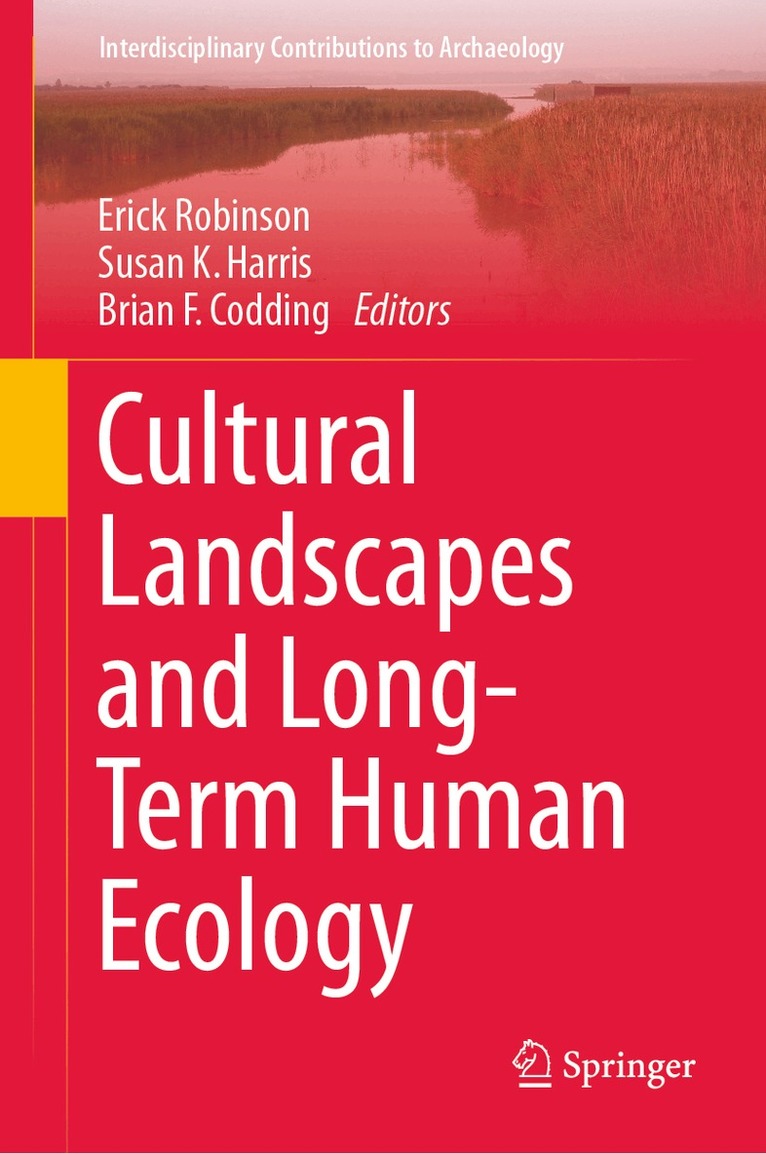
Bringing together an international set of scholars, this volume presents integrative theoretical and methodological perspectives linking two complementary approaches in anthropological archaeology: cultural landscapes and human ecology. Authors grapple with issues ranging from the hunter-gatherer populations of North America and the emergence of the Neolithic in Europe to contemporary hunter-gatherer societies, using approaches from ethnoarchaeology to geomorphology, and methodological specialties from stable isotopes to social networks, in order to shed light on prehistoric human adaptations and how they produce cultural variation on a landscape scale. Together, contributions to this volume illustrate how interdisciplinary and integrative perspectives can aid archaeology by providing the means necessary to interpret and explain long-term records of human activity.This book capitalizes on the unique position of archaeology, and the long-term records of human ecology and cultural resilience the discipline develops, to make significant contributions to contemporary discussions of long-term climate human-environment interactions throughout the Holocene. The book is therefore produced during a perfect time in which other disciplines are focusing on the unique contribution that can be made by archaeology.
1 419 kr
Skickas inom 10-15 vardagar
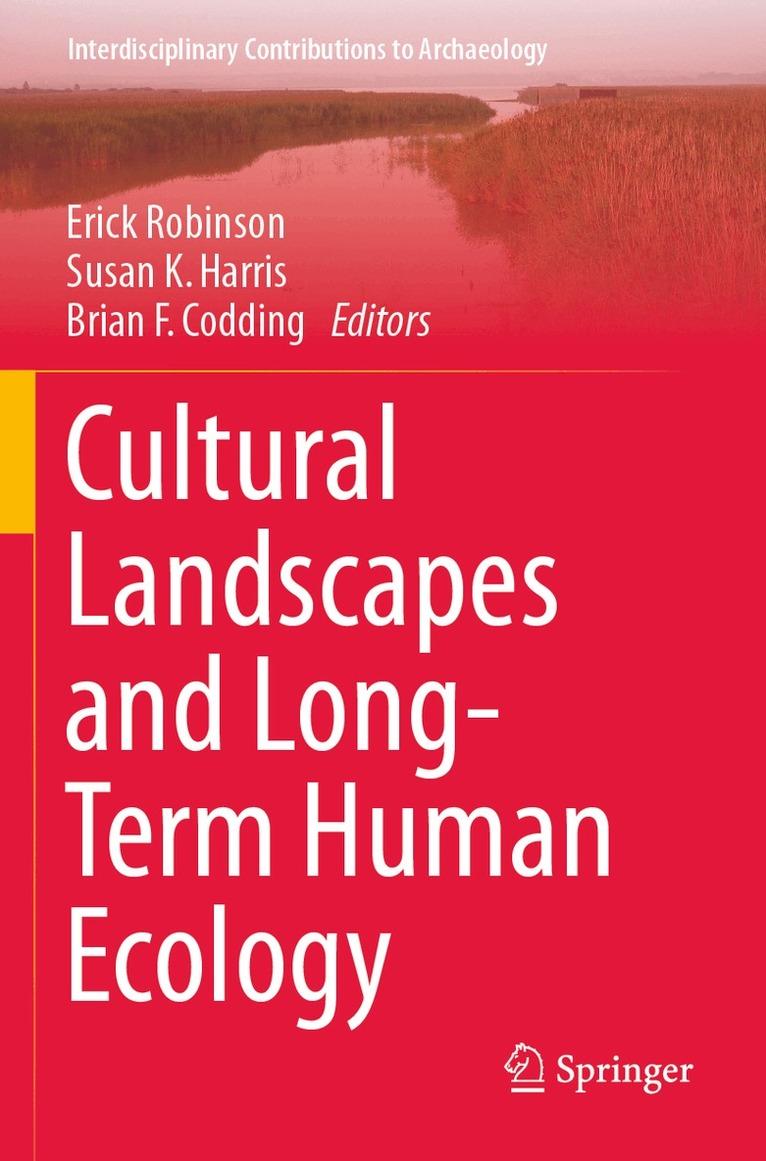
Bringing together an international set of scholars, this volume presents integrative theoretical and methodological perspectives linking two complementary approaches in anthropological archaeology: cultural landscapes and human ecology. Authors grapple with issues ranging from the hunter-gatherer populations of North America and the emergence of the Neolithic in Europe to contemporary hunter-gatherer societies, using approaches from ethnoarchaeology to geomorphology, and methodological specialties from stable isotopes to social networks, in order to shed light on prehistoric human adaptations and how they produce cultural variation on a landscape scale. Together, contributions to this volume illustrate how interdisciplinary and integrative perspectives can aid archaeology by providing the means necessary to interpret and explain long-term records of human activity.This book capitalizes on the unique position of archaeology, and the long-term records of human ecology and cultural resilience the discipline develops, to make significant contributions to contemporary discussions of long-term climate human-environment interactions throughout the Holocene. The book is therefore produced during a perfect time in which other disciplines are focusing on the unique contribution that can be made by archaeology.