Brian Hatfield – författare
Visar alla böcker från författaren Brian Hatfield. Handla med fri frakt och snabb leverans.
6 produkter
6 produkter
Häftad, Engelska, 1992
1 114 kr
Skickas inom 10-15 vardagar
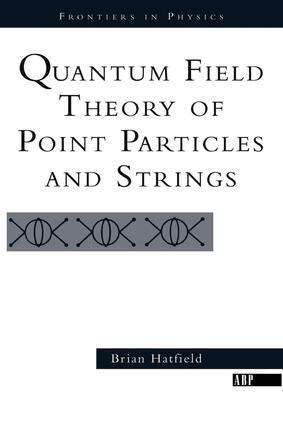
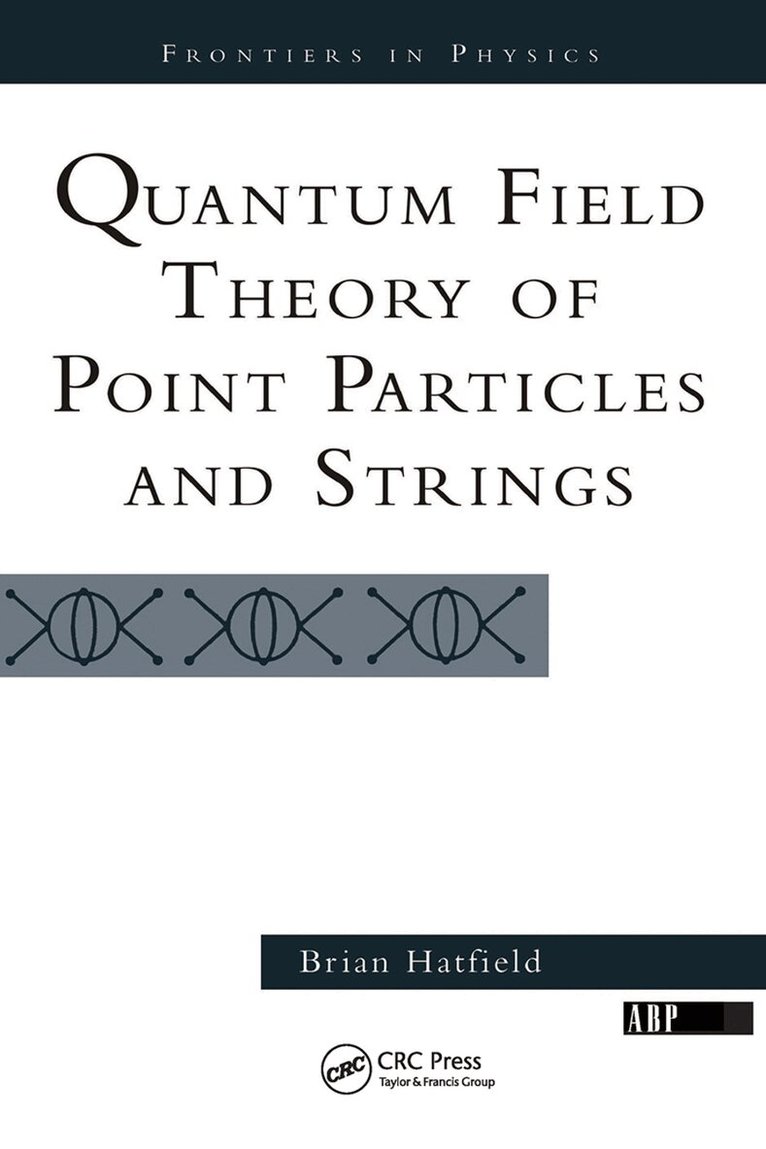
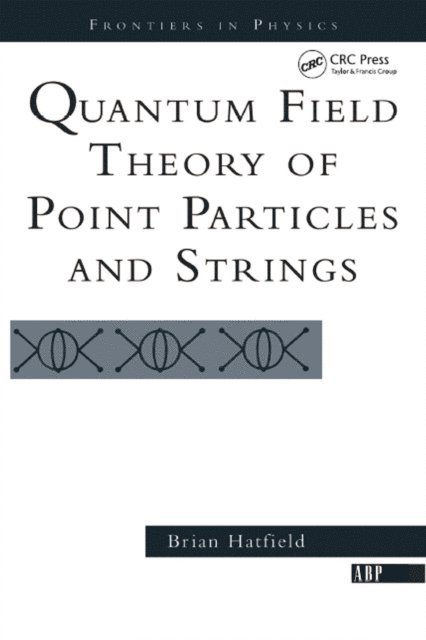
The purpose of this book is to introduce string theory without assuming any background in quantum field theory. Part I of this book follows the development of quantum field theory for point particles, while Part II introduces strings. All of the tools and concepts that are needed to quantize strings are developed first for point particles. Thus, Part I presents the main framework of quantum field theory and provides for a coherent development of the generalization and application of quantum field theory for point particles to strings.Part II emphasizes the quantization of the bosonic string. The treatment is most detailed in the path integral representation where the object of interest, the partition function, is a sum over random surfaces. The relevant mathematics of Riemann surfaces is covered. Superstrings are briefly introduced, and the sum over genus 0 supersurfaces is computed.The emphasis of the book is calculational, and most computations are presented in step-by-step detail. The book is unique in that it develops all three representations of quantum field theory (operator, functional Schr dinger, and path integral) for point particles and strings. In many cases, identical results are worked out in each representation to emphasize the representation-independent structures of quantum field theory.
Inbunden, Engelska, 2019
2 179 kr
Skickas inom 10-15 vardagar
The purpose of this book is to introduce string theory without assuming any background in quantum field theory. Part I of this book follows the development of quantum field theory for point particles, while Part II introduces strings. All of the tools and concepts that are needed to quantize strings are developed first for point particles. Thus, Part I presents the main framework of quantum field theory and provides for a coherent development of the generalization and application of quantum field theory for point particles to strings.Part II emphasizes the quantization of the bosonic string. The treatment is most detailed in the path integral representation where the object of interest, the partition function, is a sum over random surfaces. The relevant mathematics of Riemann surfaces is covered. Superstrings are briefly introduced, and the sum over genus 0 supersurfaces is computed.The emphasis of the book is calculational, and most computations are presented in step-by-step detail. The book is unique in that it develops all three representations of quantum field theory (operator, functional Schr�dinger, and path integral) for point particles and strings. In many cases, identical results are worked out in each representation to emphasize the representation-independent structures of quantum field theory.
E-bok
PDF, Engelska, 20181 282 kr
Läs direkt efter köp
First Published in 2018. The emphasis of the book is calculational, and most computations are presented in step-by-step detail. The book is unique in that it develops all three representations of quantum field theory (operator, functional Schr dinger, and path integral) for point particles and strings. In many cases, identical results are worked out in each representation to emphasize the representation-independent structures of quantum field theory
E-bok
PDF, Engelska, 2018974 kr
Läs direkt efter köp
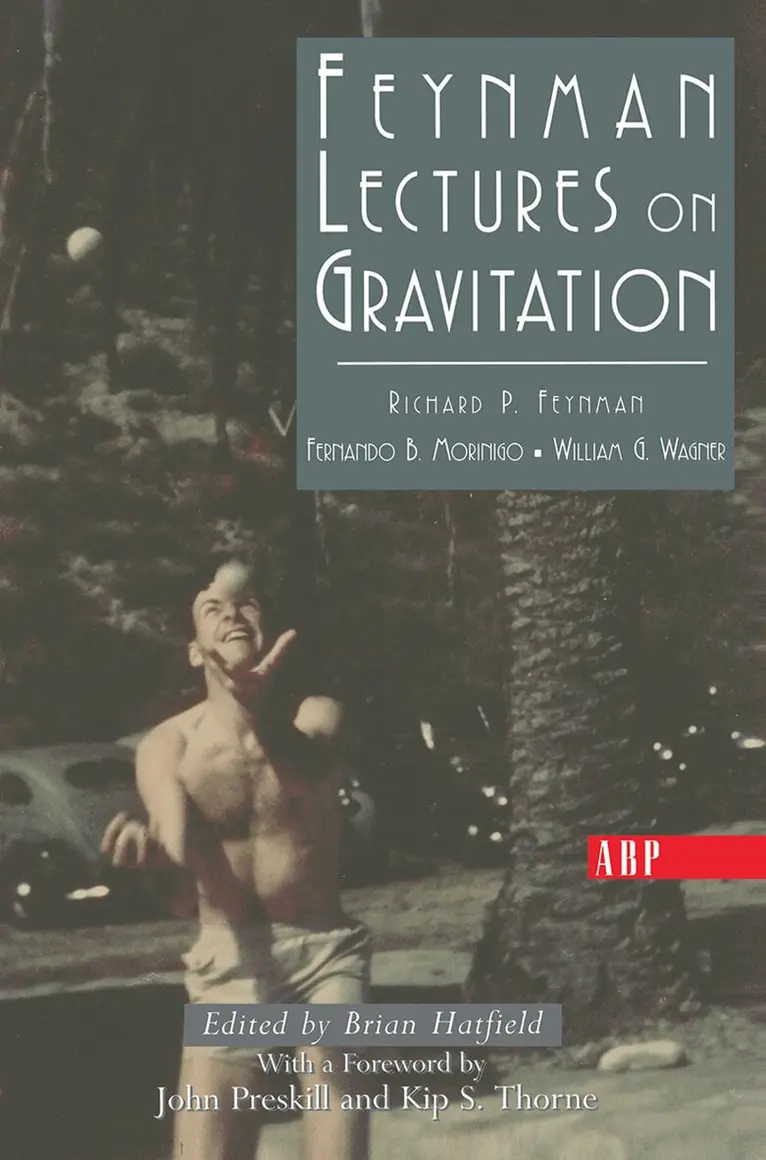
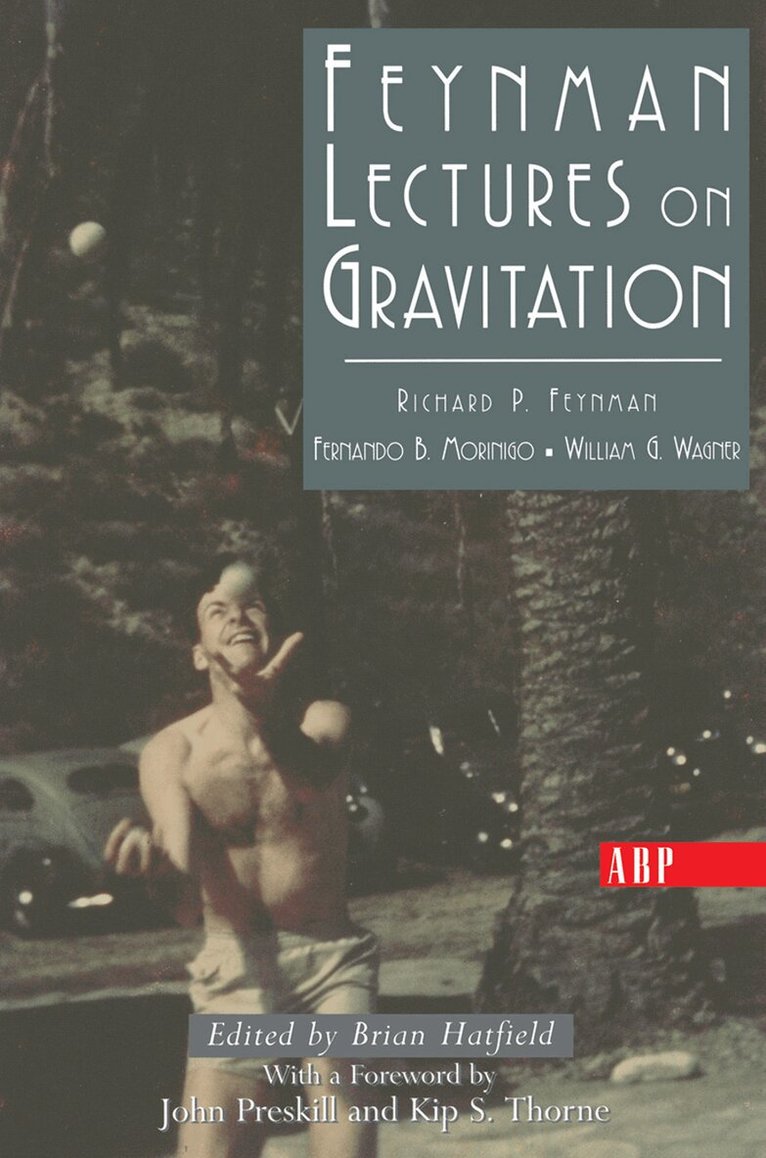
The Feynman Lectures on Gravitation are based on notes prepared during a course on gravitational physics that Richard Feynman taught at Caltech during the 1962-63 academic year. For several years prior to these lectures, Feynman thought long and hard about the fundamental problems in gravitational physics, yet he published very little. These lectures represent a useful record of his viewpoints and some of his insights into gravity and its application to cosmology, superstars, wormholes, and gravitational waves at that particular time. The lectures also contain a number of fascinating digressions and asides on the foundations of physics and other issues.Characteristically, Feynman took an untraditional non-geometric approach to gravitation and general relativity based on the underlying quantum aspects of gravity. Hence, these lectures contain a unique pedagogical account of the development of Einstein''s general theory of relativity as the inevitable result of the demand for a self-consistent theory of a massless spin-2 field (the graviton) coupled to the energy-momentum tensor of matter. This approach also demonstrates the intimate and fundamental connection between gauge invariance and the principle of equivalence.
E-bok
Engelska, 20181 282 kr
Läs direkt efter köp
First Published in 2018. The emphasis of the book is calculational, and most computations are presented in step-by-step detail. The book is unique in that it develops all three representations of quantum field theory (operator, functional Schr dinger, and path integral) for point particles and strings. In many cases, identical results are worked out in each representation to emphasize the representation-independent structures of quantum field theory
E-bok
Engelska, 2018974 kr
Läs direkt efter köp
The Feynman Lectures on Gravitation are based on notes prepared during a course on gravitational physics that Richard Feynman taught at Caltech during the 1962-63 academic year. For several years prior to these lectures, Feynman thought long and hard about the fundamental problems in gravitational physics, yet he published very little. These lectures represent a useful record of his viewpoints and some of his insights into gravity and its application to cosmology, superstars, wormholes, and gravitational waves at that particular time. The lectures also contain a number of fascinating digressions and asides on the foundations of physics and other issues.Characteristically, Feynman took an untraditional non-geometric approach to gravitation and general relativity based on the underlying quantum aspects of gravity. Hence, these lectures contain a unique pedagogical account of the development of Einstein''s general theory of relativity as the inevitable result of the demand for a self-consistent theory of a massless spin-2 field (the graviton) coupled to the energy-momentum tensor of matter. This approach also demonstrates the intimate and fundamental connection between gauge invariance and the principle of equivalence.