Brian J. Alloway - Böcker
Visar alla böcker från författaren Brian J. Alloway. Handla med fri frakt och snabb leverans.
6 produkter
6 produkter
2 433 kr
Skickas inom 10-15 vardagar
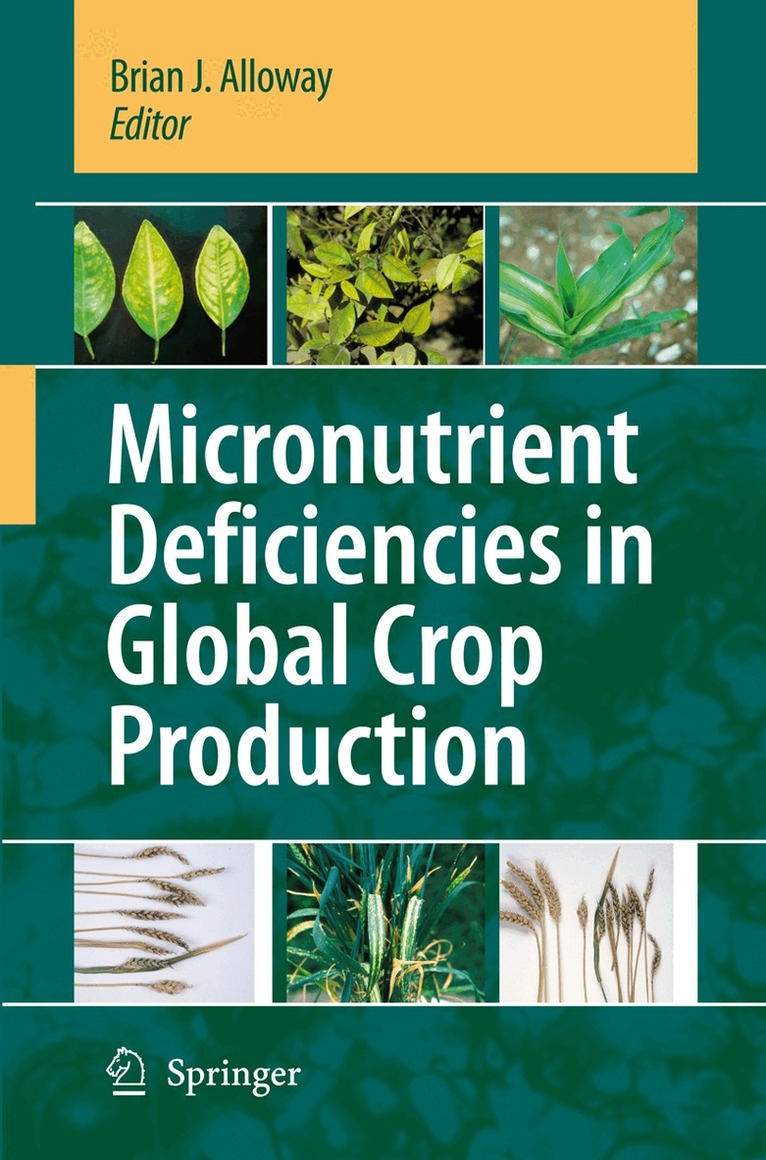
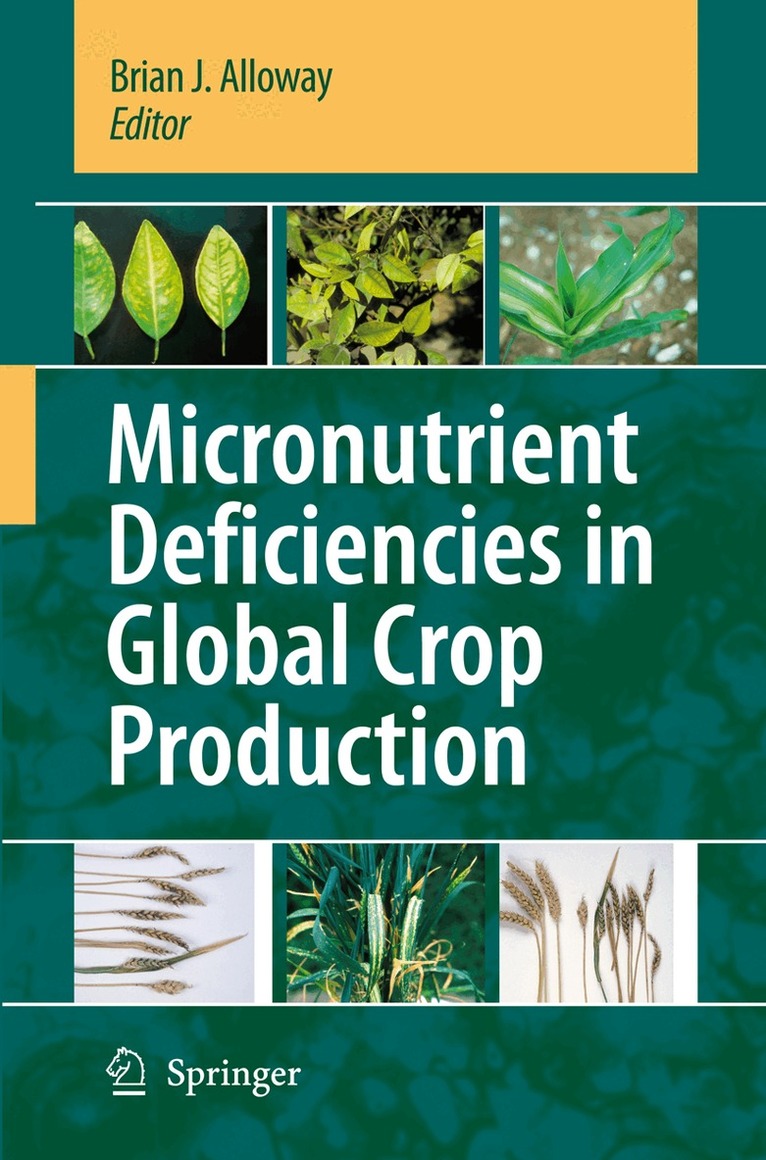
A deficiency of one or more of the eight plant micronutrients (boron, chlorine, copper, iron, manganese, molybdenum, nickel and zinc) will adversely affect both the yield and quality of crops. Micronutrient deficiencies in crops occur in many parts of the world, at various scales (from one to millions of hectares), but differences in soil conditions, climate, crop genotypes and management, result in marked variations in their occurrence. The causes, effects and alleviation of micronutrient deficiencies in crops in: Australia, India, China, Turkey, the Near East, Africa, Europe, South America and the United States of America, are covered, and these are representative of most of the different conditions under which crops are grown anywhere in the world.Links between low contents of iodine, iron and zinc (human micronutrients) in staple grains and the incidence of human health problems are discussed, together with the ways in which the micronutrient content of food crops can beincreased and their bioavailability to humans improved. Detailed treatment of topics, such as: soil types associated with deficiencies, soil testing and plant analysis, field experiments, innovative treatments, micronutrients in the subsoil, nutrient interactions, effects of changing cropping systems, micronutrient budgets and hidden deficiencies in various chapters provides depth to the broad coverage of the book.This book provides a valuable guide to the requirements of crops for plant micronutrients and the causes, occurrence and treatment of deficiencies. It is essential reading for many agronomy, plant nutrition and agricultural extension professionals.
1 979 kr
Skickas inom 10-15 vardagar
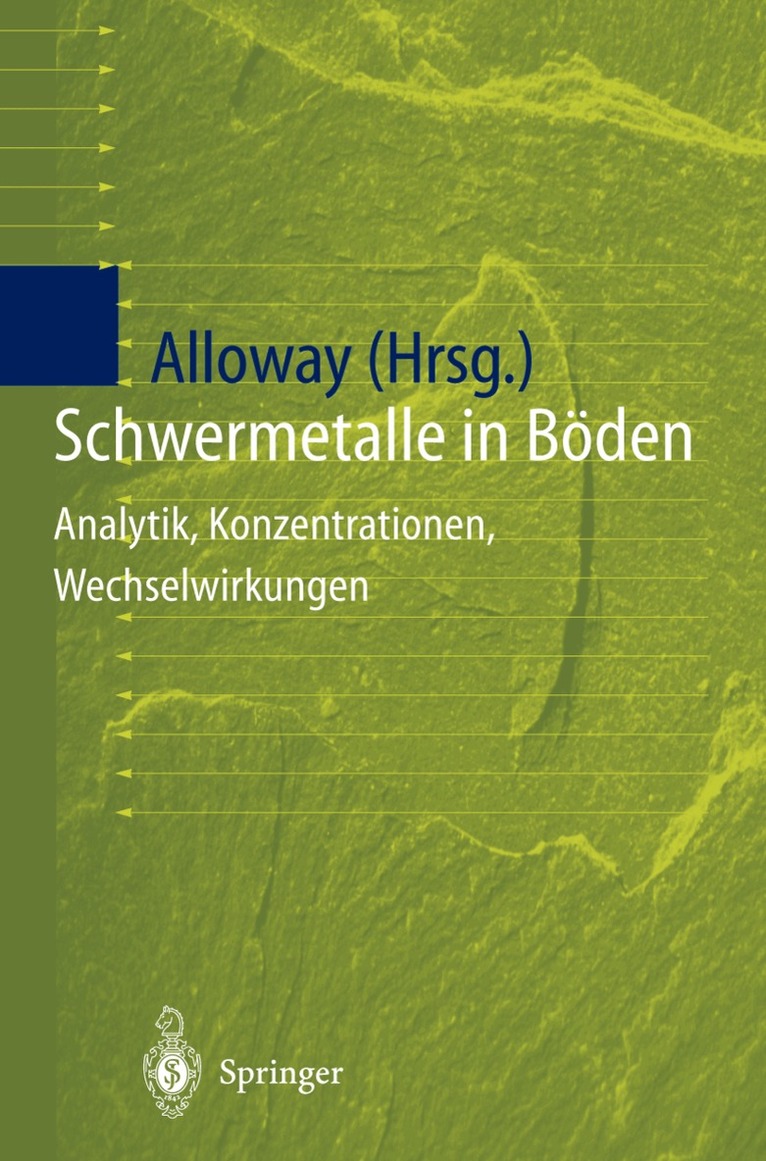
Schwermetalle sind von Natur aus in allen Böden vorhanden. Die jeweiligen Gehalte sind dabei abhängig von den in den bodenbildenden Ausgangsgesteinen vorhandenen Konzentrationen, von den chemischen Eigenschaften der einzelnen Schwermetalle und von der Entwicklungsgeschichte der Böden. Von einer wirklichen Belastung für den Boden kann daher nur bei zusätzlich anthropogen verursachtem Schwermetalleintrag gesprochen werden. Der erste Teil des Buches führt in die natürlichen Bodenprozesse sowie in die Chemie der Metalle und deren Analytik ein. Der Hauptteil beinhaltet detaillierte Informationen zu den einzelnen Schwermetallen, deren spezifischen Wechselwirkungen mit Böden und Pflanzen und zeigt Möglichkeiten der Melioration bzw. Sanierung auf.
1 584 kr
Skickas inom 10-15 vardagar
Schwermetalle sind von Natur aus in allen Böden vorhanden. Die jeweiligen Gehalte sind dabei abhängig von den in den bodenbildenden Ausgangsgesteinen vorhandenen Konzentrationen, von den chemischen Eigenschaften der einzelnen Schwermetalle und von der Entwicklungsgeschichte der Böden. Von einer wirklichen Belastung für den Boden kann daher nur bei zusätzlich anthropogen verursachtem Schwermetalleintrag gesprochen werden. Der erste Teil des Buches führt in die natürlichen Bodenprozesse sowie in die Chemie der Metalle und deren Analytik ein. Der Hauptteil beinhaltet detaillierte Informationen zu den einzelnen Schwermetallen, deren spezifischen Wechselwirkungen mit Böden und Pflanzen und zeigt Möglichkeiten der Melioration bzw. Sanierung auf.
2 433 kr
Skickas inom 10-15 vardagar
A deficiency of one or more of the eight plant micronutrients (boron, chlorine, copper, iron, manganese, molybdenum, nickel and zinc) will adversely affect both the yield and quality of crops. Micronutrient deficiencies in crops occur in many parts of the world, at various scales (from one to millions of hectares), but differences in soil conditions, climate, crop genotypes and management, result in marked variations in their occurrence. The causes, effects and alleviation of micronutrient deficiencies in crops in: Australia, India, China, Turkey, the Near East, Africa, Europe, South America and the United States of America, are covered, and these are representative of most of the different conditions under which crops are grown anywhere in the world.Links between low contents of iodine, iron and zinc (human micronutrients) in staple grains and the incidence of human health problems are discussed, together with the ways in which the micronutrient content of food crops can beincreased and their bioavailability to humans improved. Detailed treatment of topics, such as: soil types associated with deficiencies, soil testing and plant analysis, field experiments, innovative treatments, micronutrients in the subsoil, nutrient interactions, effects of changing cropping systems, micronutrient budgets and hidden deficiencies in various chapters provides depth to the broad coverage of the book.This book provides a valuable guide to the requirements of crops for plant micronutrients and the causes, occurrence and treatment of deficiencies. It is essential reading for many agronomy, plant nutrition and agricultural extension professionals.
Heavy Metals in Soils
Trace Metals and Metalloids in Soils and their Bioavailability
Inbunden, Engelska, 2012
3 699 kr
Skickas inom 10-15 vardagar
The book is highly relevant for those involved in environmental science, soil science, geochemistry, agronomy, environmental health, and environmental engineering, including specialists responsible for the management and clean-up of contaminated land.
Heavy Metals in Soils
Trace Metals and Metalloids in Soils and their Bioavailability
Häftad, Engelska, 2014
3 699 kr
Skickas inom 10-15 vardagar
This third edition of the book has been completely re-written, providing a wider scope and enhanced coverage. It covers the general principles of the natural occurrence, pollution sources, chemical analysis, soil chemical behaviour and soil-plant-animal relationships of heavy metals and metalloids, followed by a detailed coverage of 21 individual elements, including: antimony, arsenic, barium, cadmium, chromium, cobalt, copper, gold, lead, manganese, mercury, molybdenum, nickel, selenium, silver, thallium, tin, tungsten, uranium, vanadium and zinc. The book is highly relevant for those involved in environmental science, soil science, geochemistry, agronomy, environmental health, and environmental engineering, including specialists responsible for the management and clean-up of contaminated land.