Brian P. Clarke – författare
Visar alla böcker från författaren Brian P. Clarke. Handla med fri frakt och snabb leverans.
3 produkter
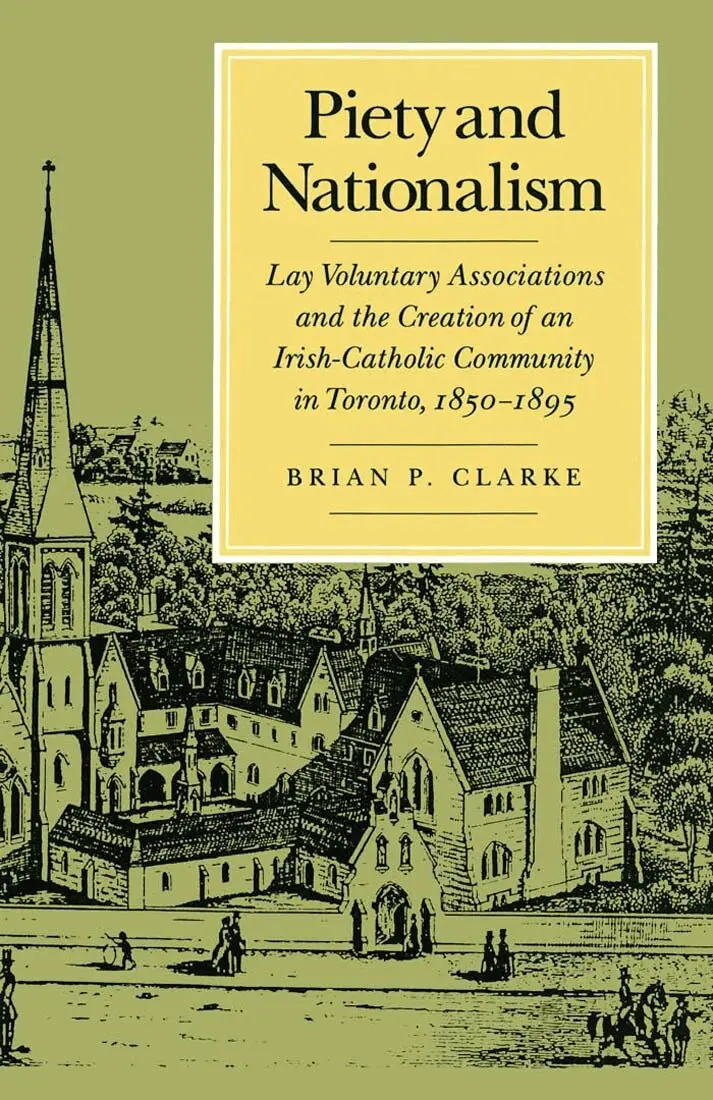
Piety and Nationalism
Lay Voluntary Associations and the Creation of an Irish-Catholic Community in Toronto, 1850-1895
Inbunden, 1993
1433 kr
Lägg i varukorg
While the role of the laity in the nationalist awakening is commonly recognized, their part in the movement for religious renewal is usually minimized. Initiative on the part of the laity has been thought to have existed only outside the church, where it remained a troubling and at times insurgent …
Leaving Christianity
Changing Allegiances in Canada since 1945
Av Brian P. Clarke, Stuart Macdonald
E-bok, 2017
403 kr
Lägg i varukorg
Canadians were once church-goers. During the post-war boom of the 1950s, Canadian churches were vibrant institutions, with attendance rates even higher than in the United States, but the following decade witnessed emptying pews. What happened? In Leaving Christianity Brian Clarke and Stuart …
Piety and Nationalism
Lay Voluntary Associations and the Creation of an Irish-Catholic Community in Toronto, 1850-1895
E-bok, 1993
1041 kr
Lägg i varukorg
While the role of the laity in the nationalist awakening is commonly recognized, their part in the movement for religious renewal is usually minimized. Initiative on the part of the laity has been thought to have existed only outside the church, where it remained a troubling and at times insurgent …