Brian R. Hamnett - Böcker
Visar alla böcker från författaren Brian R. Hamnett. Handla med fri frakt och snabb leverans.
7 produkter
7 produkter
Del 12 - Cambridge Latin American Studies
Politics and Trade in Mexico 1750-1821
Häftad, Engelska, 2009
441 kr
Skickas inom 7-10 vardagar
The province of Oaxaca in southern Mexico was one of the main sources of Spanish wealth during the colonial period. The largely indigenous population supplied dyes and cotton for the Spanish merchants trading both with Spain and within Mexico itself. Much of the trade was conducted in violation of the Laws of the Indies and the royal decrees. The present study traces the struggles of the Spanish Metropolitan Government and the local episcopal authorities in Oaxaca to secure observation of the law. The effects of the eighteenth-century Bourbon reforms and of the Mexican Independence movement of 1810-21 are discussed. Brian Hamnett has based his study on archival sources in Seville and Mexico and provides statistical information in both the text and appendices. In addition the author has supplied detailed information concerning individuals - administrators, merchants, landowners, clerics - involved in politics and commerce.
Del 59 - Cambridge Latin American Studies
Roots of Insurgency
Mexican Regions, 1750-1824
Häftad, Engelska, 2002
468 kr
Skickas inom 7-10 vardagar
Studies in Spanish American regional history have, as yet, made little attempt to incorporate the struggles for independence within the context of provincial society and politics viewed over the broader period that spans the late colonial and early national experience of Latin America. This book attempts a new perspective: it emphasises the provincial milieu and popular participation in its varied forms, often ambiguous and contradictory. The central aim is to examine social conflicts, chiefly in the Mexican provinces of Puebla, Guadalajara, Michoacán, and Guanajuato from the middle of the eighteenth century, and to assess their relationship to the widespread insurgency of the second decade of the nineteenth century.
1 024 kr
Skickas inom 7-10 vardagar
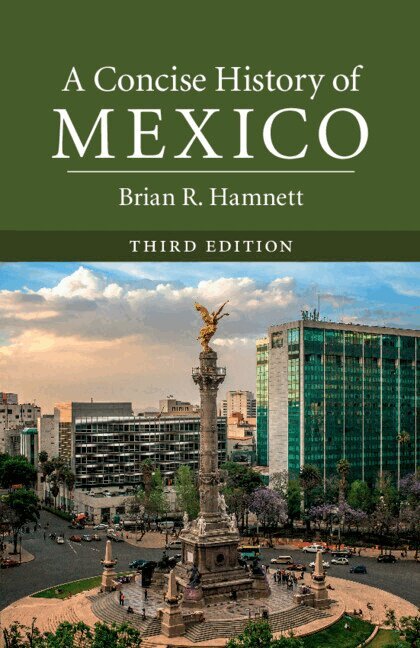
This concise history looks at Mexico from political, economic, and cultural perspectives, portraying Mexico's struggle to break out of the colonial past and assert its viability as a sovereign state in a competitive world. In this third edition, Hamnett adds new material on Mexico's regional and international roles as they have emerged in the twenty-first century, including membership of supra-national organizations (including and moving beyond NAFTA), the Mexican drug war between government officials and gangs, and the immigration and border crises within the United States. He also discusses Mexico's relationship to the outside world, particularly its efforts to broaden the range of political and commercial associations, especially with European countries, the rest of Latin America, and the Pacific Rim through trade agreements with supra-national organizations.
1 675 kr
Skickas inom 7-10 vardagar
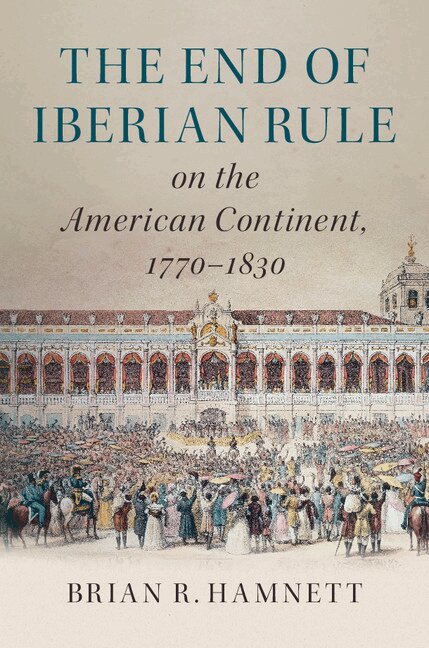
In this new work, Brian R. Hamnett offers a comprehensive assessment of the independence era in both Spanish America and Brazil by examining the interplay between events in Iberia and in the overseas empires of Spain and Portugal. Most colonists had wanted some form of unity within the Spanish and Portuguese monarchies but European intransigence continually frustrated this aim. Hamnett argues that independence finally came as a result of widespread internal conflict in the two American empires, rather than as a result of a clear separatist ideology or a growing national sentiment. With the collapse of empire, each component territory faced a struggle to survive. The End of Iberian Rule on the American Continent, 1770-1830 is the first book of its kind to give equal consideration to the Spanish and Portuguese dimensions of South America, examining these territories in terms of their divergent component elements.
318 kr
Skickas inom 7-10 vardagar
This concise history looks at Mexico from political, economic, and cultural perspectives, portraying Mexico's struggle to break out of the colonial past and assert its viability as a sovereign state in a competitive world. In this third edition, Hamnett adds new material on Mexico's regional and international roles as they have emerged in the twenty-first century, including membership of supra-national organizations (including and moving beyond NAFTA), the Mexican drug war between government officials and gangs, and the immigration and border crises within the United States. He also discusses Mexico's relationship to the outside world, particularly its efforts to broaden the range of political and commercial associations, especially with European countries, the rest of Latin America, and the Pacific Rim through trade agreements with supra-national organizations.
422 kr
Skickas inom 7-10 vardagar
In this new work, Brian R. Hamnett offers a comprehensive assessment of the independence era in both Spanish America and Brazil by examining the interplay between events in Iberia and in the overseas empires of Spain and Portugal. Most colonists had wanted some form of unity within the Spanish and Portuguese monarchies but European intransigence continually frustrated this aim. Hamnett argues that independence finally came as a result of widespread internal conflict in the two American empires, rather than as a result of a clear separatist ideology or a growing national sentiment. With the collapse of empire, each component territory faced a struggle to survive. The End of Iberian Rule on the American Continent, 1770-1830 is the first book of its kind to give equal consideration to the Spanish and Portuguese dimensions of South America, examining these territories in terms of their divergent component elements.
634 kr
Skickas inom 5-8 vardagar
This book discusses responses to the challenges faced by two different Iberian imperial systems in their struggle to sustain territorial integrity and economic interests in the face of international competition. During a so-called period of ‘Enlightened Despotism’, absolutist governments in Spain and Portugal sought to harness Enlightenment ideas to their policies of reform. The Iberian Enlightenment, however, did not rely exclusively on government sponsorship – it had existing foundations in sixteenth-century Spanish humanism and subsequent attempts at reform, and educated individuals in major cities frequently operated independently of government. The Enlightenment contributed greatly to the availability of potential political solutions to the urgent matter of political status, in the attempt to transform absolutist governments into constitutional systems and drawing in the process on the structures of medieval foundations, contemporary revolutions or less radical constitutional monarchies, or a combination of sources more closely aligned with Ibero-American realities.