Brian Roark – författare
Visar alla böcker från författaren Brian Roark. Handla med fri frakt och snabb leverans.
5 produkter
5 produkter
E-bok
PDF, Engelska, 2007587 kr
Läs direkt efter köp
The book will appeal to scholars and advanced students of morphology, syntax, computational linguistics and natural language processing (NLP). It provides a critical and practical guide to computational techniques for handling morphological and syntactic phenomena, showing how these techniques have been used and modified in practice. The authors discuss the nature and uses of syntactic parsers and examine the problems and opportunities of parsing algorithms for finite-state, context-free and various context-sensitive grammars. They relate approaches for describing syntax and morphology to formal mechanisms and algorithms, and present well-motivated approaches for augmenting grammars with weights or probabilities.
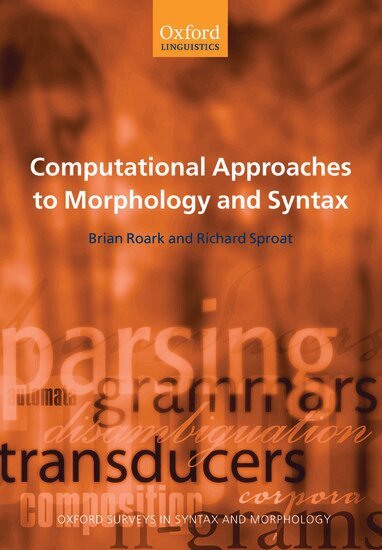
Del 4 - Oxford Surveys in Syntax & Morphology
Computational Approaches to Morphology and Syntax
Inbunden, Engelska, 2007
2 359 kr
Skickas inom 5-8 vardagar
The book will appeal to scholars and advanced students of morphology, syntax, computational linguistics and natural language processing (NLP). It provides a critical and practical guide to computational techniques for handling morphological and syntactic phenomena, showing how these techniques have been used and modified in practice. The authors discuss the nature and uses of syntactic parsers and examine the problems and opportunities of parsing algorithms for finite-state, context-free and various context-sensitive grammars. They relate approaches for describing syntax and morphology to formal mechanisms and algorithms, and present well-motivated approaches for augmenting grammars with weights or probabilities.
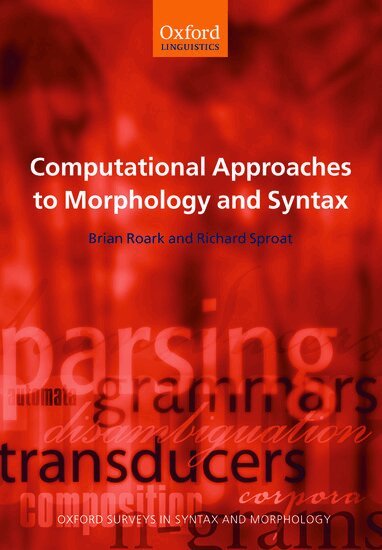
Del 4 - Oxford Surveys in Syntax & Morphology
Computational Approaches to Morphology and Syntax
Häftad, Engelska, 2007
730 kr
Skickas inom 5-8 vardagar
The book will appeal to scholars and advanced students of morphology, syntax, computational linguistics and natural language processing (NLP). It provides a critical and practical guide to computational techniques for handling morphological and syntactic phenomena, showing how these techniques have been used and modified in practice. The authors discuss the nature and uses of syntactic parsers and examine the problems and opportunities of parsing algorithms for finite-state, context-free and various context-sensitive grammars. They relate approaches for describing syntax and morphology to formal mechanisms and algorithms, and present well-motivated approaches for augmenting grammars with weights or probabilities.
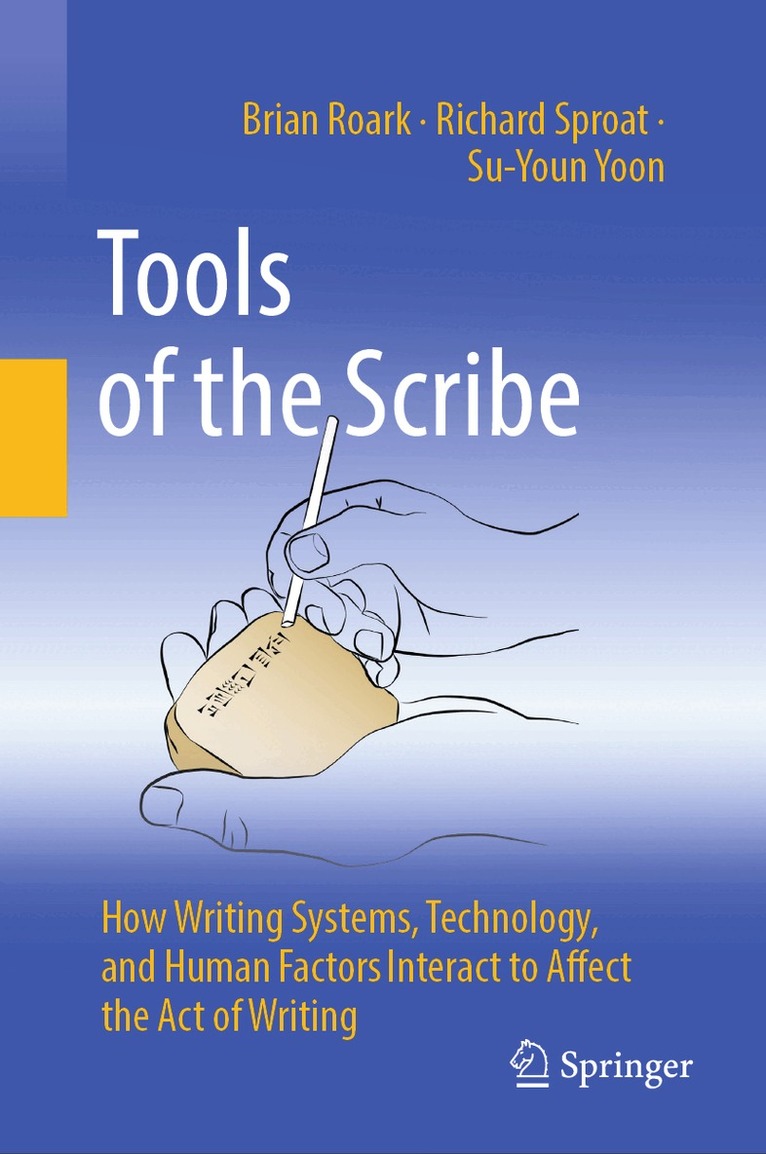
Inbunden, Engelska, 2026
345 kr
Skickas inom 10-15 vardagar
People all around the world now carry out nearly synchronous conversations using text. This puts a premium on efficient writing, something that is easier in some writing systems than others and for some individuals than for others. Fast production of text, however, is not a new problem, and has its roots in typesetting, stenography and assistive technologies. Some of these areas of technological innovation were hugely successful in the West, but were less successful in other parts of the world, such as Asia, where differences in scripts and writing systems made simple solutions to fast text production elusive. Many of these same problems remain today, but the existence of very large text corpora and the advances in AI that this has enabled now permit the use of natural language technology that makes text production faster and more accurate.This book presents writing technology past and present with a broad focus, discussing both widely used technology as well as technology serving communities of writers with special needs. For example, text is the principal communication modality for many with severe motor disabilities such as cerebral palsy: How does one type if one cannot easily or reliably point to a specific key on a keyboard? Cross cutting the discussion are several themes: How does one’s language and script influence the technology and its use? How does the technology interact with the user’s motor abilities? How does text input differ when one is writing in one’s own language, writing in several languages, or writing in a second language in which one may not be fully competent? And if one’s immediate goal is not efficiency but learning, does technology that aids efficient writing also support efficient learning?This book is the first treatment of writing technology that considers the process of writing from such a broad range of perspectives.
E-bok
PDF, Engelska, 2026468 kr
Läs direkt efter köp
People all around the world now carry out nearly synchronous conversations using text. This puts a premium on efficient writing, something that is easier in some writing systems than others and for some individuals than for others. Fast production of text, however, is not a new problem, and has its roots in typesetting, stenography and assistive technologies. Some of these areas of technological innovation were hugely successful in the West, but were less successful in other parts of the world, such as Asia, where differences in scripts and writing systems made simple solutions to fast text production elusive. Many of these same problems remain today, but the existence of very large text corpora and the advances in AI that this has enabled now permit the use of natural language technology that makes text production faster and more accurate.This book presents writing technology past and present with a broad focus, discussing both widely used technology as well as technology serving communities of writers with special needs. For example, text is the principal communication modality for many with severe motor disabilities such as cerebral palsy: How does one type if one cannot easily or reliably point to a specific key on a keyboard? Cross cutting the discussion are several themes: How does one’s language and script influence the technology and its use? How does the technology interact with the user’s motor abilities? How does text input differ when one is writing in one’s own language, writing in several languages, or writing in a second language in which one may not be fully competent? And if one’s immediate goal is not efficiency but learning, does technology that aids efficient writing also support efficient learning?This book is the first treatment of writing technology that considers the process of writing from such a broad range of perspectives.