Brian S. Dixon – författare
Visar alla böcker från författaren Brian S. Dixon. Handla med fri frakt och snabb leverans.
3 produkter
3 produkter
Inbunden, Engelska, 2020
1 512 kr
Skickas inom 10-15 vardagar
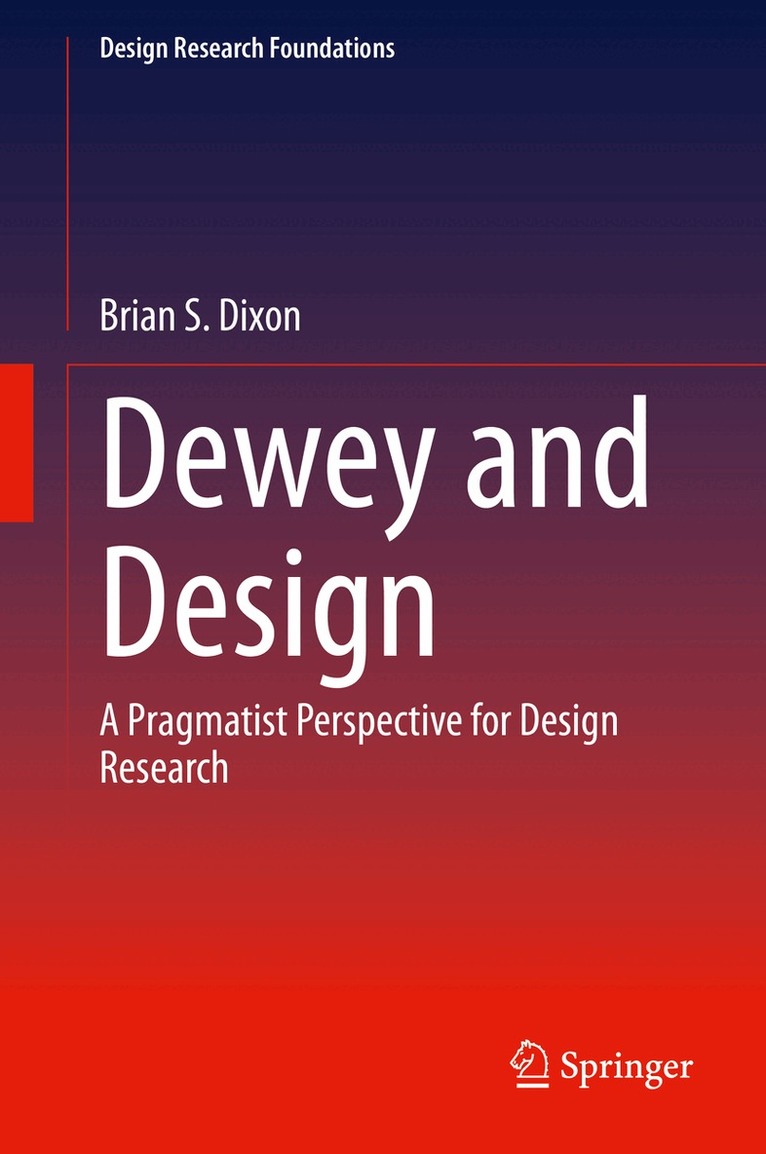
Over the last four decades, John Dewey’s pragmatist philosophy has formed an intellectual core in design research, underpinning Donald Schön’s theory of reflective practice, the experiential perspective in HCI and the democratic commitments of participatory design.
E-bok
Engelska, 20201 825 kr
Läs direkt efter köp
Over the last four decades, John Dewey’s pragmatist philosophy has formed an intellectual core in design research, underpinning Donald Schön’s theory of reflective practice, the experiential perspective in HCI and the democratic commitments of participatory design. Taking these existing connections as a starting point, Brian Dixon explores how deeper alignments may be drawn between Dewey’s insights and contemporary design research’s concern with practice, meaning and collaboration. Chapter by chapter, a fresh intellectual approach is revealed, one which recognises the transformative power of doing, making and knowing as a force for positive change in the world. We see that, for Dewey, experience comes first. It connects us to surrounding world and the society of which we are part; good things can happen and new realities are possible—we just have to work for them. The implications for design research are vast. We are offered a new way of understanding designerly knowledge production, as well as the methodological implications of adopting Deweyan pragmatism in design research. Taken as a whole, Dewey and Design not only draws out the value of Dewey’s work for design research but also, crucially, offers a clear articulation of the value of design itself.
Häftad, Engelska, 2021
1 512 kr
Skickas inom 10-15 vardagar
Over the last four decades, John Dewey’s pragmatist philosophy has formed an intellectual core in design research, underpinning Donald Schön’s theory of reflective practice, the experiential perspective in HCI and the democratic commitments of participatory design.