Brian T. Edwards – författare
Visar alla böcker från författaren Brian T. Edwards. Handla med fri frakt och snabb leverans.
5 produkter
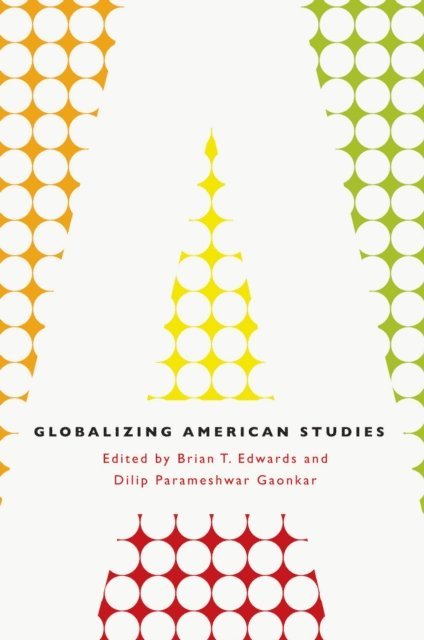
Globalizing American Studies
Av Brian T. Edwards, Dilip Parameshwar Gaonkar
Häftad, 2010
333 kr
Lägg i varukorg
The discipline of American studies was established in the early days of World War II and drew on the myth of American exceptionalism. But now that the so-called American Century has come to an end, what would a truly globalized version of American studies look like? Brian T. Edwards and Dilip …
Globalizing American Studies
Av Dilip Parameshwar Gaonkar, Brian T. Edwards
E-bok, 2010
806 kr
Lägg i varukorg
The discipline of American studies was established in the early days of World War II and drew on the myth of American exceptionalism. Now that the so-called American Century has come to an end, what would a truly globalized version of American studies look like? Brian T. Edwards and Dilip …
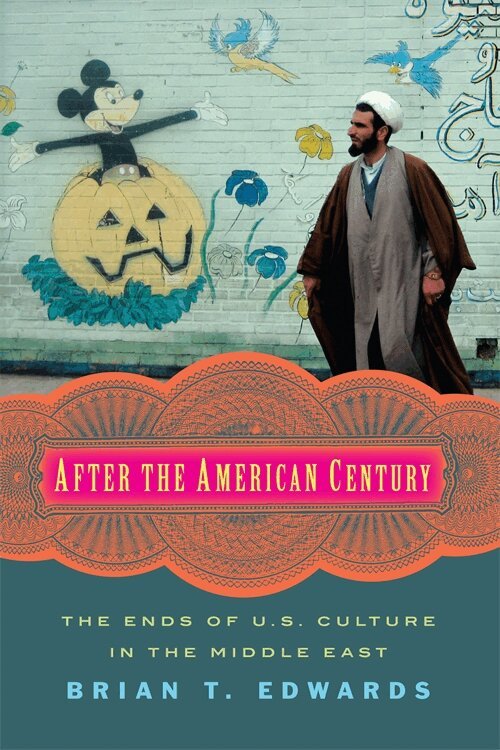
After the American Century
The Ends of U.S. Culture in the Middle East
Inbunden, 2015
1188 kr
Lägg i varukorg
When Henry Luce announced in 1941 that we were living in the "American century," he believed that the international popularity of American culture made the world favorable to U.S. interests. Now, in the digital twenty-first century, the American century has been superseded, as American movies, …
After the American Century
The Ends of U.S. Culture in the Middle East
Häftad, 2017
303 kr
Lägg i varukorg
When Henry Luce announced in 1941 that we were living in the "American century," he believed that the international popularity of American culture made the world favorable to U.S. interests. Now, in the digital twenty-first century, the American century has been superseded, as American movies, …
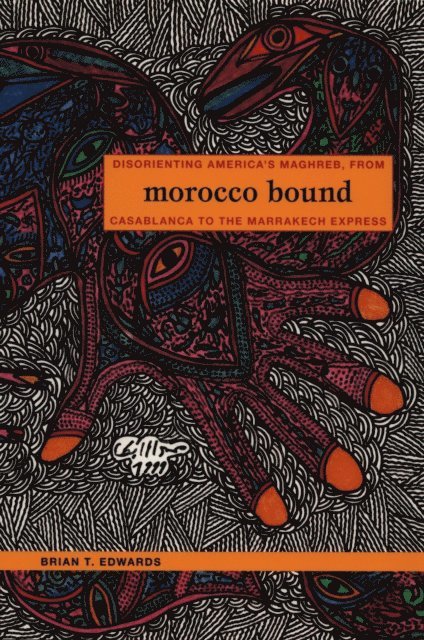
Morocco Bound
Disorienting America''s Maghreb, from Casablanca to the Marrakech Express
E-bok, 2005
651 kr
Lägg i varukorg
Until attention shifted to the Middle East in the early 1970s, Americans turned most often toward the Maghreb—Morocco, Algeria, Tunisia, and the Sahara—for their understanding of “the Arab.” In Morocco Bound , Brian T. Edwards examines American representations of the Maghreb during three pivotal …