Brian Trench - Böcker
Visar alla böcker från författaren Brian Trench. Handla med fri frakt och snabb leverans.
5 produkter
5 produkter
3 163 kr
Skickas inom 10-15 vardagar
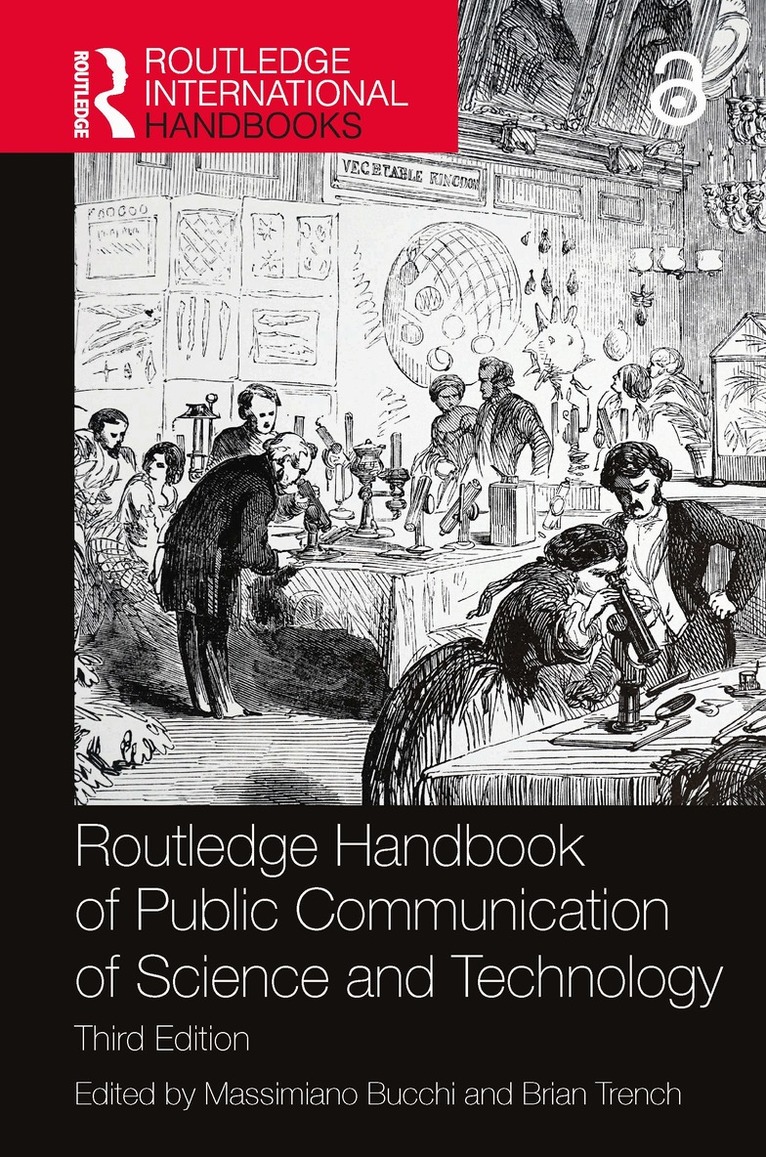
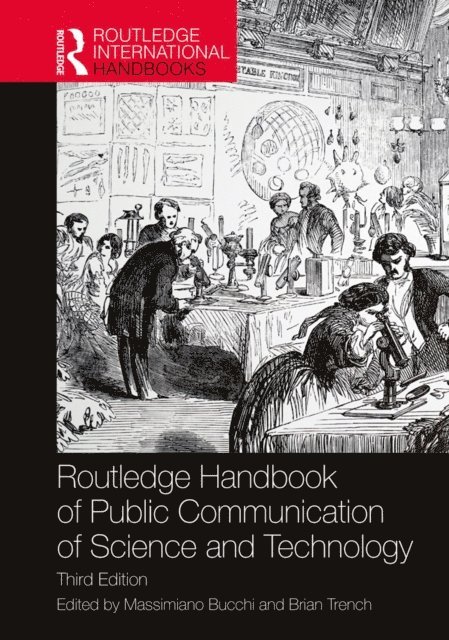
Communicating science and technology is a high priority of many research and policy institutions, a concern of many other private and public bodies, and an established subject of training and education. In the past few decades, the field has developed and expanded significantly, both in terms of professional practice, and in terms of research and reflection. At the same time, particularly in recent years, interactions between science and society have become a topic of heated public and political debates, touching issues like quality and credibility of information, trust in science and scientific actors and institutions and the roles of experts in crises and emergencies. This book provides a state-of-the-art review of this fast-growing and increasingly important area, through an examination of research done on the main actors, issues and arenas involved.The third edition of the Handbook brings the reviews up-to-date and deepens the analysis. As well as substantial re-working of many chapters, it includes four new chapters addressing enduring themes (science publics, science-media theories), recent trends (art-science interactions) and new proposed insights on science communication as culture and as 'the social conversation around science'. New contributors are added to the group of leading scholars in the field featured in the previous editions.The Handbook is a student-friendly resource, but its scope and expert contributions will equally appeal to practitioners and professionals in science communication. Combining the perspectives of different disciplines and of different geographical and cultural contexts, this original text provides an interdisciplinary as well as a global approach to public communication of science and technology. It is a valuable resource, notably an indispensable guide to the published work in the field, for students, researchers, educators and professionals in science communication, media and journalism studies, sociology, history of science, and science and technology studies.Chapter 8 of this book is freely available as a downloadable Open Access PDF at http://www.taylorfrancis.com under a Creative Commons Attribution-Non Commercial-No Derivatives (CC-BY-NC-ND) 4.0 license.
671 kr
Skickas inom 10-15 vardagar
Communicating science and technology is a high priority of many research and policy institutions, a concern of many other private and public bodies, and an established subject of training and education. In the past few decades, the field has developed and expanded significantly, both in terms of professional practice, and in terms of research and reflection. At the same time, particularly in recent years, interactions between science and society have become a topic of heated public and political debates, touching issues like quality and credibility of information, trust in science and scientific actors and institutions and the roles of experts in crises and emergencies. This book provides a state-of-the-art review of this fast-growing and increasingly important area, through an examination of research done on the main actors, issues and arenas involved.The third edition of the Handbook brings the reviews up-to-date and deepens the analysis. As well as substantial re-working of many chapters, it includes four new chapters addressing enduring themes (science publics, science-media theories), recent trends (art-science interactions) and new proposed insights on science communication as culture and as 'the social conversation around science'. New contributors are added to the group of leading scholars in the field featured in the previous editions.The Handbook is a student-friendly resource, but its scope and expert contributions will equally appeal to practitioners and professionals in science communication. Combining the perspectives of different disciplines and of different geographical and cultural contexts, this original text provides an interdisciplinary as well as a global approach to public communication of science and technology. It is a valuable resource, notably an indispensable guide to the published work in the field, for students, researchers, educators and professionals in science communication, media and journalism studies, sociology, history of science, and science and technology studies.Chapter 8 of this book is freely available as a downloadable Open Access PDF at http://www.taylorfrancis.com under a Creative Commons Attribution-Non Commercial-No Derivatives (CC-BY-NC-ND) 4.0 license.
21 229 kr
Skickas inom 10-15 vardagar
This is a new title from Routledge’s Critical Concepts in Sociology series. Compiled by the editorial team behind the acclaimed International Handbook of Public Communication of Science and Technology (Routledge, 2008), this four-volume ‘mini library’ provides an easy-to-use, one-stop collection of the best foundational and cutting-edge scholarship from the fast-growing—and increasingly important—scholarly domain that is the public communication of science.As well as bringing together the major works that have shaped this field of research, the collection will be welcomed as the first mapping of an area that to date has rather lacked an authoritative interdisciplinary synthesis. The collection assembles contributions from a variety of subjects (including media and journalism studies, sociology, and the history of science), and it contrasts the perspectives of different geographical and cultural contexts. Together with the editors’ introductions, the gathered materials allow users to make sense of the wide range of approaches, theories, and concepts that have informed the public communication of science.
1 887 kr
Skickas inom 10-15 vardagar
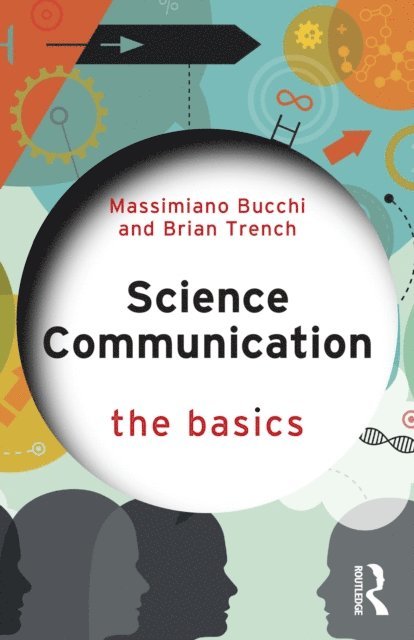
Science Communication: The Basics is an accessible yet critical introduction to science communication, which is viewed as the social conversation around science. It addresses why science communication matters, examines the evolution of theories and practices and explains concepts, myths, misunderstandings and challenges.Massimiano Bucchi and Brian Trench navigate the foundations and key themes of science communication through numerous vignettes, examples, cases and arguments. They provide annotated recommended reading and a Lexicon summarising the understandings and uses of key terms in the field. Revealing science communication as a collective process and part of daily life, topics covered include science communication as part of culture and our understanding of ourselves and the world; the history of science communication and the development of ‘modern science’; policy and theoretical approaches; the growth of professional practice, formal education and research in the field; evolving platforms for science communication; and quality, trust and ethical awareness in science communication.Science Communication: The Basics is designed to be a concise primer and essential reading for newcomers to the field, including staff in research and policy institutions, students of the natural, human and social sciences, and general readers curious about the ways science is presented and perceived in society.Science Communication: The Basics is the third in a triptych of works on science communication from the two authors. The other two works are the Routledge Handbook of Public Communication of Science and Technology, first published in 2008 and now in its third edition (2021), and a four-volume anthology of readings, The Public Communication of Science (2016), also published by Routledge.
278 kr
Skickas inom 10-15 vardagar
Science Communication: The Basics is an accessible yet critical introduction to science communication, which is viewed as the social conversation around science. It addresses why science communication matters, examines the evolution of theories and practices and explains concepts, myths, misunderstandings and challenges.Massimiano Bucchi and Brian Trench navigate the foundations and key themes of science communication through numerous vignettes, examples, cases and arguments. They provide annotated recommended reading and a Lexicon summarising the understandings and uses of key terms in the field. Revealing science communication as a collective process and part of daily life, topics covered include science communication as part of culture and our understanding of ourselves and the world; the history of science communication and the development of ‘modern science’; policy and theoretical approaches; the growth of professional practice, formal education and research in the field; evolving platforms for science communication; and quality, trust and ethical awareness in science communication.Science Communication: The Basics is designed to be a concise primer and essential reading for newcomers to the field, including staff in research and policy institutions, students of the natural, human and social sciences, and general readers curious about the ways science is presented and perceived in society.Science Communication: The Basics is the third in a triptych of works on science communication from the two authors. The other two works are the Routledge Handbook of Public Communication of Science and Technology, first published in 2008 and now in its third edition (2021), and a four-volume anthology of readings, The Public Communication of Science (2016), also published by Routledge.