Brian W. Dotts – författare
Visar alla böcker från författaren Brian W. Dotts. Handla med fri frakt och snabb leverans.
5 produkter
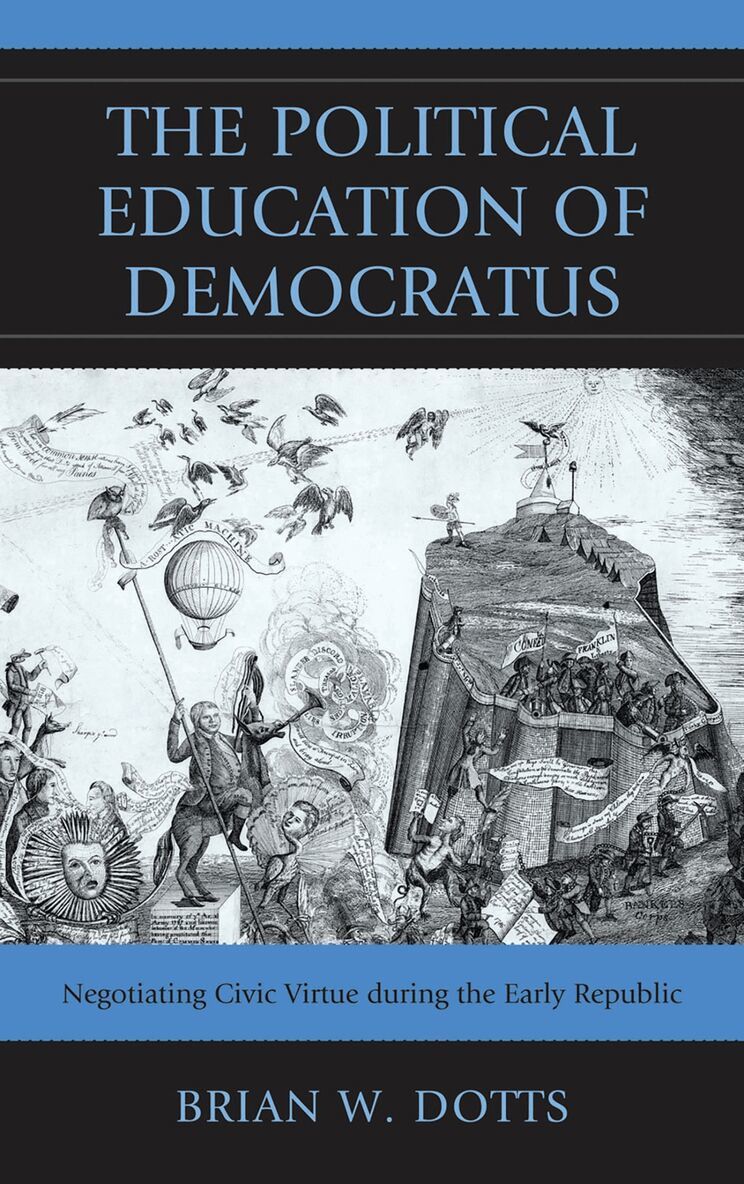
Political Education of Democratus
Negotiating Civic Virtue during the Early Republic
Inbunden, 2012
1608 kr
Lägg i varukorg
Thomas Paine described the American Revolution as educative. However, as examined in Brian W. Dotts’ The Political Education of Democratus: Negotiating Civic Virtue during the Early Republic, what was learned was neither standardized nor uniform. The Federalists, for example, viewed the revolution …
Educational Foundations
Philosophical and Historical Perspectives
E-bok, 2018
930 kr
Lägg i varukorg
This educational foundations book offers a comprehensive overview of American education history and a variety of classical, Enlightenment, and contemporary educational philosophers. While Educational Foundations includes a history of American education, it also looks at numerous policies, …
Educational Foundations
Philosophical and Historical Perspectives
E-bok, 2018
951 kr
Lägg i varukorg
This educational foundations book offers a comprehensive overview of American education history and a variety of classical, Enlightenment, and contemporary educational philosophers. While Educational Foundations includes a history of American education, it also looks at numerous policies, …
Educational Foundations
Philosophical and Historical Perspectives
Häftad, 2018
944 kr
Lägg i varukorg
This educational foundations book offers a comprehensive overview of American education history and a variety of classical, Enlightenment, and contemporary educational philosophers. While Educational Foundations includes a history of American education, it also looks at numerous policies, …
Elusive Thomas Jefferson
Essays on the Man Behind the Myths
Av M. Andrew Holowchak, Brian W. Dotts
Häftad, 2017
606 kr
Lägg i varukorg
Thomas Jefferson's writings on morality have largely been ignored. His thoughts on the subject, never developed in any formal work, are said to be unsystematic--a judgment reinforced by his shift from Stoicism (intentions are critical) to Utilitarianism (consequences are critical) later in life.Yet …