Brian Waddell – författare
Visar alla böcker från författaren Brian Waddell. Handla med fri frakt och snabb leverans.
5 produkter
5 produkter
Inbunden, Engelska, 2008
711 kr
Skickas inom 10-15 vardagar
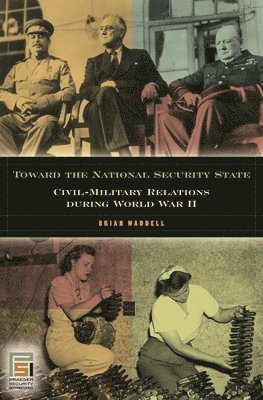
American involvement in World War II greatly transformed U.S. civil-military relations by propelling the U.S. military into a prominent position within the national government. The war established new linkages and a new unity between key civilian and military personnel. And these new civil-military relations became institutionalized with the postwar creation of the national security state. Waddell explores these new developments and examines how they affected the very nature of American governmental power.War is considered the most significant influence on building and transforming government institutions. And yet, scholars interested in American political development tend to ignore World War II while focusing on the Great Depression and Roosevelt's New Deal. In turn, scholars who focus on the war tend to focus on the diplomacy, strategies, battles, and personalities that dominated the war itself. Rarely is the war considered from the perspective of how it changed the fundamental nature of American government as it led to the national security state, the military-industrial complex, and the militarization of foreign policy. This book places these dramatic shifts in the context of the changing civil-military relations of World War II. It examines these relations in terms of the three central areas of modern warfare-production, strategy, and manpower. Chapters focus on the military-corporate relations involved in mobilizing the arsenal of democracy; top-level command relations between President Franklin D. Roosevelt and his military commanders; and the civil-military tensions and relations involved in mobilizing a mass citizen army. A final chapter analyzes what came of these changes as the U.S. institutionalized a striking new civil-military unity in and through the postwar national security state.
Inbunden, Engelska, 2001
500 kr
Skickas inom 10-15 vardagar
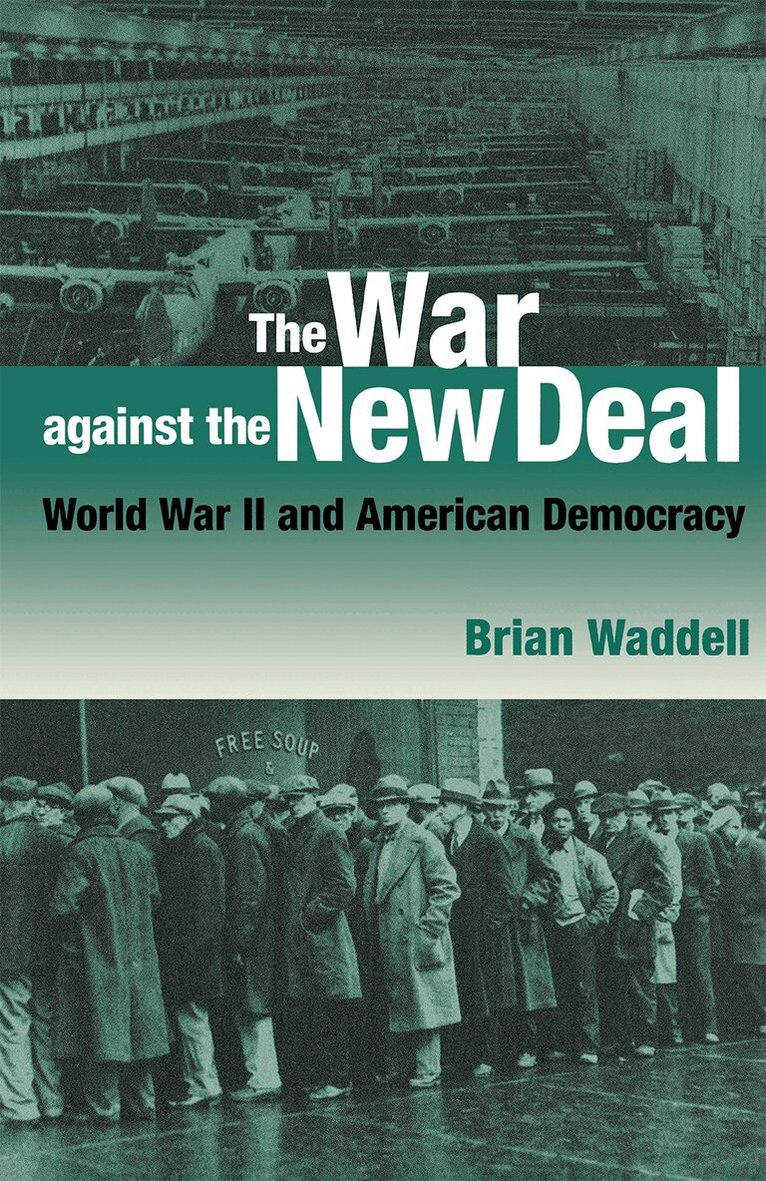
Waddell addresses a central paradox in American governance: the rise of a strong national security state coincided with a relatively weak federal structure. He argues that on the political home front World War II represented the victory of the warfare state over the nascent New Deal welfare state, with important consequences for American democracy. The warfare state defeated the New Deal's labor and academic supporters, thereby increasing the national capacity for global involvement while undermining domestic intervention. Waddell traces the creation of a military-corporate alliance from its tenuous beginnings during World War I to its crowning fulfillment with World War II. This alliance blocked any wartime increase in controversial domestic programs, as corporate interests created an international activism to supplant New Deal activism. The outcome of the war against the New Deal was a militarily powerful, centralized national security state that was structurally and politically unable to confront the decisive issues of postwar America, from Civil Rights to social welfare. The War against the New Deal describes the role economic interests played in tipping the balance in the wartime struggles over resources and power-and the results of increasing corporate influence within the federal government. It reveals how the warfare state legitimized the postwar growth of national state power and how it strengthened, without democratizing, the American government.
Häftad, Engelska, 2011
135 kr
Skickas inom 5-8 vardagar
Häftad, Engelska, 2017
406 kr
Skickas inom 5-8 vardagar
It has become all too easy to disparage the role of the US government today. Many Americans are influenced by a simplistic anti-government ideology that is itself driven by a desire to roll back the more democratically responsive aspects of public policy. But government has improved the lives of Americans in numerous ways, from providing income, food, education, housing, and healthcare support, to ensuring cleaner air, water, and food, to providing a vast infrastructure upon which economic growth depends. In What American Government Does, Stan Luger and Brian Waddell offer a practical understanding of the scope and function of American governance. They present a historical overview of the development of US governance that is rooted in the theoretical work of Charles Tilly, Karl Polanyi, and Michael Mann. Touching on everything from taxes, welfare, and national and domestic security to the government's regulatory, developmental, and global responsibilities, each chapter covers a main function of American government and explains how it emerged and then evolved over time.Luger and Waddell are careful to both identify the controversies related to what government does and those areas of government that should elicit concern and vigilance. Analyzing the functions of the US government in terms of both a tug-of-war and a collaboration between state and societal forces, they provide a reading of American political development that dispels the myth of a weak, minimal, non-interventionist state. What American Government Does represents a major contribution to the scholarly debate on the nature of the American state and the exercise of power in America.
Häftad, Engelska, 2024
399 kr
Skickas inom 10-15 vardagar
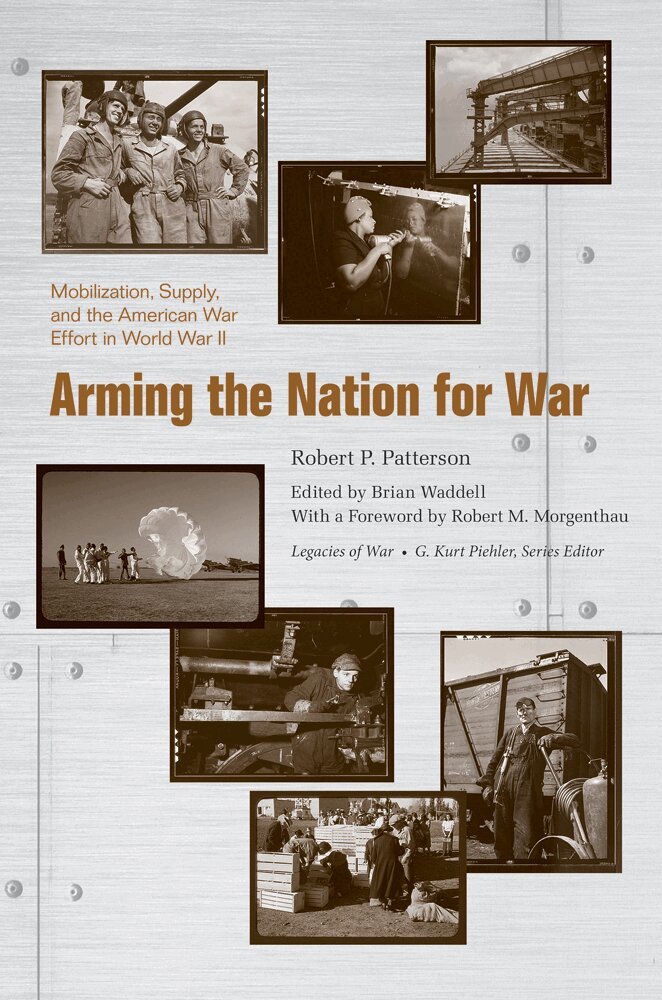
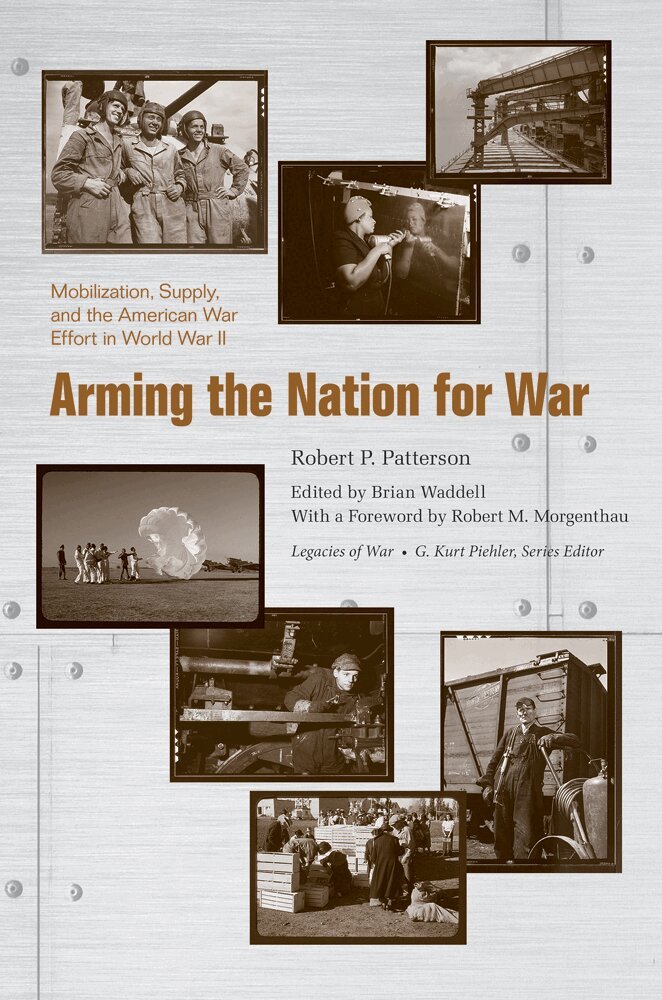
A decorated World War I veteran, Federal Judge Robert P. Patterson knew all too well the needs of soldiers on the battlefield. He was thus dismayed by America’s lack of military preparedness when a second great war engulfed Europe in 1939–40. With the international crisis worsening, Patterson even resumed military training—as a forty-nine-year-old private—before being named assistant secretary of war in July 1940. That appointment set the stage for Patterson’s central role in the country’s massive mobilization and supply effort which helped the Allies win World War II.In Arming the Nation for War, a previously unpublished account long buried among the late author’s papers and originally marked confidential, Patterson describes the vast challenges the United States faced as it had to equip, in a desperately short time, a fighting force capable of confronting a formidable enemy. Brimming with data and detail, the book also abounds with deep insights into the myriad problems encountered on the domestic mobilization front—including the sometimes divergent interests of wartime planners and industrial leaders—along with the logistical difficulties of supplying far-flung theaters of war with everything from ships, planes, and tanks to food and medicine. Determined to remind his contemporaries of how narrow the Allied margin of victory was and that the war’s lessons not be forgotten, Patterson clearly intended the manuscript (which he wrote between 1945 and ’47, when he was President Truman’s secretary of war) to contribute to the postwar debates on the future of the military establishment. That passage of the National Security Act of 1947, to which Patterson was a key contributor, answered many of his concerns may explain why he never published the book during his lifetime.A unique document offering an insider’s view of a watershed historical moment, Patterson’s text is complemented by editor Brian Waddell’s extensive introduction and notes. In addition, Robert M. Morgenthau, former Manhattan district attorney and a protÉgÉ of Patterson’s for four years prior to the latter’s death in a 1952 plane crash, offers a heartfelt remembrance of a man the New York Herald-Tribune called “an example of the public-spirited citizen.”