Brianne Donaldson - Böcker
Visar alla böcker från författaren Brianne Donaldson. Handla med fri frakt och snabb leverans.
6 produkter
6 produkter
287 kr
Skickas inom 7-10 vardagar
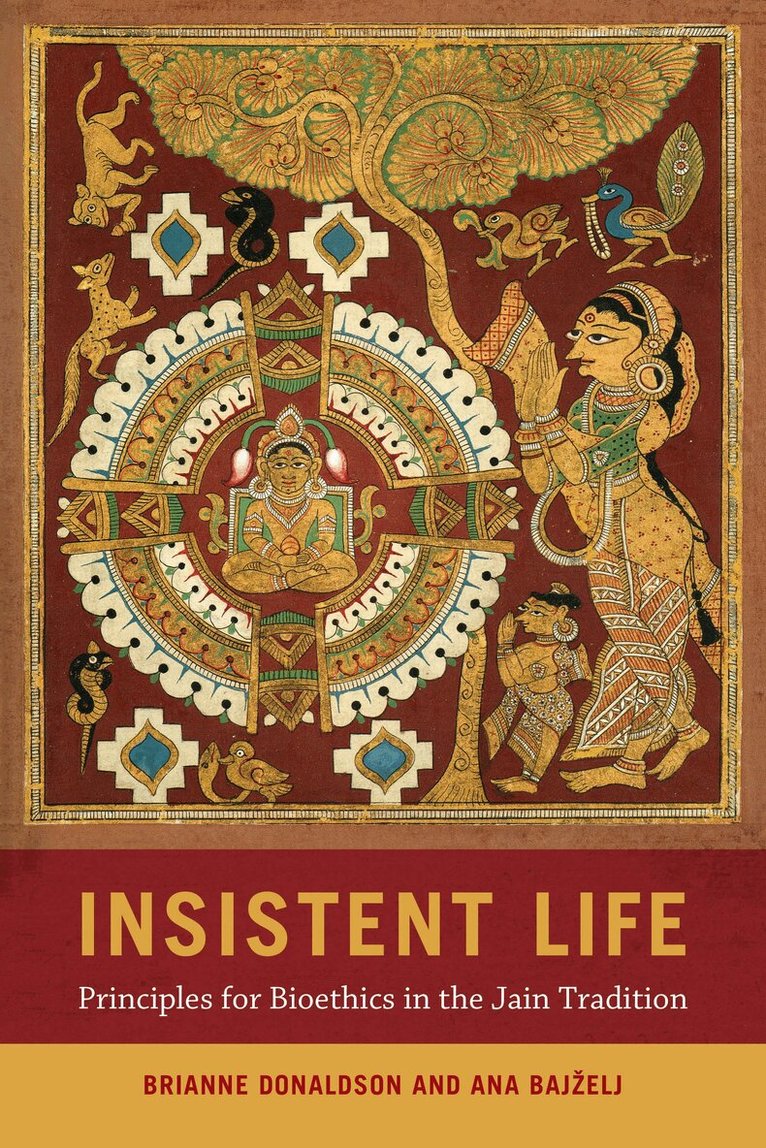
A free open access ebook is available upon publication. Learn more at www.luminosoa.org.Jainism, perhaps more so than any other South Asian tradition, focuses strongly on the ethics of birth, life, and death, with regard to both humans and other living beings. Insistent Life is the first full-length interdisciplinary examination of the foundational principles of bioethics within Jain doctrine and the application of those principles in the contemporary sphere. Brianne Donaldson and Ana Bajželj analyze a diverse range of Jain texts and contemporary sources to identify Jain perspectives on bioethical issues while highlighting the complexity of their personal, professional, and public dimensions. The book also features extensive original data based on an international survey the authors conducted with Jain medical professionals in India and diaspora communities of North America, Europe, and Africa.
2 103 kr
Skickas inom 10-15 vardagar
Knowing Life examines the limits of dominant knowledge forms that contribute to current practices negatively affecting more-than-human beings, while also exploring alternative approaches to knowing that are capable of reducing harm and maximizing planetary thriving.Specifically, this volume seeks multispecies answers to long-standing questions in Western philosophy: Who or what counts as a knower? What kinds of knowing are valid? Is knowledge a product of mind, body, or something else? Historically, these epistemic questions have been answered in ways that neutralize the knowing and knowledge contribution of and for more-than-human beings, as well as those on the margins of society considered less than “human.” Consequently, these epistemic assumptions often support the destruction of ecological habitats, industrialization of food animals, widespread use of insect and plant toxins, water and air pollution, climate extinctions, ecological militarism, and the perpetual flow of living beings used for entertainment, research, clothing, companionship, and economic resources.In this book, crosscultural and multidisciplinary contributors—including lesser-known global religious-philosophical accounts, philosophies of plant and insect life, race and disability studies, laboratory epistemology, embodied semiotics, and scholar-artists—challenge and expand these classical concepts through diverse modes of embodied engagement on multispecies knowing toward open futures of planetary co-flourishing.
635 kr
Skickas inom 10-15 vardagar
Knowing Life examines the limits of dominant knowledge forms that contribute to current practices negatively affecting more-than-human beings, while also exploring alternative approaches to knowing that are capable of reducing harm and maximizing planetary thriving.Specifically, this volume seeks multispecies answers to long-standing questions in Western philosophy: Who or what counts as a knower? What kinds of knowing are valid? Is knowledge a product of mind, body, or something else? Historically, these epistemic questions have been answered in ways that neutralize the knowing and knowledge contribution of and for more-than-human beings, as well as those on the margins of society considered less than “human.” Consequently, these epistemic assumptions often support the destruction of ecological habitats, industrialization of food animals, widespread use of insect and plant toxins, water and air pollution, climate extinctions, ecological militarism, and the perpetual flow of living beings used for entertainment, research, clothing, companionship, and economic resources.In this book, crosscultural and multidisciplinary contributors—including lesser-known global religious-philosophical accounts, philosophies of plant and insect life, race and disability studies, laboratory epistemology, embodied semiotics, and scholar-artists—challenge and expand these classical concepts through diverse modes of embodied engagement on multispecies knowing toward open futures of planetary co-flourishing.
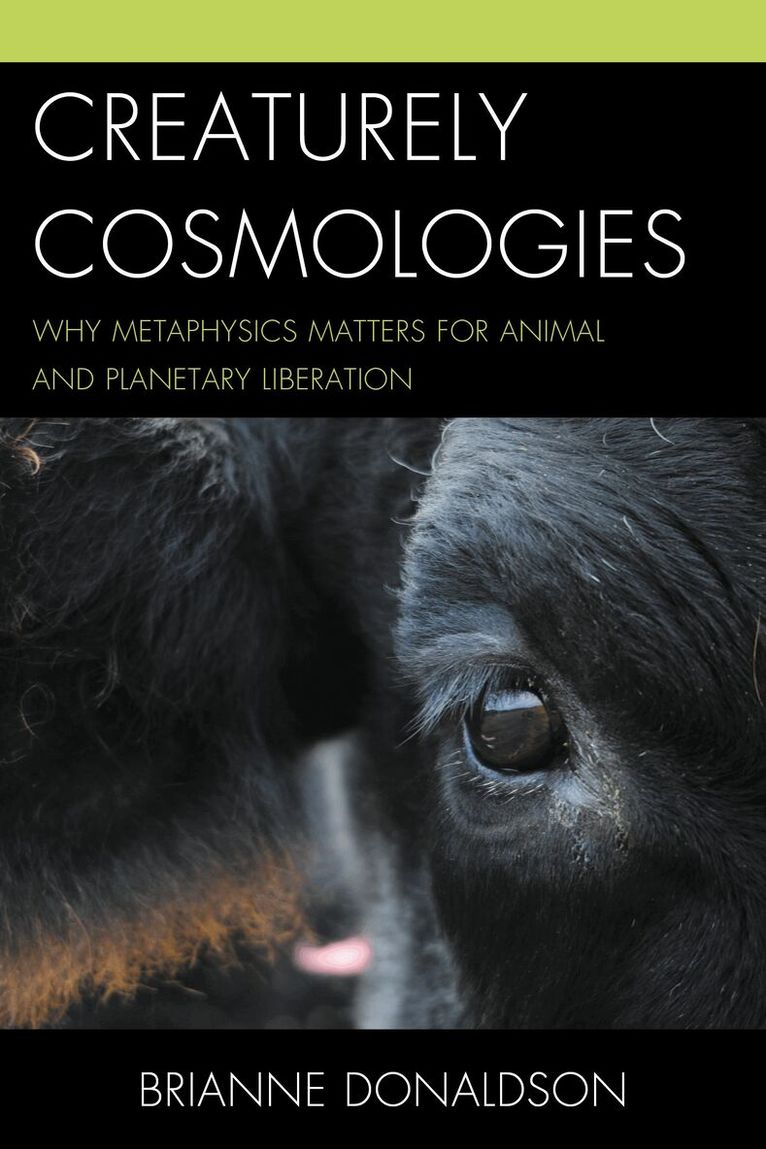
Creaturely Cosmologies
Why Metaphysics Matters for Animal and Planetary Liberation
Inbunden, Engelska, 2015
1 209 kr
Skickas inom 10-15 vardagar
Metaphysics—or the grand narratives about reality that shape a community—has historically been identified as one of the primary oppressive factors in violence against animals, the environment, and other subordinated populations. Yet, this rejection of metaphysics has allowed inadequate worldviews to be smuggled back into secular rights-based systems, and into politics, language, arts, economics, media, and science under the guise of value-free and narrowly human-centric facts that relegate many populations to the margins and exclude them from consideration as active members of the planetary community. Those concerned with systemic violence against creatures and other oppressed populations must overcome this allergy to metaphysics in order to illuminate latent assumptions at work in their own worldviews, and to seek out dynamic, many-sided, and relational narratives about reality that are more adequate to a universe of responsive and creative world-shaping creatures. This text examines two such worldviews—Whitehead’s process-relational thought in the west and the nonviolent Indian tradition of Jainism—alongside theorists such as Gilles Deleuze and Félix Guattari, Judith Butler, Donna Haraway, Karen Barad, that offer a new perspective on metaphysics as well as the creaturely kin and planetary fellows with whom we co-shape our future.
1 703 kr
Skickas inom 10-15 vardagar
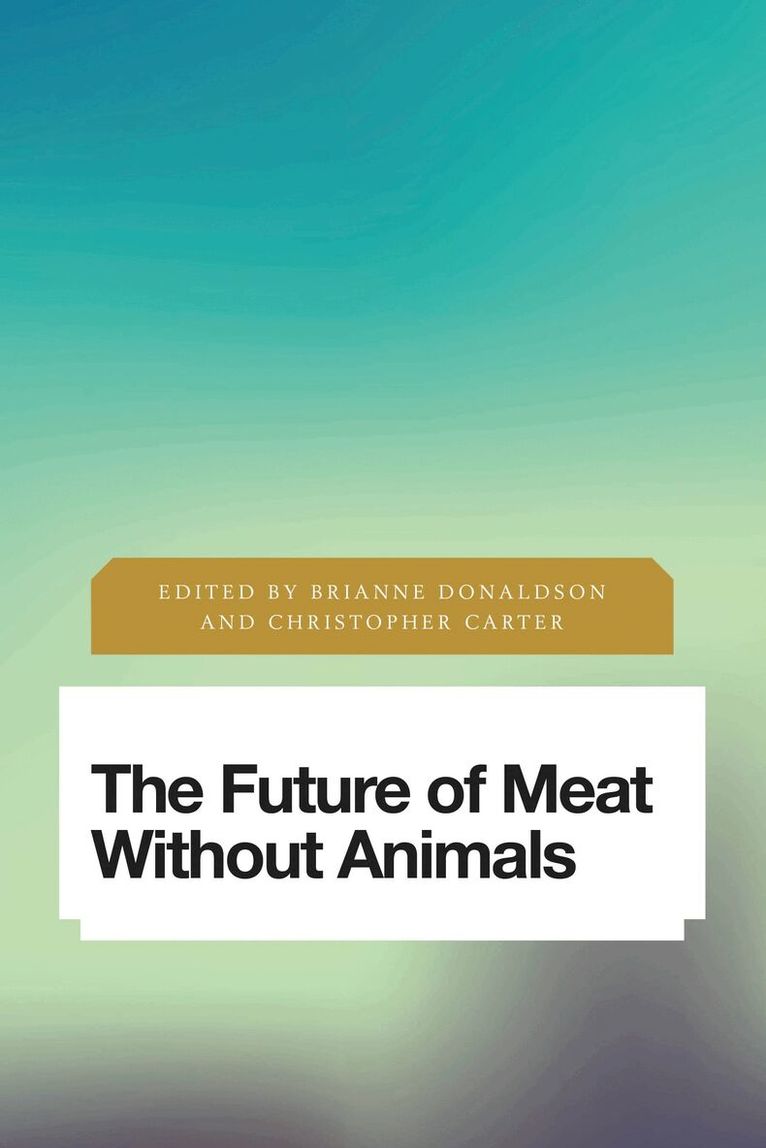
Plant-based and cell-cultured meat, milk, and egg producers aim to replace industrial food production with animal-free fare that tastes better, costs less, and requires a fraction of the energy inputs. These products are no longer relegated to niche markets for ethical vegetarians, but are heavily funded by private investors betting on meat without animals as mass-market, environmentally feasible alternatives that can be scaled for a growing global population.This volume examines conceptual and cultural opportunities, entanglements, and pitfalls in moving global meat, egg, and dairy consumption toward these animal-free options. Beyond surface tensions of “meatless meat” and “animal-free flesh,” deeper conflicts proliferate around naturalized accounts of human identity and meat consumption, as well as the linkage of protein with colonial power and gender oppression. What visions and technologies can disrupt modern agriculture? What economic and marketing channels are required to scale these products? What beings and ecosystems remain implicated in a livestock-free food system? A future of meat without animals invites adjustments on the plate, but it also inspires renewed habits of mind as well as life-affirming innovations capable of nourishing the contours of our future selves. This book illuminates material and philosophical complexities that will shape the character of our future/s of food.
595 kr
Skickas inom 10-15 vardagar
Plant-based and cell-cultured meat, milk, and egg producers aim to replace industrial food production with animal-free fare that tastes better, costs less, and requires a fraction of the energy inputs. These products are no longer relegated to niche markets for ethical vegetarians, but are heavily funded by private investors betting on meat without animals as mass-market, environmentally feasible alternatives that can be scaled for a growing global population.This volume examines conceptual and cultural opportunities, entanglements, and pitfalls in moving global meat, egg, and dairy consumption toward these animal-free options. Beyond surface tensions of “meatless meat” and “animal-free flesh,” deeper conflicts proliferate around naturalized accounts of human identity and meat consumption, as well as the linkage of protein with colonial power and gender oppression. What visions and technologies can disrupt modern agriculture? What economic and marketing channels are required to scale these products? What beings and ecosystems remain implicated in a livestock-free food system? A future of meat without animals invites adjustments on the plate, but it also inspires renewed habits of mind as well as life-affirming innovations capable of nourishing the contours of our future selves. This book illuminates material and philosophical complexities that will shape the character of our future/s of food.