Bridget M. Hutter - Böcker
Visar alla böcker från författaren Bridget M. Hutter. Handla med fri frakt och snabb leverans.
10 produkter
10 produkter
1 966 kr
Skickas inom 7-10 vardagar
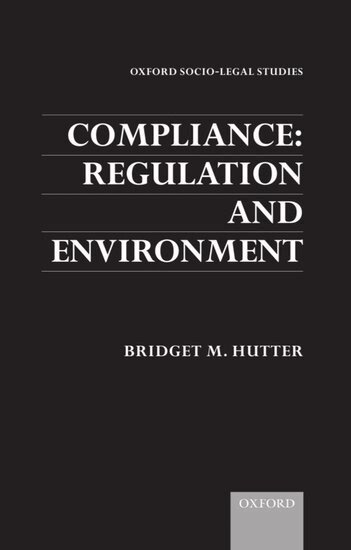
Regulation touches upon areas of vital importance to our lives and the economy, but it is still very much a 'grey area' of criminal law and social control, subject to very little academic scrutiny. This book combines an analysis of the broader structural factors which influence regulation and its definition at the everyday level with a discussion of empirical data, to reach a thorough understanding of the subject. The empirical data focuses on the regulation of economic activities in the areas of occupational health and safety and the environment in England and Wales in the 1980s.
3 140 kr
Skickas inom 5-8 vardagar
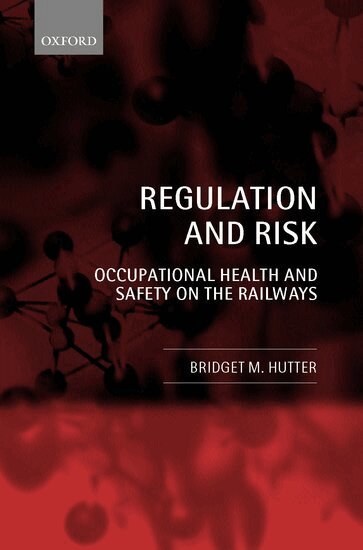
Regulating the risks associated with economic activities is a feature of modern societies and one in which the state increasingly seeks to co-opt the regulatory powers of corporations. This book examines the impact of a system of enforced self-regulation on the corporate life of British Railways. It uses this case study of occupational health and safety regulation to focus on broader theoretical and empirical discussions of regulation, risk, and corporate activities.A central organizing perspective of this book is that regulation is a form of risk management. It examines how workplace risks in modern societies are managed by businesses and the individuals within them and considers what influence the law has in this. The tensions between the constitutive and controlling aspects of regulatory law are analysed with reference to in-depth empirical data about corporate and individual compliance and non-compliance. Related concerns about the social control of organizational and economic life are explored and their policy and theoretical implications examined. These issues are especially significant following the privatization of Britain's rail network and the introduction of regulatory systems which are highly reliant on industry self-regulation. More generally, their significance is highlighted by the increasing popularity of risk-based approaches to corporate governance. The book argues that if regulation is to be an effective way of managing risk we need to pay more attention to the assumptions we make about corporate life and be more prepared to use the full range of regulatory sources and tools available to us.
1 228 kr
Skickas inom 7-10 vardagar
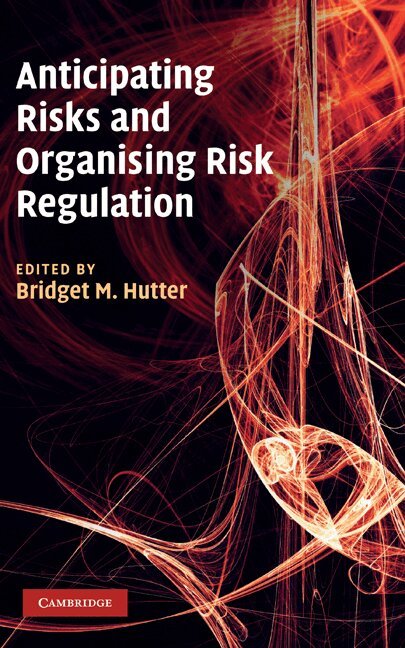
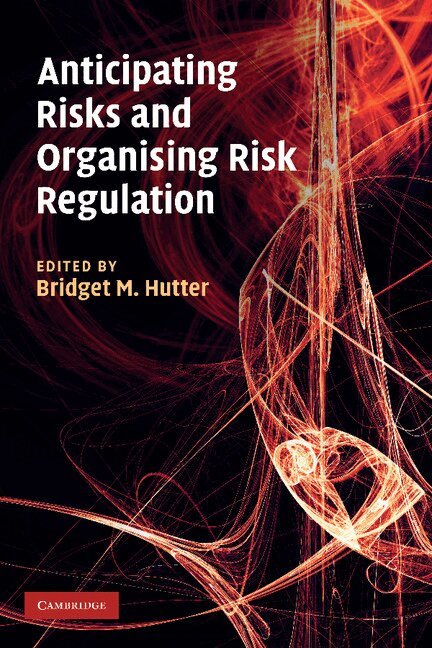
Anticipating risks has become an obsession of the early twenty-first century. Private and public sector organisations increasingly devote resources to risk prevention and contingency planning to manage risk events should they occur. This 2010 book shows how we can organise our social, organisational and regulatory policy systems to cope better with the array of local and transnational risks we regularly encounter. Contributors from a range of disciplines - including finance, history, law, management, political science, social psychology, sociology and disaster studies - consider threats, vulnerabilities and insecurities alongside social and organisational sources of resilience and security. These issues are introduced and discussed through a fascinating and diverse set of topics, including myxomatosis, the 2012 Olympic Games, gene therapy and the financial crisis. This is an important book for academics and policy makers who wish to understand the dilemmas generated in the anticipation and management of risks.
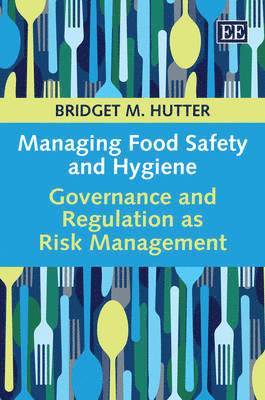
Managing Food Safety and Hygiene
Governance and Regulation as Risk Management
Inbunden, Engelska, 2011
1 859 kr
Skickas inom 7-10 vardagar
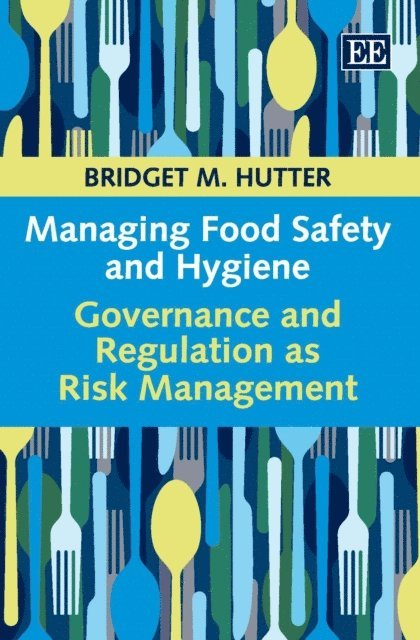
Food safety and hygiene is of critical importance to us all, yet, as periodic food crises in various countries each year show, we are all dependent on others in business and public regulation to ensure that the food we consume in the retailing and hospitality sectors is safe. Bridget Hutter considers the understandings of risk and regulation held by those in business and considers the compliance pressures on managers and owners, and how these relate to understandings of risk and uncertainty. Using data from an in-depth case study of the food retail and catering sectors in the UK, the research investigates how business risk management practices are influenced by external pressures such as state regulation, consumers, insurance and the media and by pressures within business. The argument of the book is that food businesses in the UK are generally motivated to manage risk. They realize that good risk management aligns with good business practice. However, there are challenges for an industry that is highly segmented in terms of risk management capacity. The findings have implications for contemporary risk regulation in the increasingly number of countries that rely on self-regulation. Managing Food Safety and Hygiene will prove invaluable for academic researchers and students in risk regulation studies, business studies, food studies, organizational studies, social psychology, socio-legal studies, sociology, management, public administration and political science. In addition, the book will also appeal to practitioners specifically to senior policy makers, regulators and business risk managers charged with managing risk in diverse organizational settings, and across different functional jurisdictions.
995 kr
Skickas inom 7-10 vardagar
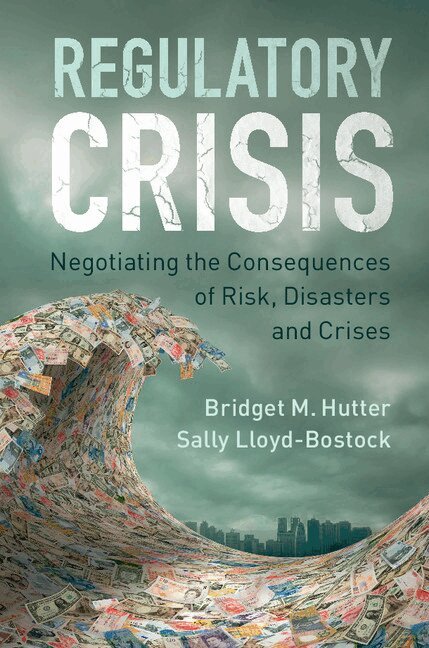
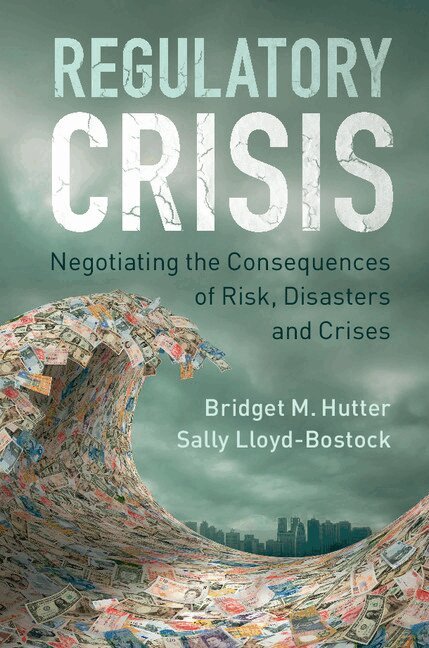
Using a new concept - 'regulatory crisis' - this book examines how major crises may or may not affect regulation. The authors provide a detailed analysis of selected well-known disasters, tracing multiple interwoven sources of influence and competing narratives shaping crises and their impact. Their findings challenge currently influential ideas about 'regulatory failure', 'risk society' and the process of learning from disasters. They argue that interpretations of and responses to disasters and crises are fluid, socially constructed, and open to multiple influences. Official sense-making can be too readily taken at face value. Failure to manage risks may not be central or even necessary for a regulatory crisis to emerge from a disaster; and the impacts for the regulator can take on a life detached from the precipitating disaster or crisis.
577 kr
Skickas inom 7-10 vardagar
Anticipating risks has become an obsession of the early twenty-first century. Private and public sector organisations increasingly devote resources to risk prevention and contingency planning to manage risk events should they occur. This 2010 book shows how we can organise our social, organisational and regulatory policy systems to cope better with the array of local and transnational risks we regularly encounter. Contributors from a range of disciplines - including finance, history, law, management, political science, social psychology, sociology and disaster studies - consider threats, vulnerabilities and insecurities alongside social and organisational sources of resilience and security. These issues are introduced and discussed through a fascinating and diverse set of topics, including myxomatosis, the 2012 Olympic Games, gene therapy and the financial crisis. This is an important book for academics and policy makers who wish to understand the dilemmas generated in the anticipation and management of risks.
410 kr
Skickas inom 7-10 vardagar
Using a new concept - 'regulatory crisis' - this book examines how major crises may or may not affect regulation. The authors provide a detailed analysis of selected well-known disasters, tracing multiple interwoven sources of influence and competing narratives shaping crises and their impact. Their findings challenge currently influential ideas about 'regulatory failure', 'risk society' and the process of learning from disasters. They argue that interpretations of and responses to disasters and crises are fluid, socially constructed, and open to multiple influences. Official sense-making can be too readily taken at face value. Failure to manage risks may not be central or even necessary for a regulatory crisis to emerge from a disaster; and the impacts for the regulator can take on a life detached from the precipitating disaster or crisis.
502 kr
Skickas inom 7-10 vardagar
Food safety and hygiene is of critical importance to us all, yet, as periodic food crises in various countries each year show, we are all dependent on others in business and public regulation to ensure that the food we consume in the retailing and hospitality sectors is safe. Bridget Hutter considers the understandings of risk and regulation held by those in business and considers the compliance pressures on managers and owners, and how these relate to understandings of risk and uncertainty. Using data from an in-depth case study of the food retail and catering sectors in the UK, the research investigates how business risk management practices are influenced by external pressures such as state regulation, consumers, insurance and the media and by pressures within business. The argument of the book is that food businesses in the UK are generally motivated to manage risk. They realize that good risk management aligns with good business practice. However, there are challenges for an industry that is highly segmented in terms of risk management capacity. The findings have implications for contemporary risk regulation in the increasingly number of countries that rely on self-regulation. Managing Food Safety and Hygiene will prove invaluable for academic researchers and students in risk regulation studies, business studies, food studies, organizational studies, social psychology, socio-legal studies, sociology, management, public administration and political science. In addition, the book will also appeal to practitioners specifically to senior policy makers, regulators and business risk managers charged with managing risk in diverse organizational settings, and across different functional jurisdictions.
1 821 kr
Skickas inom 7-10 vardagar
The environmental challenges of the twenty-first century have raised profound questions regarding the suitability of environmental law to manage the many complex issues at hand. This insightful book considers how the law has adapted to address these challenges and considers the ways in which it might be used to cope with environmental risks and uncertainties, whilst also promoting resilience and greater equality. The book uses a multi-disciplinary approach to address the compatibility of law with the notions of risk and resilience, it scrutinises how capable these approaches are to effect equitable solutions to environmental risks, and it raises important questions about multi-level and participatory governance. Key chapters examine a variety of global experiments in countries such as China and countries in Latin America, to generate further governance of the environment, improve the available legal tools and give a voice to more diverse groups. Students and scholars across a variety of fields such as environmental studies, socio-legal studies, law, and risk regulation will find this an stimulating read. Senior policy-makers in central and local government, regulators and risk managers will also find this book imperative in their efforts to manage the dilemmas of environmental control.Contributors include: F.H. Barnes, D. Curran, C. Holley, B.M. Hutter, C. Ituarte-Lima, T. Johnson, J. McDonald, L. Patton, O.W. Pedersen, D. Satterthwaite, E. Sofronova, H. Wang
582 kr
Skickas inom 7-10 vardagar
The environmental challenges of the twenty-first century have raised profound questions regarding the suitability of environmental law to manage the many complex issues at hand. This insightful book considers how the law has adapted to address these challenges and considers the ways in which it might be used to cope with environmental risks and uncertainties, whilst also promoting resilience and greater equality. The book uses a multi-disciplinary approach to address the compatibility of law with the notions of risk and resilience, it scrutinises how capable these approaches are to effect equitable solutions to environmental risks, and it raises important questions about multi-level and participatory governance. Key chapters examine a variety of global experiments in countries such as China and countries in Latin America, to generate further governance of the environment, improve the available legal tools and give a voice to more diverse groups. Students and scholars across a variety of fields such as environmental studies, socio-legal studies, law, and risk regulation will find this an stimulating read. Senior policy-makers in central and local government, regulators and risk managers will also find this book imperative in their efforts to manage the dilemmas of environmental control.Contributors include: F.H. Barnes, D. Curran, C. Holley, B.M. Hutter, C. Ituarte-Lima, T. Johnson, J. McDonald, L. Patton, O.W. Pedersen, D. Satterthwaite, E. Sofronova, H. Wang