Brigitte Fielder – författare
Visar alla böcker från författaren Brigitte Fielder. Handla med fri frakt och snabb leverans.
5 produkter
5 produkter
Inbunden, Engelska, 2019
1 027 kr
Skickas
The work of black writers, editors, publishers, and librarians is deeply embedded in the history of American print culture, from slave narratives to digital databases. While the printed word can seem democratizing, it remains that the infrastructures of print and digital culture can be as limiting as they are enabling. Contributors to this volume explore the relationship between expression and such frameworks, analyzing how different mediums, library catalogs, and search engines shape the production and reception of written and visual culture. Topics include antebellum literature, the Harlem Renaissance, the Black Arts Movement; “post-Black” art, the role of black librarians, and how present-day technologies aid or hinder the discoverability of work by African Americans. Against a Sharp White Background covers elements of production, circulation, and reception of African American writing across a range of genres and contexts. This collection challenges mainstream book history and print culture to understand that race and racialization are inseparable from the study of texts and their technologies.
Inbunden, Engelska, 2020
1 771 kr
Skickas inom 5-8 vardagar
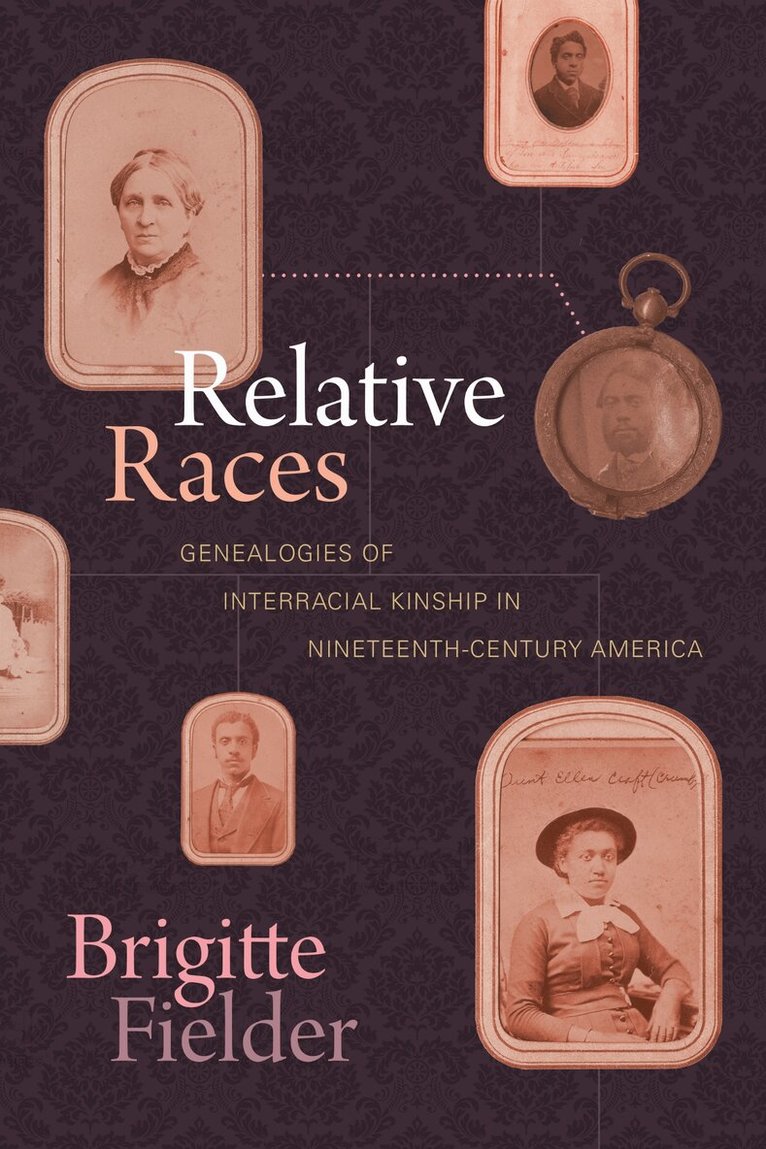
In Relative Races, Brigitte Fielder presents an alternative theory of how race is ascribed. Contrary to notions of genealogies by which race is transmitted from parents to children, the examples Fielder discusses from nineteenth-century literature, history, and popular culture show how race can follow other directions: Desdemona becomes less than fully white when she is smudged with Othello's blackface, a white woman becomes Native American when she is adopted by a Seneca family, and a mixed-race baby casts doubt on the whiteness of his mother. Fielder shows that the genealogies of race are especially visible in the racialization of white women, whose whiteness often depends on their ability to reproduce white family and white supremacy. Using black feminist and queer theories, Fielder presents readings of personal narratives, novels, plays, stories, poems, and images to illustrate how interracial kinship follows non-heteronormative, non-biological, and non-patrilineal models of inheritance in nineteenth-century literary culture.
Häftad, Engelska, 2020
433 kr
Skickas inom 5-8 vardagar
In Relative Races, Brigitte Fielder presents an alternative theory of how race is ascribed. Contrary to notions of genealogies by which race is transmitted from parents to children, the examples Fielder discusses from nineteenth-century literature, history, and popular culture show how race can follow other directions: Desdemona becomes less than fully white when she is smudged with Othello's blackface, a white woman becomes Native American when she is adopted by a Seneca family, and a mixed-race baby casts doubt on the whiteness of his mother. Fielder shows that the genealogies of race are especially visible in the racialization of white women, whose whiteness often depends on their ability to reproduce white family and white supremacy. Using black feminist and queer theories, Fielder presents readings of personal narratives, novels, plays, stories, poems, and images to illustrate how interracial kinship follows non-heteronormative, non-biological, and non-patrilineal models of inheritance in nineteenth-century literary culture.
E-bok
PDF, Engelska, 2020636 kr
Läs direkt efter köp
In Relative Races, Brigitte Fielder presents an alternative theory of how race is ascribed. Contrary to notions of genealogies by which race is transmitted from parents to children, the examples Fielder discusses from nineteenth-century literature, history, and popular culture show how race can follow other directions: Desdemona becomes less than fully white when she is smudged with Othello''s blackface, a white woman becomes Native American when she is adopted by a Seneca family, and a mixed-race baby casts doubt on the whiteness of his mother. Fielder shows that the genealogies of race are especially visible in the racialization of white women, whose whiteness often depends on their ability to reproduce white family and white supremacy. Using black feminist and queer theories, Fielder presents readings of personal narratives, novels, plays, stories, poems, and images to illustrate how interracial kinship follows non-heteronormative, non-biological, and non-patrilineal models of inheritance in nineteenth-century literary culture.
E-bok
PDF, Engelska, 2017280 kr
Läs direkt efter köp
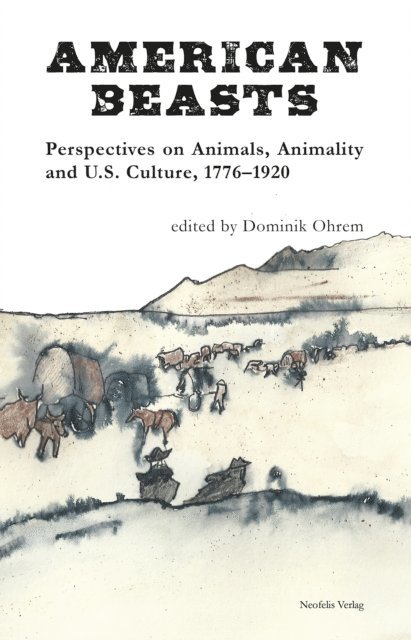
In American history, animals are everywhere. They are a ubiquitous presence in myriad historical, literary, biographical, scientific and other documents and narratives of the American past – a past that, just like the present, was shaped by a multiplicity of relations between humans and other creatures ranging from coexistence and conviviality to hostility, subjugation and extermination. While such quintessentially American species as the bison, the mustang or the grizzly continue to roam the discursive, imaginary and, now to a much lesser degree, the geographical spaces of the nation, the less iconic creatures of civilization – the various species of domesticated working and companion animals – have arguably played an even more critical role in the genesis of modern American culture and society throughout the ''long nineteenth century.''Until recently, however, despite their ubiquity in historical documents, social relations and cultural productions, animals have rarely been of serious interest to mainstream historians. American Beasts argues that an adequate understanding of American history, and indeed of ''human'' history more broadly, requires a sustained engagement with its multifaceted more-than-human dimensions.The contributions collected here offer various insights into the broad relevance of animality and human-animal relations – from the culture of pet-keeping and the role of animals and animality in the context of slavery and abolition to the emergence of animal athletes at the turn of the twentieth century – as aspects that have always influenced all areas of American society. In addition, by highlighting the ways in which human-animal relations crucially shaped the relations (of power) between different groups of humans, American Beasts shows that a stronger concern with animals and animality also allows us to address the complex intersections between the history of human-animal relations and the histories of (for example) race, class and gender in the United States in the time from the early national period to the Progressive Era.