Brij Kishore Tyagi - Böcker
Visar alla böcker från författaren Brij Kishore Tyagi. Handla med fri frakt och snabb leverans.
5 produkter
5 produkter
2 445 kr
Skickas inom 10-15 vardagar
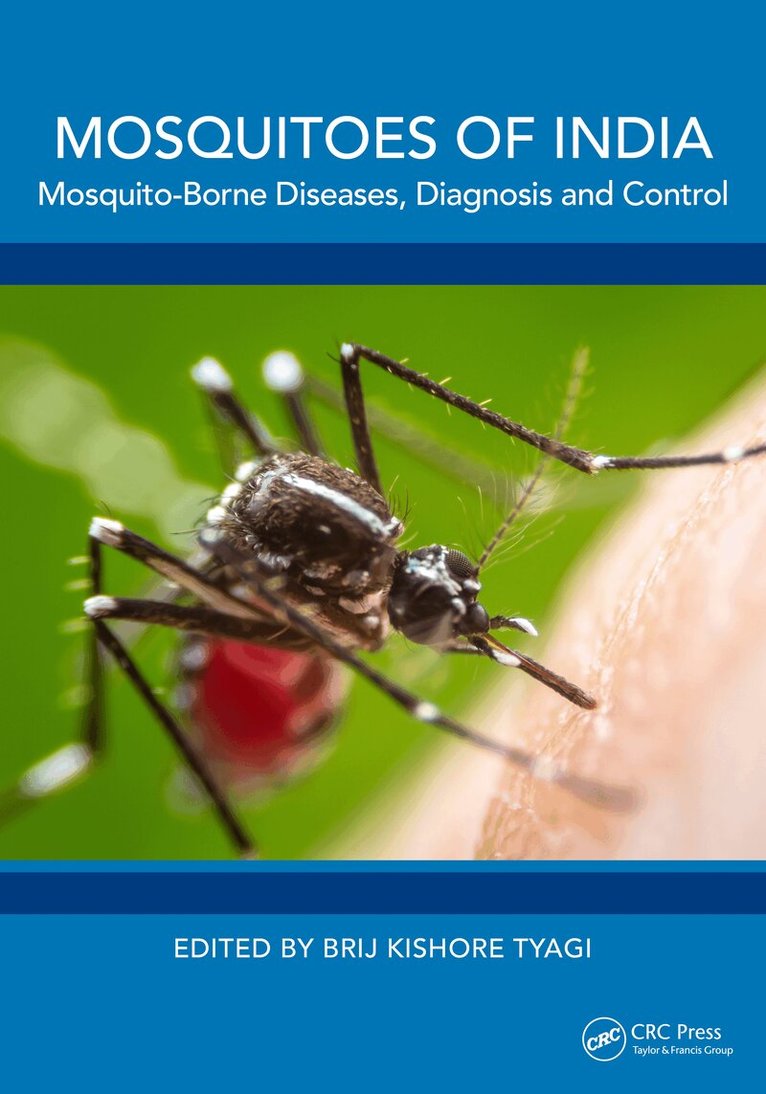
This is an up-to-date and comprehensive handbook that presents a wealth of information on the different aspects of one of the largest dipterous family, Culicidae (mosquitoes). India shares more than 10% of the global mosquito fauna and some of the deadliest mosquito species occur in the country, implying that globally, India has always been in the forefront of research and control of such deadly and/or debilitating diseases as malaria, lymphatic filariasis, dengue, chikungunya, Zika, Japanese encephalitis, West Nile Virus, etc. This book illustrates updated information, including chemical, biological, herbal, and genetical, on the control of vectors, and showcases mosquito preponderance in the neighbouring countries. The book additionally deals with the biosafety principles in theory and practice, use of emerging science of artificial intelligence in mosquito identity and control, and, of course, consideration of mosquitoes in human psyche. This authoritative account is a crucial reference source for mosquito-borne disease control and prevention. This book is meant for researchers, university students, medical entomologists, parasitologists, and public health professionals.
3 419 kr
Skickas inom 10-15 vardagar
Vector-borne diseases have increasingly emerged as significant causes of human illnesses worldwide, largely due to environmental changes (deforestation), population movements (migration and travelling), international trades, and buildup of drug resistance. These are presenting major challenge to the efficacy and use of conventional tools for controlling vector-borne diseases. Therefore, use of microbial approach for the control of vector-borne diseases is gaining importance. This book comprehensively reviews vector-borne diseases and their microbial control, emphasizing majorly on ecofriendly ways of microbial control.
Lymphatic Filariasis
Epidemiology, Treatment and Prevention - The Indian Perspective
Inbunden, Engelska, 2018
1 640 kr
Skickas inom 10-15 vardagar
Lymphatic Filariasis (LF) is a group of human and animal infectious diseases caused by nematode parasites of the order Filariidae. Often neglected, it is one of the oldest and the most debilitating tropical diseases (NTDs), transmitted from human to human by mosquitoes bites, particularly the brown black mosquito known as Culex quinquifasciatus. LF is a major public health problem in many parts of the tropics, especially India, which accounts for as much as 40% of total global cases. As a leading cause of permanent and long-term disability worldwide, the parasite infection imposes a severe physical and socioeconomic burden. The World Health Organization (WHO) estimates that 1.4 billion people live in high-risk areas – 120 million of which are already infected with LF, including 22 million children below the age of 15 and about 76 million who suffer from damaged lymphatic and renal systems.India has made great strides toward eliminating the disease, and these advances are of global significance. They include early diagnosis mechanisms, vaccine product development, detection of parasites in the vector, and studies on parasite evolution trends in nature as warning signals. Reports on the successes and failures are needed to enable measures to be taken to avoid disaster and ensure a smooth transition from endemicity in India to the elimination of lymphatic filariasis by 2020. This book, which gathers highly original contributions on various subjects related to lymphatic filariasis, discusses the latest scientific research that will help the nation to achieve this milestone. It also serves as a guide to many other countries struggling against this highly debilitating and incapacitating disease.
Genetically Modified and other Innovative Vector Control Technologies
Eco-bio-social Considerations for Safe Application
Inbunden, Engelska, 2021
1 858 kr
Skickas inom 10-15 vardagar
This book comprehensively covers the latest development in developing and deploying the genetically modified vectors, particularly Anopheles and Aedes mosquitoes responsible for transmitting malaria parasites and dengue viruses, the most deadly and/or debilitating among all the vector-borne diseases. It is considered timely and commensurate to bring about a book dealing with the various ecological, biological and social as well as regulatory aspects for the deployment of genetically modified vectors in special context with the biosafety of humans, his associates, and the environment. Written by an array of specialists and experts in various subjects of genetically modified organisms, this book centrally addresses the (i) basic principles of the genetic manipulation of vectors and they are potential impact on human and the environment, (ii) ecological, biological, ethical, legal and social implications of the use of genetically modified vectors, (iii) identification of potential hazards; assessment and management of risks for human and environment; risk/benefit analysis, (iv) principles and practices for the assessment and management of biosecurity and biosafety in laboratories (and in the field), (v) guiding principles for creation and management of institutional or national biosafety review boards and ethics review committees, and (vi) development and application of a biosafety regulatory framework and its related legal principles at national levels for securing the development and use of vector control methods based on genetic modification strategies.This publication will be useful to researchers, scientists, and professionals engaged in academic and research institutions, government or non-government, as well as students in universities and medical colleges.
Genetically Modified and other Innovative Vector Control Technologies
Eco-bio-social Considerations for Safe Application
Häftad, Engelska, 2022
1 858 kr
Skickas inom 10-15 vardagar
This book comprehensively covers the latest development in developing and deploying the genetically modified vectors, particularly Anopheles and Aedes mosquitoes responsible for transmitting malaria parasites and dengue viruses, the most deadly and/or debilitating among all the vector-borne diseases. It is considered timely and commensurate to bring about a book dealing with the various ecological, biological and social as well as regulatory aspects for the deployment of genetically modified vectors in special context with the biosafety of humans, his associates, and the environment. Written by an array of specialists and experts in various subjects of genetically modified organisms, this book centrally addresses the (i) basic principles of the genetic manipulation of vectors and they are potential impact on human and the environment, (ii) ecological, biological, ethical, legal and social implications of the use of genetically modified vectors, (iii) identification of potential hazards; assessment and management of risks for human and environment; risk/benefit analysis, (iv) principles and practices for the assessment and management of biosecurity and biosafety in laboratories (and in the field), (v) guiding principles for creation and management of institutional or national biosafety review boards and ethics review committees, and (vi) development and application of a biosafety regulatory framework and its related legal principles at national levels for securing the development and use of vector control methods based on genetic modification strategies.This publication will be useful to researchers, scientists, and professionals engaged in academic and research institutions, government or non-government, as well as students in universities and medical colleges.