Brinley Thomas – författare
2 239 kr
Skickas inom 10-15 vardagar
3 315 kr
Skickas inom 10-15 vardagar
675 kr
Läs direkt efter köp
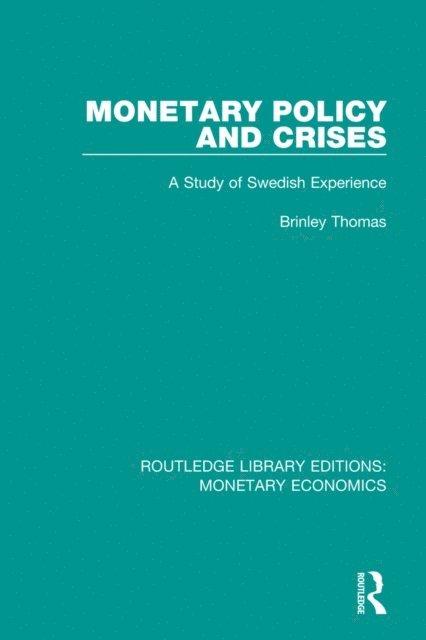
This book, first published in 1936, is both an instructive chapter in economic history and a stimulating period in the history of economic thought. The author examines the years of economic recovery in Sweden and the measures that the country adopted to cope with the crisis due to the War. This title will be of interest to students of monetary e
652 kr
Läs direkt efter köp
This book, first published in 1936, is both an instructive chapter in economic history and a stimulating period in the history of economic thought. The author examines the years of economic recovery in Sweden and the measures that the country adopted to cope with the crisis due to the War. This title will be of interest to students of monetary e
774 kr
Läs direkt efter köp
This book provides a fascinating insight into the development of the nineteenth century Atlantic economy and the nature of contemporary migration. In particular the author argues that the assumption that the United States economy was the unmoved mover in the fluctuations of the international economy between 1860 and 1913 is incorrect. He presents evidence on regional housebuilding cycles in nineteenth-century Britain and shows that the British cycle was inverse to the American, and that both were primarily determined by demographic factors. From the mid-nineteenth century, Professor Thomas concludes, the countries of new settlement - America, Canada, Argentina and Australia - experienced long swings in urban development opposite in timing to those in Britain, the principal suppliers of funds. The result was a converse pattern of capital formation and export upsurges in Britain and her overseas borrowers.
This book was first published in 1972.
753 kr
Läs direkt efter köp
This book provides a fascinating insight into the development of the nineteenth century Atlantic economy and the nature of contemporary migration. In particular the author argues that the assumption that the United States economy was the unmoved mover in the fluctuations of the international economy between 1860 and 1913 is incorrect. He presents evidence on regional housebuilding cycles in nineteenth-century Britain and shows that the British cycle was inverse to the American, and that both were primarily determined by demographic factors. From the mid-nineteenth century, Professor Thomas concludes, the countries of new settlement - America, Canada, Argentina and Australia - experienced long swings in urban development opposite in timing to those in Britain, the principal suppliers of funds. The result was a converse pattern of capital formation and export upsurges in Britain and her overseas borrowers.
This book was first published in 1972.
1 823 kr
Skickas inom 10-15 vardagar
574 kr
Skickas inom 10-15 vardagar
698 kr
Skickas inom 10-15 vardagar
2 822 kr
Läs direkt efter köp
2 239 kr
Skickas inom 10-15 vardagar