Briony Jones – författare
719 kr
Skickas inom 10-15 vardagar
2 020 kr
Skickas inom 10-15 vardagar
758 kr
Läs direkt efter köp
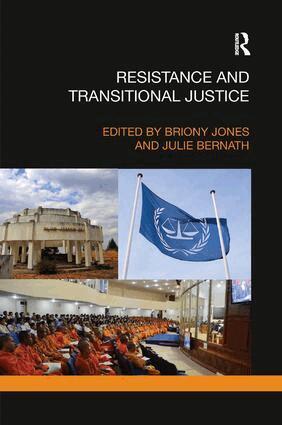
Despite a more reflective concern over the past 20 years with marginalised voices, justice from below, power relations and the legitimacy of mechanisms and processes, scholarship on transitional justice has remained relatively silent on the question of ‘resistance’. In response, this book asks what can be learnt by engaging with resistance to transitional justice not just as a problem of process, but as a necessary element of transitional justice. Drawing on literatures about resistance from geography and anthropology, it is the social act of labelling resistance, along with its subjective nature, that is addressed here as part of the political, economic, social and cultural contexts in which transitional justice processes unfold. Working through three cases – Côte d’Ivoire, Burundi and Cambodia – each chapter of the book addresses a different form or meaning of resistance, from the vantage point of multiple actors. As such, each chapter adds a different element to an overall argument that disrupts the norm/deviancy dichotomy that has so far characterised the limited work on resistance and transitional justice. Together, the chapters of the book develop cross-cutting themes that elaborate an overall argument for considering resistance to transitional justice as a subjective element of a political process, rather than as a problem of implementation.
758 kr
Läs direkt efter köp
Despite a more reflective concern over the past 20 years with marginalised voices, justice from below, power relations and the legitimacy of mechanisms and processes, scholarship on transitional justice has remained relatively silent on the question of ‘resistance’. In response, this book asks what can be learnt by engaging with resistance to transitional justice not just as a problem of process, but as a necessary element of transitional justice. Drawing on literatures about resistance from geography and anthropology, it is the social act of labelling resistance, along with its subjective nature, that is addressed here as part of the political, economic, social and cultural contexts in which transitional justice processes unfold. Working through three cases – Côte d’Ivoire, Burundi and Cambodia – each chapter of the book addresses a different form or meaning of resistance, from the vantage point of multiple actors. As such, each chapter adds a different element to an overall argument that disrupts the norm/deviancy dichotomy that has so far characterised the limited work on resistance and transitional justice. Together, the chapters of the book develop cross-cutting themes that elaborate an overall argument for considering resistance to transitional justice as a subjective element of a political process, rather than as a problem of implementation.
1 726 kr
Skickas inom 5-8 vardagar
1 432 kr
Skickas inom 5-8 vardagar
410 kr
Läs direkt efter köp
Throughout the book, Briony Jones addresses contemporary criticism of transitional justice theory and practice in order to improve our understanding of the agency of people at times of transition. Drawing on three diverse case studies from across the globe, chapters demonstrate how the transitional justice citizen is defined by transitional justice discourse, policy and practice, and through acts of claiming justice such as protests and political violence. Combining in-depth theorization with empirical insights, this perceptive book positions the concept of citizenship within the context of long-term historical political struggle and the contemporary importance of justice.
Investigating the current debates and key research gaps in the field of transitional justice, this book will be vital reading for students and scholars of transitional justice, including those focusing on peacebuilding, citizenship, democratization, and political geography. It will also be beneficial for transitional justice practitioners who wish to reflect on their practice and compare their work with other case studies.