Britt Baillie – författare
Visar alla böcker från författaren Britt Baillie. Handla med fri frakt och snabb leverans.
7 produkter
7 produkter
Inbunden, Engelska, 2021
1 782 kr
Skickas inom 10-15 vardagar
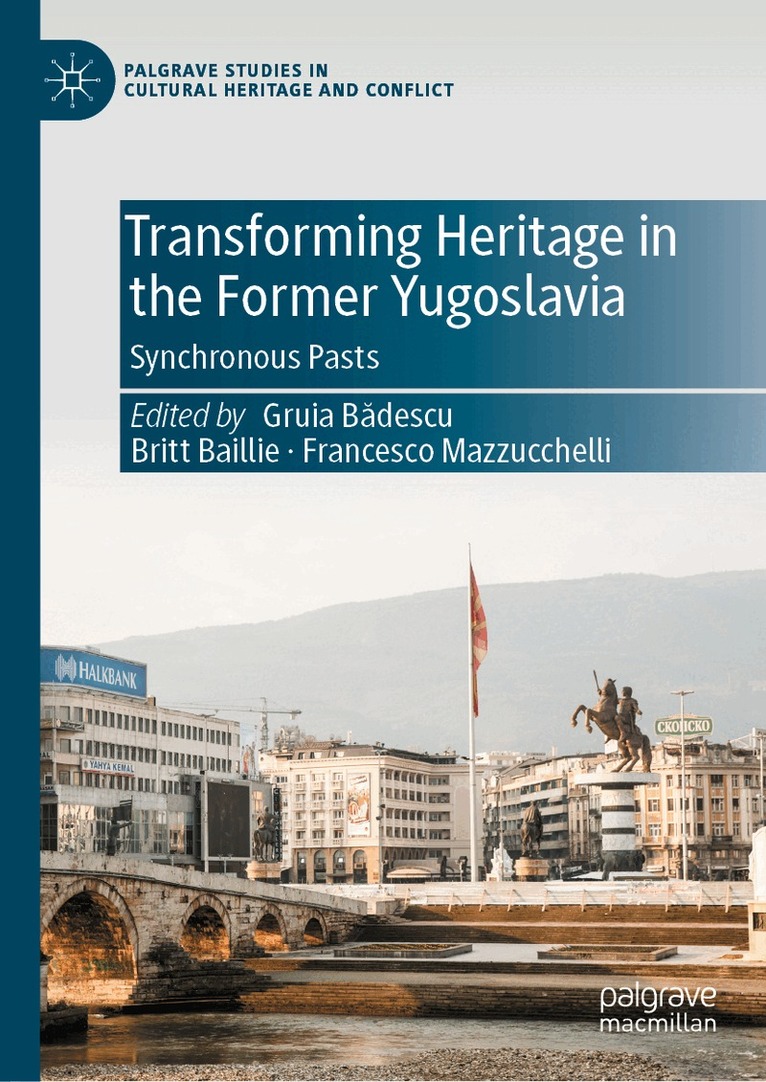
Heritage became a target during the Yugoslav Wars as part of ethnic cleansing and urbicide. Out of the ashes of war, pasts were remodelled, places took on new layers of meaning, and a wave of new memorialization took hold. Three decades since the fall of Vukovar and the end of the siege of Sarajevo, and more than a decade since Kosovo’s Declaration of Independence, conflict has shifted from armed confrontations to battles about the past. The former Yugoslavia has been described on the one hand as a bastion of plurality and multiculturalism, and on the other, as a territory of antagonism and radical nationalisms, echoing imaginaries and narratives relevant to Europe as a whole. With Croatia having entered the EU in 2013 and the continuous political contestation in the region, wounds in the memory fabric of the former Yugoslavia have once more come to the world’s attention. Thus, there is the question what will happen when the former republics are ‘reunited’ once more under the EU umbrella, itself beset by increasing populisms, nationalisms, and the looming prospects of territorial fragmentation. This collection scrutinizes the role of heritage in ‘conflict-time’, inquires what role the past might have in creating new identities at the local, regional, national, and supra-national levels, and investigates the dynamics of heritage as a process.
E-bok
Engelska, 20212 273 kr
Läs direkt efter köp
Heritage became a target during the Yugoslav Wars as part of ethnic cleansing and urbicide. Out of the ashes of war, pasts were remodelled, places took on new layers of meaning, and a wave of new memorialization took hold. Three decades since the fall of Vukovar and the end of the siege of Sarajevo, and more than a decade since Kosovo’s Declaration of Independence, conflict has shifted from armed confrontations to battles about the past. The former Yugoslavia has been described on the one hand as a bastion of plurality and multiculturalism, and on the other, as a territory of antagonism and radical nationalisms, echoing imaginaries and narratives relevant to Europe as a whole. With Croatia having entered the EU in 2013 and the continuous political contestation in the region, wounds in the memory fabric of the former Yugoslavia have once more come to the world’s attention. Thus, there is the question what will happen when the former republics are ‘reunited’ once more under the EU umbrella, itself beset by increasing populisms, nationalisms, and the looming prospects of territorial fragmentation. This collection scrutinizes the role of heritage in ‘conflict-time’, inquires what role the past might have in creating new identities at the local, regional, national, and supra-national levels, and investigates the dynamics of heritage as a process.
Häftad, Engelska, 2022
1 782 kr
Skickas inom 10-15 vardagar
Heritage became a target during the Yugoslav Wars as part of ethnic cleansing and urbicide. Out of the ashes of war, pasts were remodelled, places took on new layers of meaning, and a wave of new memorialization took hold. Three decades since the fall of Vukovar and the end of the siege of Sarajevo, and more than a decade since Kosovo’s Declaration of Independence, conflict has shifted from armed confrontations to battles about the past. The former Yugoslavia has been described on the one hand as a bastion of plurality and multiculturalism, and on the other, as a territory of antagonism and radical nationalisms, echoing imaginaries and narratives relevant to Europe as a whole. With Croatia having entered the EU in 2013 and the continuous political contestation in the region, wounds in the memory fabric of the former Yugoslavia have once more come to the world’s attention. Thus, there is the question what will happen when the former republics are ‘reunited’ once more under the EU umbrella, itself beset by increasing populisms, nationalisms, and the looming prospects of territorial fragmentation. This collection scrutinizes the role of heritage in ‘conflict-time’, inquires what role the past might have in creating new identities at the local, regional, national, and supra-national levels, and investigates the dynamics of heritage as a process.
Inbunden, Engelska, 2026
10 095 kr
Kommande
The Palgrave Encyclopedia of Cultural Heritage and Conflict critically analyses the relationship between cultural heritage and conflict as well as the tangible and intangible remnants, traces and spaces of competing heritages and memories of the past in the present. The interdisciplinary scope of the encyclopaedia breaks new ground in the study of contemporary narratives of cultural heritage and conflict and the ways in which they broaden public understandings of the complex spacio-temporal dynamics between heritage, memory, conflict, and identity. By crossing academic, artistic and professional boundaries, the encyclopedia aims to contribute to a better understanding of the extent to which practices and discourses of heritage and conflict operate as vehicles at local, national and transnational levels.
Inbunden, Engelska, 2020
1 407 kr
Skickas inom 10-15 vardagar
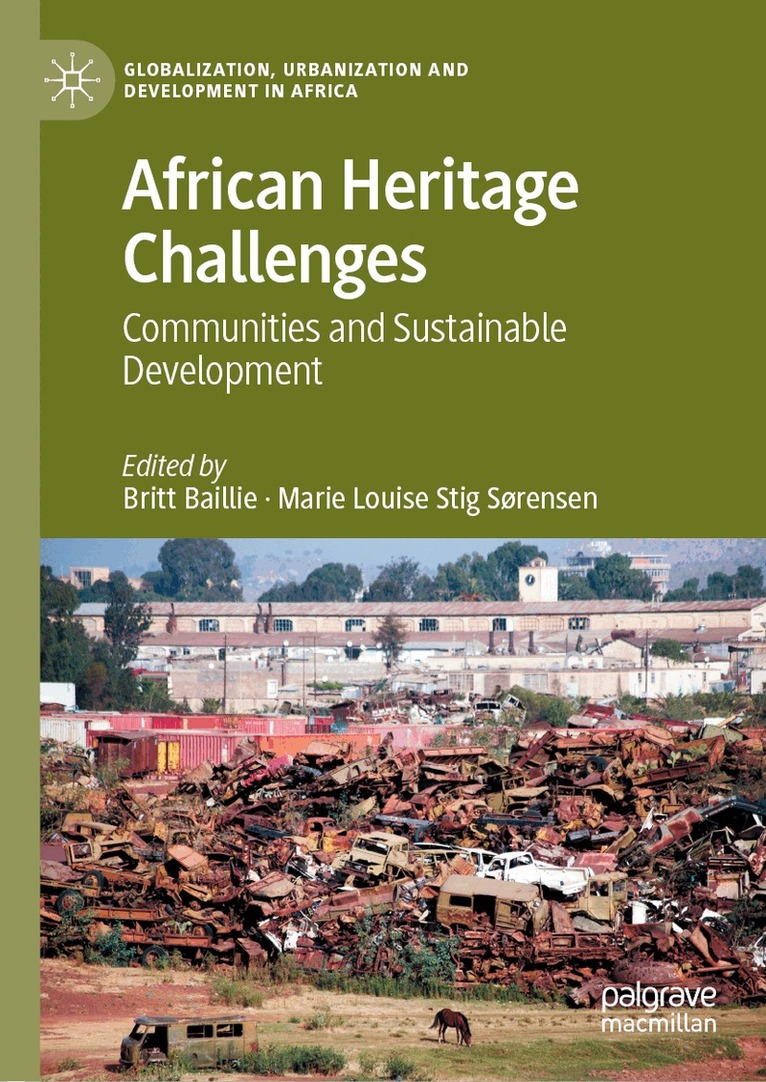
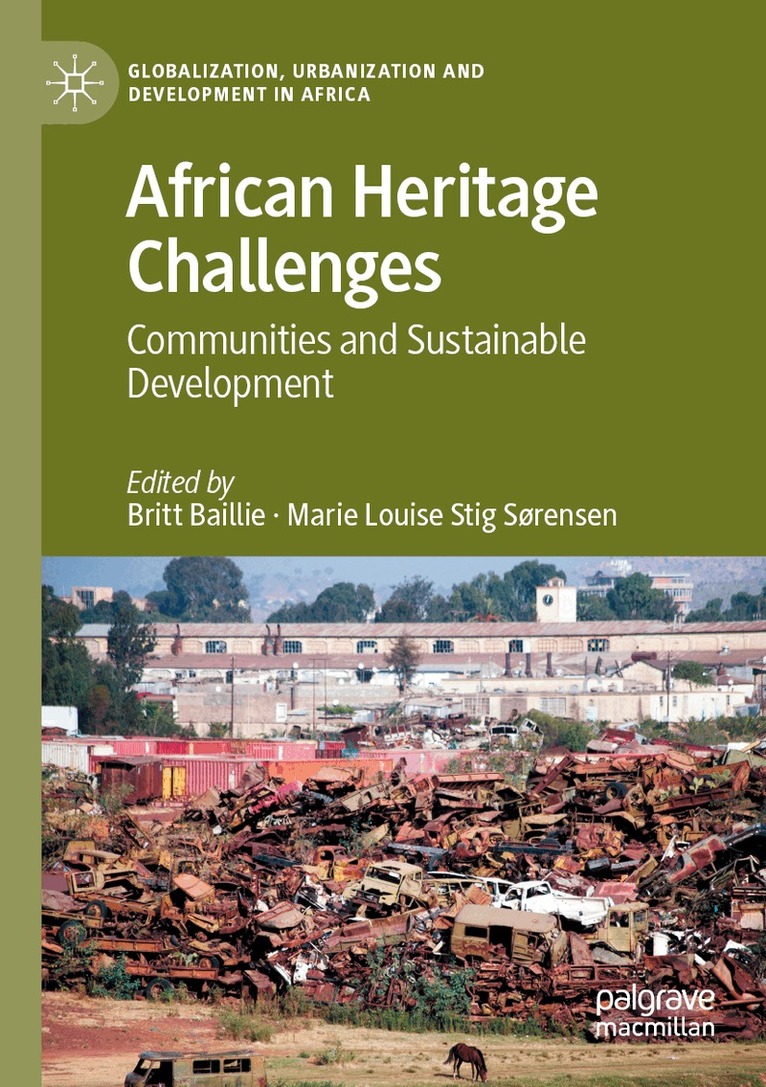
The richness of Africa’s heritage at times stands in stark contrast to the economic, health, political and societal challenges faced. Development is essential but in what forms? For whom? Following whose agendas? At what costs? This book explores how heritage can promote, secure, or undermine sustainable development with special focus on sub-Saharan Africa, and in turn, how this affects conceptions of heritage. The chapters in this volume identify shared challenges, good practices and failures, and use specific case studies to provide detailed insights into varied forms of heritage and heritage defining processes on the continent. By critically analysing the often romanticised discourses of ‘heritage’, ‘community engagement’, and ‘sustainable development’ the volume suggests ways of harnessing aspects of heritage to tackle some of the socio-economic and political pressures facing heritage practices on the continent, including the legacies of colonialism.
E-bok
Engelska, 20201 733 kr
Läs direkt efter köp
The richness of Africa’s heritage at times stands in stark contrast to the economic, health, political and societal challenges faced. Development is essential but in what forms? For whom? Following whose agendas? At what costs? This book explores how heritage can promote, secure, or undermine sustainable development with special focus on sub-Saharan Africa, and in turn, how this affects conceptions of heritage. The chapters in this volume identify shared challenges, good practices and failures, and use specific case studies to provide detailed insights into varied forms of heritage and heritage defining processes on the continent. By critically analysing the often romanticised discourses of ‘heritage’, ‘community engagement’, and ‘sustainable development’ the volume suggests ways of harnessing aspects of heritage to tackle some of the socio-economic and political pressures facing heritage practices on the continent, including the legacies of colonialism.
Häftad, Engelska, 2021
1 407 kr
Skickas inom 10-15 vardagar
The richness of Africa’s heritage at times stands in stark contrast to the economic, health, political and societal challenges faced. Development is essential but in what forms? For whom? Following whose agendas? At what costs? This book explores how heritage can promote, secure, or undermine sustainable development with special focus on sub-Saharan Africa, and in turn, how this affects conceptions of heritage. The chapters in this volume identify shared challenges, good practices and failures, and use specific case studies to provide detailed insights into varied forms of heritage and heritage defining processes on the continent. By critically analysing the often romanticised discourses of ‘heritage’, ‘community engagement’, and ‘sustainable development’ the volume suggests ways of harnessing aspects of heritage to tackle some of the socio-economic and political pressures facing heritage practices on the continent, including the legacies of colonialism.