BROUGHTON – författare
Visar alla böcker från författaren BROUGHTON. Handla med fri frakt och snabb leverans.
5 produkter
5 produkter
Inbunden, Engelska, 2017
1 678 kr
Skickas inom 5-8 vardagar
The Letters of Chan Master Dahui Pujue offers a complete annotated translation, the first into English, of a Chan Buddhist classic, the collected letters of the Southern Song Linji Chan teacher Dahui Zonggao (1089-1163). Addressed to forty scholar-officials, members of the elite class in Chinese society, and to two Chan masters, these letters are dharma talks on how to engage in Buddhist cultivation. Each of the letters to laymen is fascinating as a document directed to a specific scholar-official with his distinctive niche, high or low, in the Song-dynasty social-political landscape, and his idiosyncratic stage of development on the Buddhist path. Dahui is engaging, incisive, and often quite humorous in presenting his teaching of "constantly lifting to awareness the phrase (huatou)," his favored phrases being No (wu) and dried turd. Throughout one's busy twenty-four hours, the practitioner is not to perform any mental operation whatsoever on this phrase, and to "take awakening as the standard."This epistolary compilation has long constituted a self-contained course of study for Chan practitioners. For centuries, Letters of Dahui has been revered throughout East Asia. It has exerted a formative influence on Linji Chan practice in China, molded Sŏn practice in Korea, and played a key role in Hakuin (Rinzai) Zen in Japan. Jeffrey Broughton's translation, has made extensive use of Mujaku Dōchū's (1653-1744) insightful commentary on Letters of Dahui, Pearl in the Wicker-Basket.
Häftad, Engelska, 2011
309 kr
Skickas inom 5-8 vardagar
E-bok
PDF, Engelska, 20131 122 kr
Läs direkt efter köp
J ÜRGEN AscHOFF "Very bad habit! Very bad habit!" Captain Giles to Joseph Conrad who had taken a siesta. -Conrad: The Shadow Line On the Multiplicity of Rest-Activity Cycles: Some Historical and Conceptual Notes According to its title this book tries to answer the profound question of why we nap-and why Captain Giles was wrong in blaming Conrad for having napped. However, in this volume the term nap is not used in the narrower sense of an afternoon siesta; instead, emphasis is placed on the recurrent alternation between states of alertness and drowsiness, i. e. , on rest-activity cycles of high er frequency throughout the 24 hr. In view of this focus, two authors (Stampi, in Chapter I, and Ball, in Chapter 3) rightly refer to the psychologist Szymanski who was among the first to describe "polyphasic" activity patterns. Hence, I consider it appropriate to open this foreword with a few historical remarks. At the time when Szymanski (1920) made the distinction between "monophasic" and "polyphasic" rest-activity patterns and sleep-wake cy cles, respectively, not much was known about the mechanisms of such temporal structures. Although the botanists quite some time ago had demonstrated the endogenous nature of the "monophasic" sleep movements in plants, the hypothesis of an (still unknown) external driving force was favored by those who studied rhythms in animals and humans (Aschoff, 1990).
Häftad, Engelska, 2013
927 kr
Skickas inom 10-15 vardagar
J ÜRGEN AscHOFF "Very bad habit! Very bad habit!" Captain Giles to Joseph Conrad who had taken a siesta. -Conrad: The Shadow Line On the Multiplicity of Rest-Activity Cycles: Some Historical and Conceptual Notes According to its title this book tries to answer the profound question of why we nap-and why Captain Giles was wrong in blaming Conrad for having napped. However, in this volume the term nap is not used in the narrower sense of an afternoon siesta; instead, emphasis is placed on the recurrent alternation between states of alertness and drowsiness, i. e. , on rest-activity cycles of high er frequency throughout the 24 hr. In view of this focus, two authors (Stampi, in Chapter I, and Ball, in Chapter 3) rightly refer to the psychologist Szymanski who was among the first to describe "polyphasic" activity patterns. Hence, I consider it appropriate to open this foreword with a few historical remarks. At the time when Szymanski (1920) made the distinction between "monophasic" and "polyphasic" rest-activity patterns and sleep-wake cy cles, respectively, not much was known about the mechanisms of such temporal structures. Although the botanists quite some time ago had demonstrated the endogenous nature of the "monophasic" sleep movements in plants, the hypothesis of an (still unknown) external driving force was favored by those who studied rhythms in animals and humans (Aschoff, 1990).
Ljudbok
Spanska, 2021103 kr
Lyssna direkt efter köp
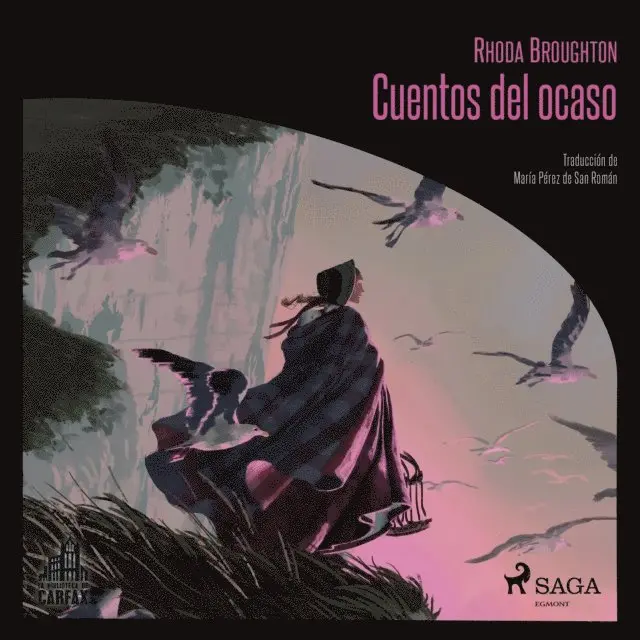
Deliciosa colección de cuentos escalofriantes para los amantes del misterio. Una de las más destacadas damas de la literatura victoriana, Rhoda Broughton, nos presenta unas historias capaces de poner la piel de gallina al lector más avezado. Incluye los títulos: «La verdad, toda la verdad y nada más que la verdad», «El hombre de la nariz», «Bajo la capa», «¡Atiende! Era un sueño» y «El pobre y apuesto Bobby».Este audiolibro está narrado en castellano.Rhoda Broughton fue una novelista británica nacida en Denbigh (Gales) en 1840 y fallecida en Headinton Hill (Oxford) en 1920. Sobrina de Sheridan Le Fanu, cultivó la novela en más de treinta títulos en los que abordó temas como el adulterio y la libertad sexual, así como numerosos relatos de corte fantástico y sobrenatural.