
Brown Lucien Brown – författare
Visar alla böcker från författaren Brown Lucien Brown. Handla med fri frakt och snabb leverans.
2 produkter
2 produkter
E-bok
Engelska, 20231 353 kr
Läs direkt efter köp
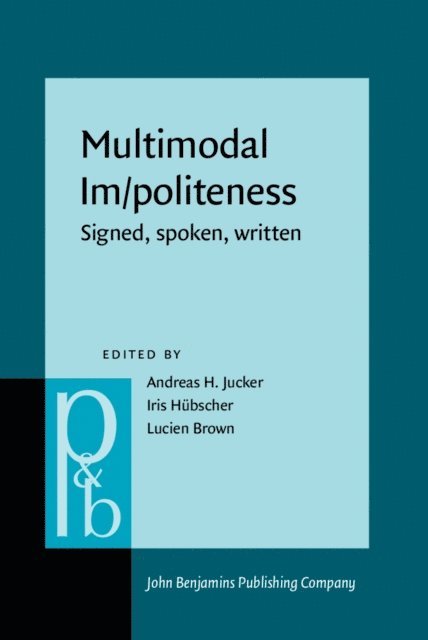
Politeness and impoliteness are not just expressed by words. People communicate polite and impolite attitudes towards each other through their intonation, tone of voice, their facial expressions, their gestures, the positioning of their bodies towards each other, and so on. This volume brings together eleven empirical studies that investigate these various modalities of im/politeness across signed, spoken and written languages, plus a detailed introductory chapter that establishes a framework for the multimodal investigation of im/politeness. The papers cover a range of languages and cultures, including Swiss German Sign Language, Catalan Sign Language, English (as a native language and as a lingua franca), Korean, Catalan, Persian, Japanese and Spanish. Using a range of data sources and state-of-the art methodologies, the papers reveal that these multimodal features are essential aspects of im/politeness across different languages, cultures and modes of interaction. Put together, the findings from these studies lay the groundwork for a new understanding of im/politeness which is fundamentally multimodal.
E-bok
PDF, Engelska, 20111 353 kr
Läs direkt efter köp
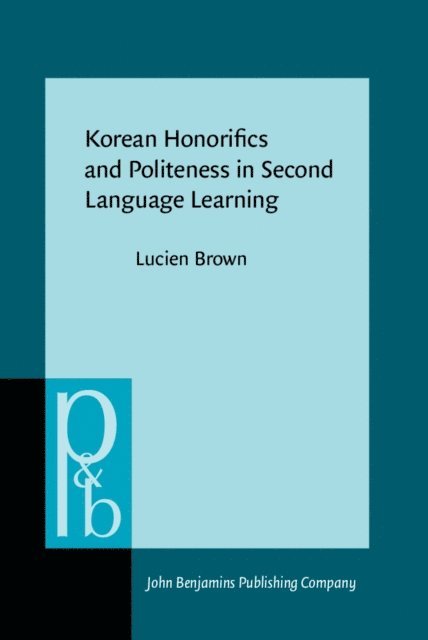
This book investigates the ways that advanced speakers of Korean as a second language perceive, use and learn the complexities of the Korean honorifics system. Despite their advanced proficiency in Korean, the study shows that the honorifics use of these speakers diverges in crucial ways from native speaker norms. It is argued that, rather than reflecting the language competence of these speakers as such, this usage is linked to questions of the identity of "e;language learners"e; and "e;foreigners"e; in Korean society. In addition, it shows the influence of conflicting ideologies regarding the "e;meaning"e; of "e;politeness"e;. This argument is backed up by rich data collected through mixed methods (discourse completion tests, role-plays, natural interactions, introspective interviews), allowing for a detailed picture of how the honorifics use of second language speakers emerges in context. The book concludes by discussing the implications of the study for politeness research, interlanguage pragmatics and language pedagogy.