Bruce A. Reed – författare
Visar alla böcker från författaren Bruce A. Reed. Handla med fri frakt och snabb leverans.
4 produkter
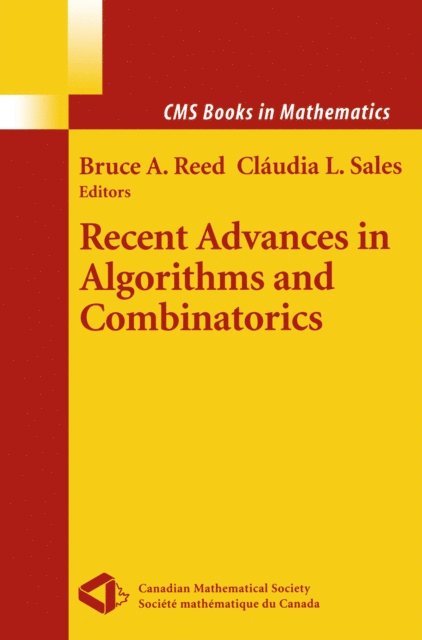
Recent Advances in Algorithms and Combinatorics
Av Claudia L. Linhares-Sales, Bruce A. Reed
E-bok, 2006
1427 kr
Lägg i varukorg
Combinatorics is one of the fastest growing ?elds of mathematics. In large measure this is because many practical problems can be modeled and then e?ciently solved using combinatorial theory. This real world motivation for studying algorithmic combinatorics has led not only to the development of …
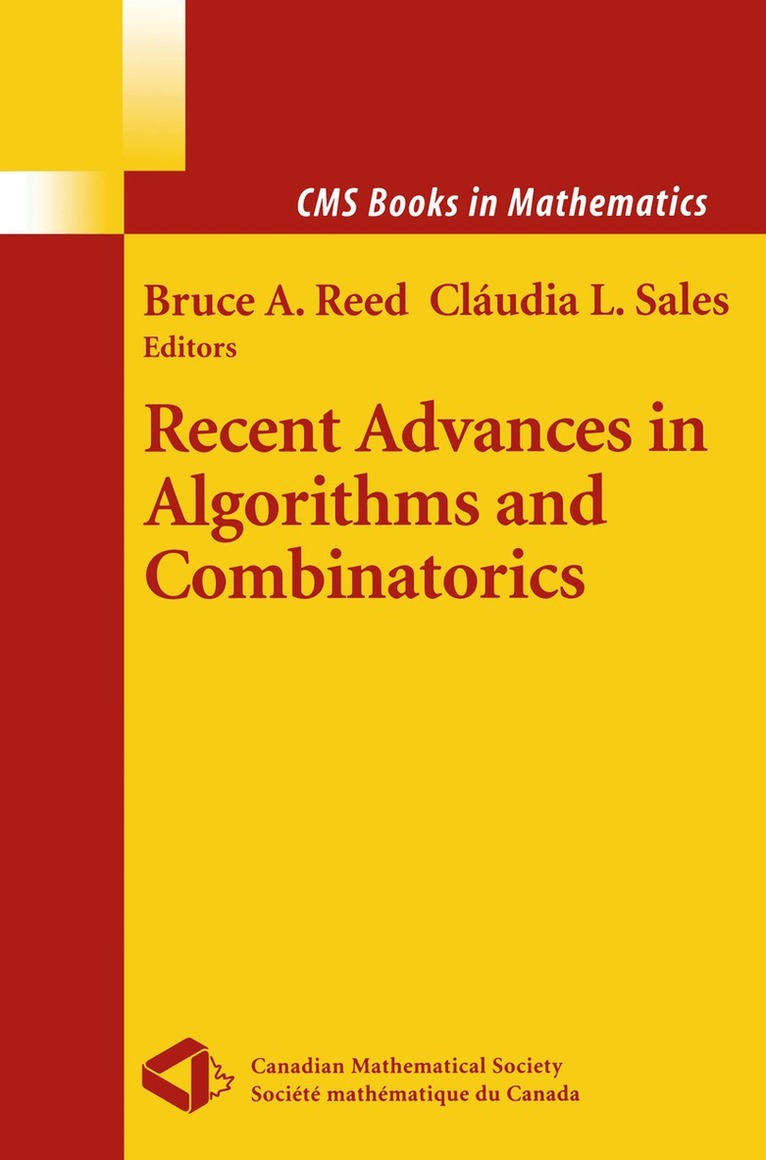
Recent Advances in Algorithms and Combinatorics
Av Bruce A. Reed, Claudia L. Linhares-Sales
Inbunden, 2002
1096 kr
Lägg i varukorg
Combinatorics is one of the fastest growing ?elds of mathematics. In large measure this is because many practical problems can be modeled and then e?ciently solved using combinatorial theory. This real world motivation for studying algorithmic combinatorics has led not only to the development of …
Perfect Graphs
Av Jorge L. Ramírez-Alfonsín, Bruce A. Reed
Inbunden, 2001
3016 kr
Lägg i varukorg
The theory of perfect graphs was born out of a conjecture about graph colouring made by Claude Berge in 1960. That conjecture remains unsolved, but has generated an important area of research in combinatorics. This book:* Includes an introduction by Claude Berge, the founder of perfect graph theory …
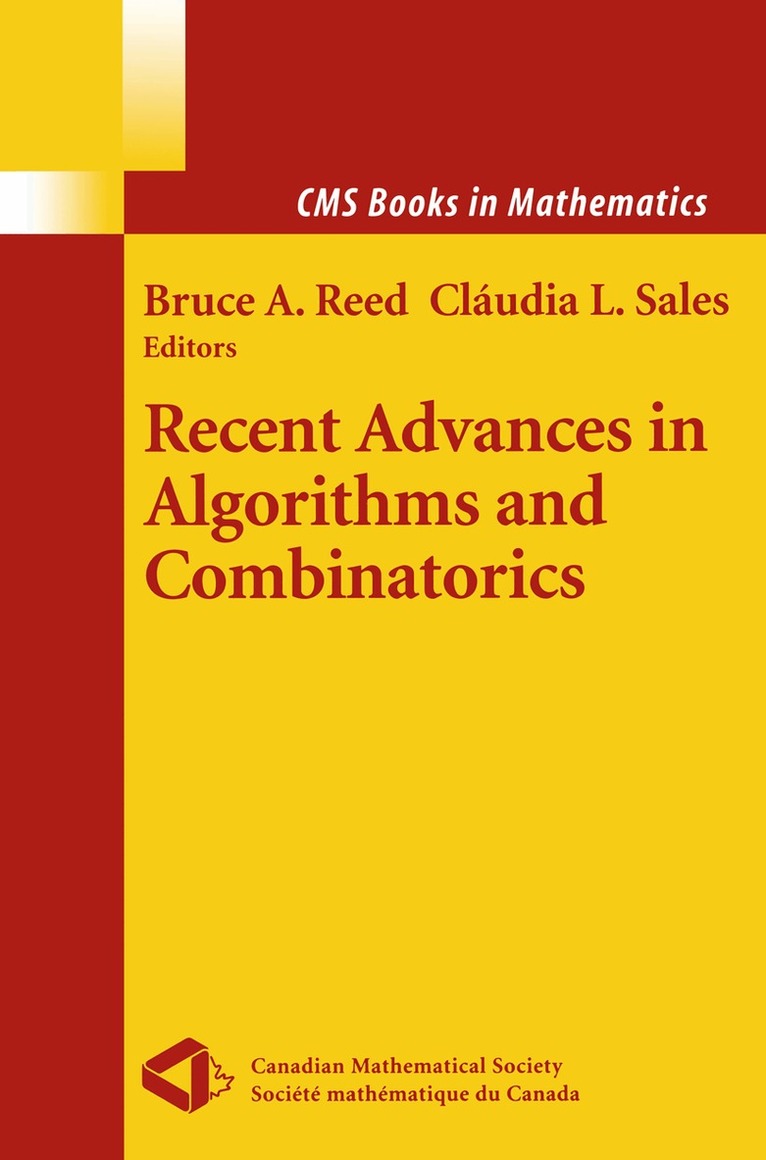
Recent Advances in Algorithms and Combinatorics
Av Bruce A. Reed, Claudia L. Linhares-Sales
Häftad, 2012
1096 kr
Lägg i varukorg
Combinatorics is one of the fastest growing ?elds of mathematics. In large measure this is because many practical problems can be modeled and then e?ciently solved using combinatorial theory. This real world motivation for studying algorithmic combinatorics has led not only to the development of …