Bruce Bracken - Böcker
Visar alla böcker från författaren Bruce Bracken. Handla med fri frakt och snabb leverans.
5 produkter
5 produkter
Del 19 - Essentials of Psychological Assessment
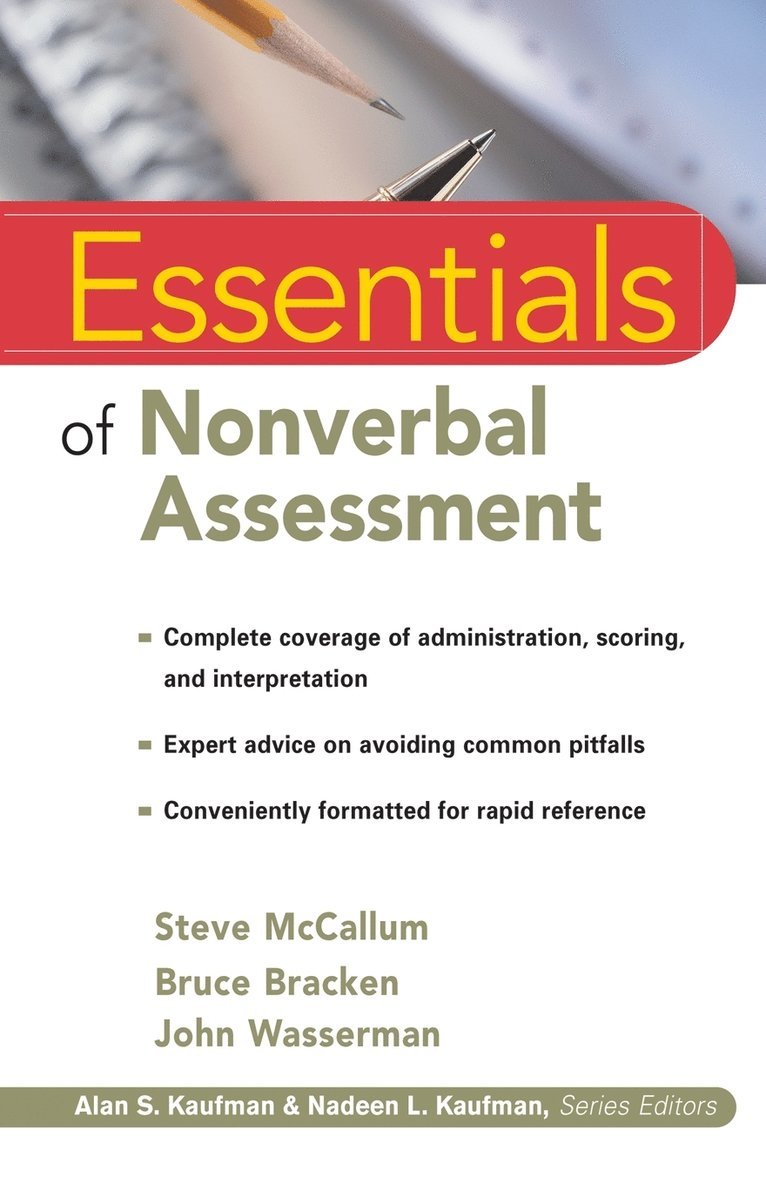
Essentials of Nonverbal Assessment
Häftad, Engelska, 2000
537 kr
Skickas inom 7-10 vardagar
Quickly acquire the knowledge and skills you need to confidentlyadminister, score, and interpret nonverbal assessment tests Essentials of Nonverbal Assessment covers the nine most widely usednonverbal assessment tests--the Comprehensive Test of NonverbalIntelligence (C-TONI); Tests of Nonverbal Intelligence-III(TONI-III); Universal Nonverbal Intelligence Test (UNIT); Leiter-R;Beta, Third Edition (Beta-III); Cognitive Abilities Test (CogAT);General Ability Measure for Adults (GAMA); Naglieri NonverbalAbility Test, Multilevel Form (NNAT); and Raven's ProgressMatrices. To use the tests properly, professionals need anauthoritative source of advice and guidance on how to administer,score, and interpret these tests. Written by Drs. McCallum andBracken (creators of the UNIT) and Dr. Wasserman of the Universityof Tennessee, Essentials of Nonverbal Assessment is that source.Like all the volumes in the Essentials of Psychological Assessmentseries, this book is designed to help busy mental healthprofessionals quickly acquire the knowledge and skills they need tomake optimal use of major psychological assessment instruments.Each concise chapter features numerous callout boxes highlightingkey concepts, bulleted points, and extensive illustrative material,as well as test questions that help you gauge and reinforce yourgrasp of the information covered. Essentials of Nonverbal Assessment includes vital information abouteach of the nonverbal tests, including practical interpretationscales. The authors provide step-by-step guidance on testadministration, scoring, and interpretation, along with theirexpert assessment of the tests' relative strengths and weaknesses,valuable advice on their clinical applications, and severalilluminating case reports. Other titles in the Essentials of Psychological Assessmentseries: Essentials of WAIS-III Assessmen Essentials of Bayley Scales of Infant Development-IIAssessment Essentials of WISC-III and WPPSI-R Assessment Essentials of Myers-Briggs Type Indicator Assessment Essentials of Rorschach Assessment Essentials of Career Interest Assessment Essentials of Cognitive Assessment with KAIT and Other KaufmanMeasures Essentials of Cross-Battery Assessment
Del 194 - Wiley Series on Personality Processes
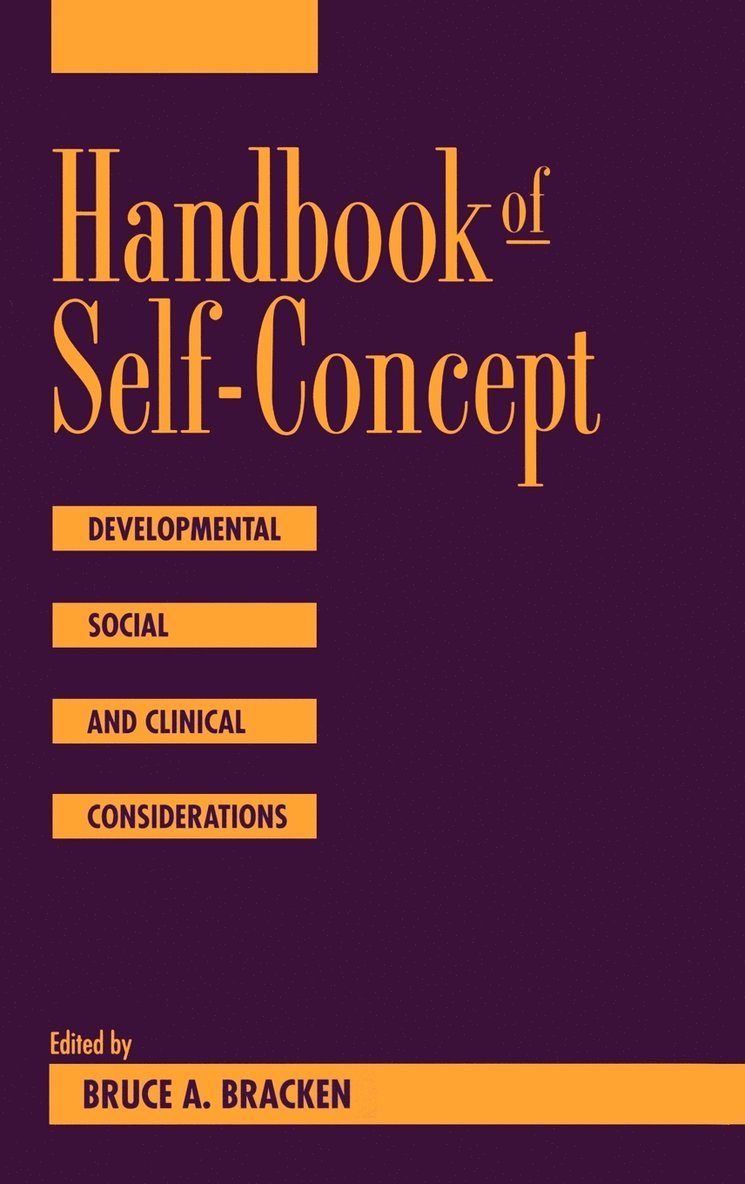
Handbook of Self-Concept
Developmental, Social, and Clinical Considerations
Inbunden, Engelska, 1995
3 451 kr
Skickas inom 7-10 vardagar
Of related interest... SOCIAL ORIGINS OF MENTAL ABILITY —Gary CollierThis volume is the first comprehensive, systematic survey of research into the non-hereditary influences on intelligence. Focusing on the cultural, environmental, and social influences on the development of mental abilities, Dr. Collier helps to advance the nurture side of the "nature vs. nurture" debate. He also offers a viable synthesis of supporting facts and ideas from the worlds of psychology, the psychology of personality, and cognitive psychology. This book will have a profound influence upon academe, the psychological community, educators, and policymakers. 1993 (0-471-30407-7) 320 pp.EGO DEFENSES: Theory and Measurement —Edited by Hope R. Conte and Robert PlutchikThis book explores the nature and manifestations of defense mechanisms and traces ego defense theory and research from Freud's initial conceptualization through recent work in object-relations theory and other psychoanalytically oriented approaches. It provides clinical guidelines for diagnosing, assessing, and dealing with defenses, reviews empirical research techniques, and indicates their value in development and in psychotherapy. This volume should be of value to theoreticians, clinicians, and researchers interested in finding appropriate tools for measurement of defense mechanisms. 1994 (0-471-05233-7) 352 pp.A THEORY OF PERSONALITY DEVELOPMENT —Luciano L'Abate with Charles H. BrysonLuciano L'Abate's theories are rooted in social interactions and life experiences, unlike the more traditional, somewhat metaphysical theories of personality development. In this groundbreaking work, he brings to light the heart of his theory, that the ability to love and to negotiate are the sine qua non of personal competence, with the family as the major determinant of both. This book is essential reading for personality researchers, students, and all psychologists in clinical, developmental, abnormal, and social psychology. 1993 (0-471-30303-8) 336 pp.Handbook of Self-Concept"If we could see ourselves as others see us, we would vanish on the spot." —E. M. CioranIt is one of the most intimate of realities and the slipperiest of abstractions. For Sartre it was a double negative and for B. F. Skinner, a set of learned responses. Among exponents of artificial intelligence it is the Oz at the end of the rainbow, while for Voltaire it was an unavoidable pathology. And, ever since William James first identified consciousness of self as a discrete psychological phenomenon, more than a century ago, it has been the source of intense speculation and debate among psychologists.In the past twenty years alone, over 11,000 studies have been conducted on various aspects of self-concept. Much progress has been made, and a general consensus has been reached about many of its aspects, yet, many fundamental questions remain unanswered, such as: What exactly do we mean when we say "self"? Is self-concept an aspect of a broader cognitive self-system, or is it best defined in behavioral terms? How valuable is self-concept to clinical practice? What roles do age, race, gender, and sociocultural variables play in self-concept?Bringing together contributions from leading researchers and clinicians from a broad range of psychological disciplines, this book provides answers to these and other important questions concerning self-concept. It explores all theoretical and applied aspects of self-concept, offering a balanced synthesis of the vast body of information on the subject that has accumulated since the 1970s. Chapters address each of the six primary self-concept domains (competence, social, affect, academic, family, and physical) with an emphasis on the clinical significance of each. In the chapter on clinical assessment, existing self-concept scales are subjected to in-depth quantitative and qualitative review, and readers are provided with standardized tables for organizing the principal characteristics reviewed and comparing individual test results. In the concluding chapter, Dr. Bracken describes the clinical applications of a multidimensional, context-dependent model that facilitates the synthesis of information across instruments (including more than 70 psychoeducational tests and scales provided in an appendix) and informants.Providing practical answers to many of the most important questions about self-concept, Handbook of Self-Concept is essential reading for personality psychologists as well as researchers and educators in developmental, clinical, and social psychology.
1 186 kr
Skickas inom 7-10 vardagar
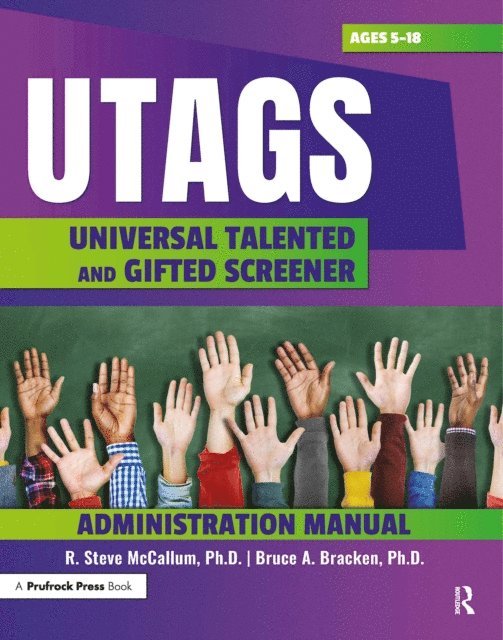
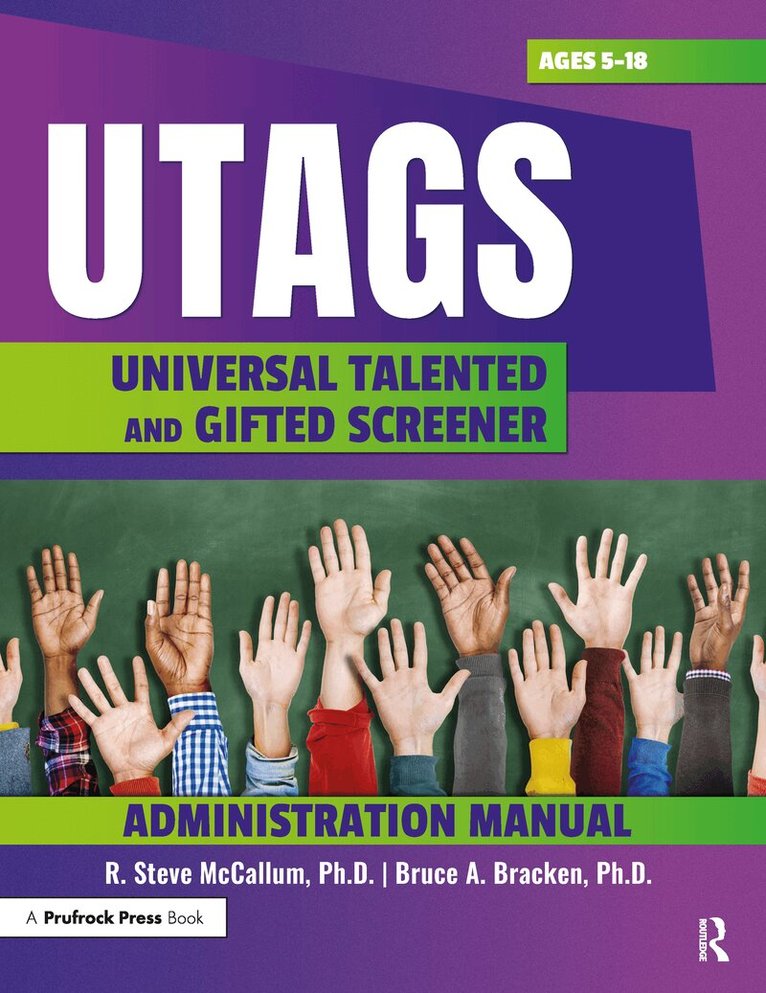
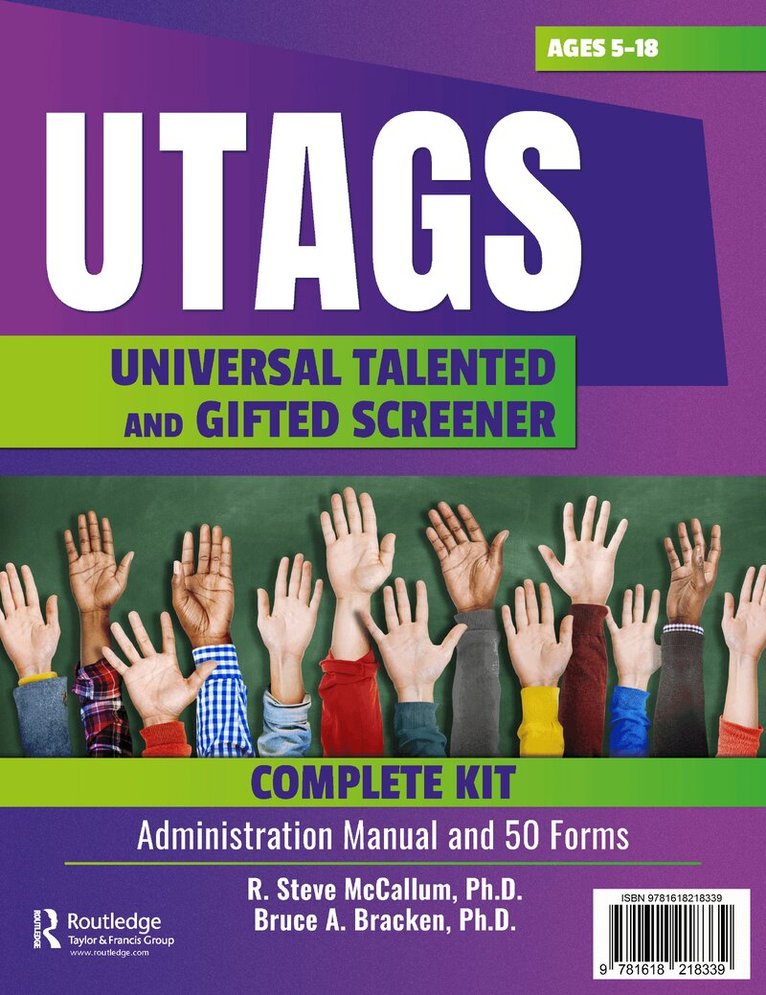
This is a set of 50 forms for use with the Universal Talented and Gifted Screener (UTAGS). Universal Talented and Gifted Screener (UTAGS)features up-to-date national norms,is effective with twice-exceptional learners,includes bias-free items, andprovides a fair assessment regardless of student demographic characteristics.The UTAGS offers schools a time-saving screener for identifying gifted and advanced learners. Designed to be culturally and linguistically fair, the UTAGS is ideal for schools seeking a nationally normed, statistically sound identification screener. Additionally, the UTAGS includes specific considerations for identifying twice-exceptional learners.UTAGS is designed to screen potentially gifted students in six important areas of school success: cognition,creativity,leadership,literacy,math, andscience.This theoretically sound instrument provides easily interpretable scores in the IQ metric (i.e., Mean = 100; SD = 15) and identifies student strengths/weaknesses in a quick, accurate, and cost-efficient format. UTAGS provides interpretation norms based on a standardization sample of 2,492 participants from 22 states; student demographics closely reflect the United States population. The authors also provide a guide for local norming. Assessment fairness was a strong consideration during the UTAGS development, and teacher raters are requested to focus on effective examinee communication strategies rather than addressing the particular language/communication mode employed by the student. Consequently, examinees from other cultures, those who have speech limitations, or those who use nonstandard English are not unfairly penalized. Ages 5 years 0 months-17 years 11 months
1 087 kr
Skickas inom 10-15 vardagar
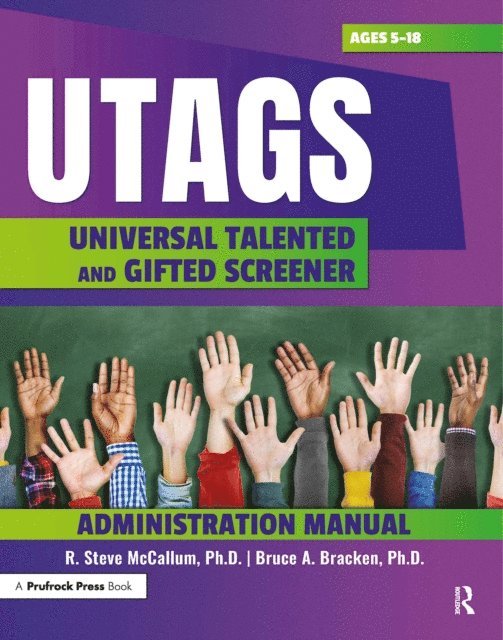
This is the technical manual for the Universal Talented and Gifted Screener.Universal Talented and Gifted Screener (UTAGS)features up-to-date national norms,is effective with twice-exceptional learners,includes bias-free items, andprovides a fair assessment regardless of student demographic characteristics.The UTAGS offers schools a time-saving screener for identifying gifted and advanced learners. Designed to be culturally and linguistically fair, the UTAGS is ideal for schools seeking a nationally normed, statistically sound identification screener. Additionally, the UTAGS includes specific considerations for identifying twice-exceptional learners.UTAGS is designed to screen potentially gifted students in six important areas of school success:cognition,creativity,leadership,literacy,math, andscience.This theoretically sound instrument provides easily interpretable scores in the IQ metric (i.e., Mean = 100; SD = 15) and identifies student strengths/weaknesses in a quick, accurate, and cost-efficient format. UTAGS provides interpretation norms based on a standardization sample of 2,492 participants from 22 states; student demographics closely reflect the United States population. The authors also provide a guide for local norming. Assessment fairness was a strong consideration during the UTAGS development, and teacher raters are requested to focus on effective examinee communication strategies rather than addressing the particular language/communication mode employed by the student. Consequently, examinees from other cultures, those who have speech limitations, or those who use nonstandard English are not unfairly penalized. Ages 5 years 0 months-17 years 11 months
196 kr
Skickas inom 5-8 vardagar