Bruce Gilley - Böcker
Visar alla böcker från författaren Bruce Gilley. Handla med fri frakt och snabb leverans.
12 produkter
12 produkter
1 108 kr
Skickas inom 7-10 vardagar
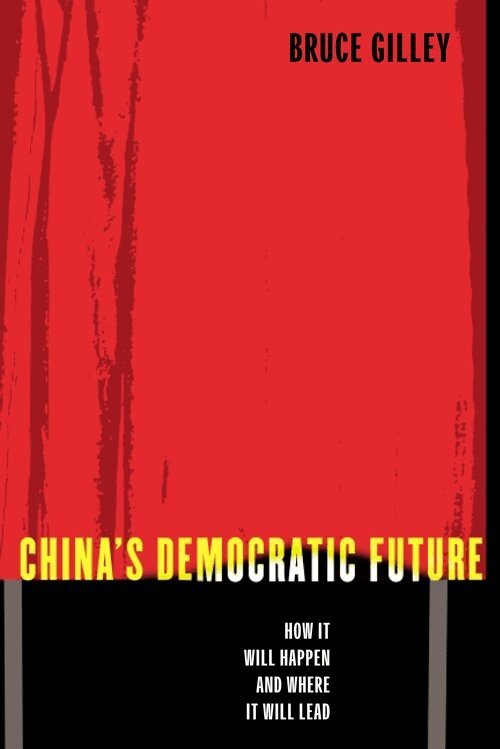
The end of communist rule in China will be one of the most momentous events of the twenty-first century, sounding the death knell for the Marxist-Leninist experiment and changing the lives of a fifth of humanity. This book provides a likely blow-by-blow account of how the Chinese Communist Party will be removed from power and how a new democracy will be born. In more than half a century of rule, the Chinese Communist Party has turned a poor and benighted China into a moderately well-off and increasingly influential nation. Yet the Party has failed to keep pace with change since stepping aside from daily life in the late-1970s. After nearly a hundred years of frustrating attempts to create a workable political system following the overthrow of the last dynasty, the prospects for democracy in China are better than ever, according to Bruce Gilley. Gilley predicts an elite-led transformation rather than a popular-led overthrow. He profiles the key actors and looks at the response of excluded elites, such as the military, as well as interested parties such as Taiwan and Tibet.He explains how democracy in China will be very "Chinese," even as it will also embody fundamental universal liberal features. He deals with competing interests-regional, sectoral, and class-of China's economy and society under democracy, addressing the pressing concerns of world business. Finally he considers the implications for Asia as well as for the United States. The end of communist rule in China will be one of the most momentous events of the twenty-first century, sounding the death knell for the Marxist-Leninist experiment and changing the lives of a fifth of humanity. This book provides a likely blow-by-blow account of how the Chinese Communist Party will be removed from power and how a new democracy will be born. In more than half a century of rule, the Chinese Communist Party has turned a poor and benighted China into a moderately well-off and increasingly influential nation. Yet the Party has failed to keep pace with change since stepping aside from daily life in the late-1970s.After nearly a hundred years of frustrating attempts to create a workable political system following the overthrow of the last dynasty, the prospects for democracy in China are better than ever, according to Bruce Gilley. Gilley predicts an elite-led transformation rather than a popular-led overthrow. He profiles the key actors and looks at the response of excluded elites, such as the military, as well as interested parties such as Taiwan and Tibet. He explains how democracy in China will be very "Chinese," even as it will also embody fundamental universal liberal features. He deals with competing interests-regional, sectoral, and class-of China's economy and society under democracy, addressing the pressing concerns of world business. Finally he considers the implications for Asia as well as for the United States.
275 kr
Skickas inom 7-10 vardagar
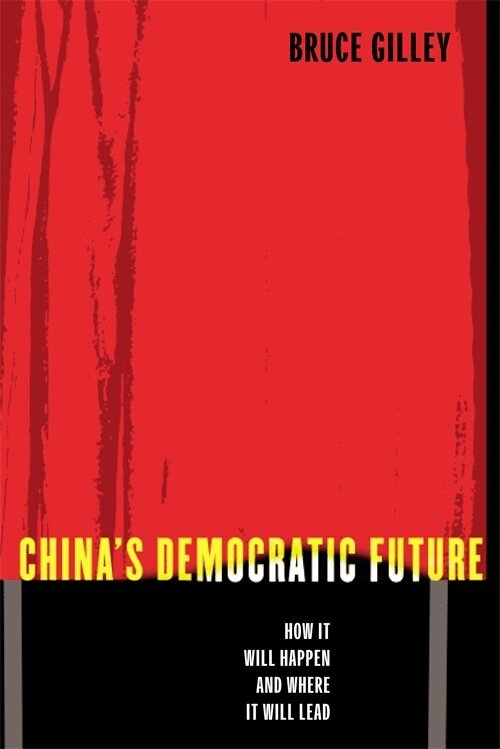
The end of communist rule in China will be one of the most momentous events of the twenty-first century, sounding the death knell for the Marxist-Leninist experiment and changing the lives of a fifth of humanity. This book provides a likely blow-by-blow account of how the Chinese Communist Party will be removed from power and how a new democracy will be born. In more than half a century of rule, the Chinese Communist Party has turned a poor and benighted China into a moderately well-off and increasingly influential nation. Yet the Party has failed to keep pace with change since stepping aside from daily life in the late-1970s. After nearly a hundred years of frustrating attempts to create a workable political system following the overthrow of the last dynasty, the prospects for democracy in China are better than ever, according to Bruce Gilley. Gilley predicts an elite-led transformation rather than a popular-led overthrow. He profiles the key actors and looks at the response of excluded elites, such as the military, as well as interested parties such as Taiwan and Tibet.He explains how democracy in China will be very "Chinese," even as it will also embody fundamental universal liberal features. He deals with competing interests-regional, sectoral, and class-of China's economy and society under democracy, addressing the pressing concerns of world business. Finally he considers the implications for Asia as well as for the United States. The end of communist rule in China will be one of the most momentous events of the twenty-first century, sounding the death knell for the Marxist-Leninist experiment and changing the lives of a fifth of humanity. This book provides a likely blow-by-blow account of how the Chinese Communist Party will be removed from power and how a new democracy will be born. In more than half a century of rule, the Chinese Communist Party has turned a poor and benighted China into a moderately well-off and increasingly influential nation. Yet the Party has failed to keep pace with change since stepping aside from daily life in the late-1970s.After nearly a hundred years of frustrating attempts to create a workable political system following the overthrow of the last dynasty, the prospects for democracy in China are better than ever, according to Bruce Gilley. Gilley predicts an elite-led transformation rather than a popular-led overthrow. He profiles the key actors and looks at the response of excluded elites, such as the military, as well as interested parties such as Taiwan and Tibet. He explains how democracy in China will be very "Chinese," even as it will also embody fundamental universal liberal features. He deals with competing interests-regional, sectoral, and class-of China's economy and society under democracy, addressing the pressing concerns of world business. Finally he considers the implications for Asia as well as for the United States.
518 kr
Skickas inom 7-10 vardagar
Popular perceptions of a state's legitimacy are inextricably bound to its ability to rule. Vast military and material reserves cannot counter the power of a citizen's belief, and the more widespread the crisis of a state's legitimacy, the greater the threat to its stability. Even such established democracies as France and India are losing their moral claims over society, while such highly illiberal states as China and Iran enjoy strong showings of public support. Through a remarkable fusion of empirical research and theory, Bruce Gilley makes clear the link between political consent and political rule. Fixing a definition of legitimacy that is both general and particular, he is able to study the role of legitimacy as it has been maintained and lost in a diverse selection of societies. He begins by detailing the origins of state legitimacy and the methods governments have used to wield it best. He then considers the habits of less successful states, exploring how the process works across different styles of government.Gilley's unique approach merges a broad study of legitimacy and performance in seventy-two states with a detailed empirical analysis of the mechanisms of legitimation. The results are tested on a case study of Uganda, a country that, after 1986, began to recover from decades of civil war. Considering a range of explanations of other domestic and international phenomena as well, Gilley ultimately argues that, because of its evident real-world importance, legitimacy should occupy a central place in political analysis.
1 063 kr
Skickas inom 3-6 vardagar
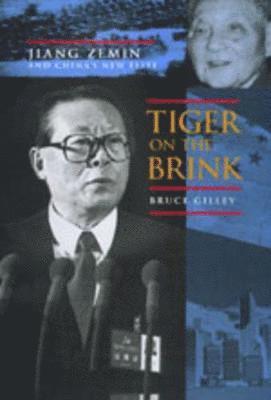
This path breaking book is the first full-length study of the rise to power of Jiang Zemin, now the central figure in China's 'third generation' of leaders. Tracing Jiang's beginnings as a student in the underground Communist movement in Shanghai through his appointment by Deng Xiaoping as party general secretary and his sudden elevation to central authority in the wake of the 1989 Tiananmen Massacre in Beijing, Bruce Gilley offers a fascinating and highly readable look at how Jiang Zemin has secured his position as one of the world's most powerful figures. Gilley follows Jiang's life and career from his early years as the adopted son of a revolutionary martyr, through his training in Western science and engineering, to his emergence as what many believed would be an interim figurehead in the wake of Tiananmen.Gilley shows how Jiang instead persisted as China's key leader following the death of Deng Xiaoping: While he shared the concerns of the last of the Party elders - including their idealistic views of Chinese socialism - he also accommodated the younger generation of economic reformers who have helped China to achieve staggering growth in its domestic economy and foreign trade. Gilley's analysis of the careful and methodical transition of power from Deng to Jiang during the 1990s is a remarkable study in complexity and contrast, clearly illustrating Jiang's ability to either placate his allies and adversaries or ruthlessly exploit their weaknesses. Based on first-hand interviews and primary documents as well as a variety of mainland Chinese and international media sources, "Tiger on the Brink" is an unprecedented and immensely revealing look into the highest echelons of Chinese politics on the eve of the twenty-first century, and will be of interest to anyone concerned with the world's most populous nation and its newest emerging superpower.
385 kr
Skickas inom 7-10 vardagar
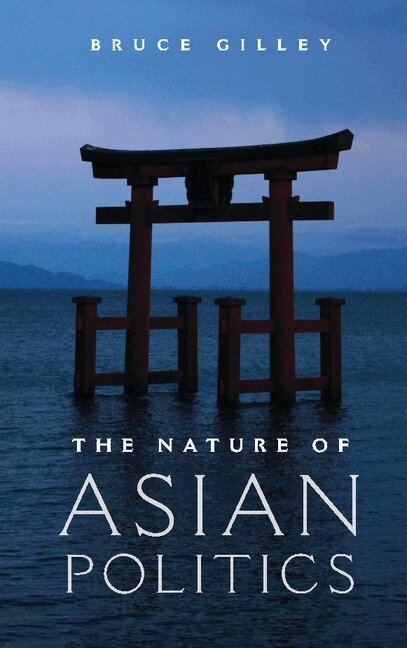
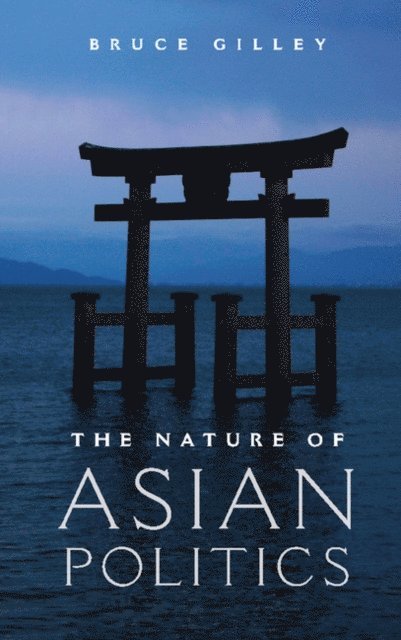
The Nature of Asian Politics is a broad and thematic treatment of the fundamental factors that characterize politics in the fourteen key countries of Southeast and Northeast Asia. Bruce Gilley begins with an overview of state-society relations, then moves on to the fundamental questions of development and democracy, and finally shifts to an exploration of governance and public policy in the region. This book proposes an Asian governance model that is useful for understanding politics from Japan to Indonesia. By reviving an earlier paradigm known as oriental despotism and applying it to political theories on the Asian region, this book is likely to attract wide debate among students of Asian politics and among Western policy makers seeking to engage the region.
1 034 kr
Skickas inom 7-10 vardagar
The Nature of Asian Politics is a broad and thematic treatment of the fundamental factors that characterize politics in the fourteen key countries of Southeast and Northeast Asia. Bruce Gilley begins with an overview of state-society relations, then moves on to the fundamental questions of development and democracy, and finally shifts to an exploration of governance and public policy in the region. This book proposes an Asian governance model that is useful for understanding politics from Japan to Indonesia. By reviving an earlier paradigm known as oriental despotism and applying it to political theories on the Asian region, this book is likely to attract wide debate among students of Asian politics and among Western policy makers seeking to engage the region.
1 393 kr
Skickas inom 5-8 vardagar
Examines the importance and role of middle powers in the key phenomenon of contemporary international politics, the rise of China. This book also explores how much (or how little) China, and for comparison the US, value middle powers and examines whether or not middle powers can actually shape China's behavior.
621 kr
Skickas inom 3-6 vardagar
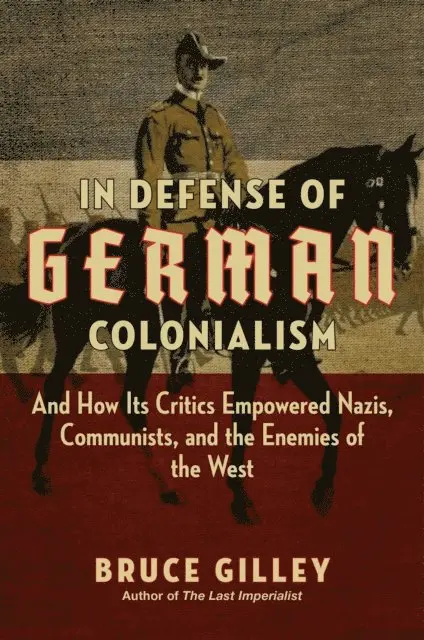
In Defense of German Colonialism
And How Its Critics Empowered Nazis, Communists, and the Enemies of the West
Inbunden, Engelska, 2022
235 kr
Tillfälligt slut
Famed historian and author of the groundbreaking "The Case for Colonialism" demonstrates that, contary to modern presuppositions, German colonialism from its early roots to the mid-twentieth century was overall a force for good in the world where development was encouraged and native governance flourished.Historian and university professor, Bruce Gilley, delves into the history of German colonialism from its earliest roots through the 20th century, demonstrating that contrary to modern presuppositions, it served as a global force for good—elevating the lives of its subjects and encouraging scientific development while allowing native cultures to flourish within its governance.
163 kr
Skickas
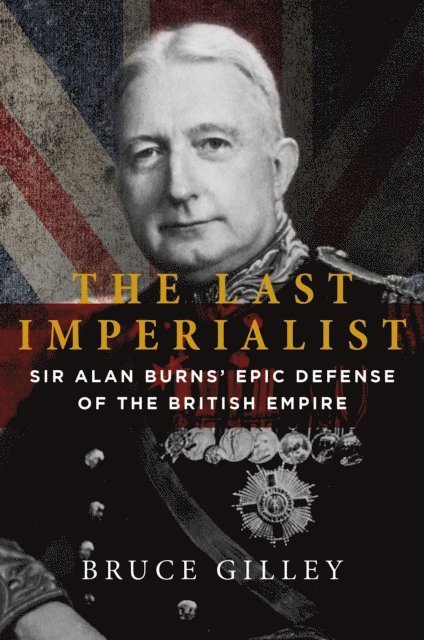
The British Empire, one of the most powerful forces in history, was also one of the most humane. Yet at its twilight, few were willing to defy the anti-colonial reaction that condemned millions to despotism under the regimes that replaced it. Sir Alan Burns was among them.In this lively and provocative work of history, Bruce Gilley vindicates Sir Alan’s view that decolonization was poorly managed and too swiftly executed, a view based not on imperialist nostalgia but on a sober assessment of the ravages of the twentieth century.Gilley demonstrates that Burns understood the benefits of colonial rule and correctly foretold the chaos that accompanied its rapid dissolution.Relying on previously unavailable documentation from Burns’s family, The Last Imperialist dethrones the revisionist historians and shatters their unbalanced accusations against European colonialism. This is history writing at its most courageous.
413 kr
Skickas inom 5-8 vardagar
277 kr
Skickas inom 5-8 vardagar