
Bruce Isaacs – författare
Visar alla böcker från författaren Bruce Isaacs. Handla med fri frakt och snabb leverans.
5 produkter
5 produkter
Inbunden, Engelska, 2020
1 710 kr
Skickas inom 7-10 vardagar
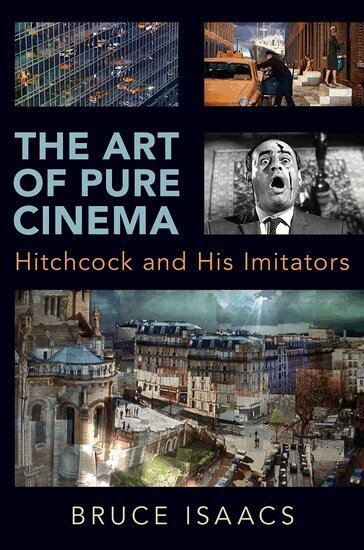
In a now-famous interview with François Truffaut in 1962, Alfred Hitchcock described his masterpiece Rear Window (1954) as "the purest expression of a cinematic idea." But what, precisely, did Hitchcock mean by pure cinema? Was pure cinema a function of mise en scène, or composition within the frame? Was it a function of montage, "of pieces of film assembled"? This notion of pure cinema has intrigued and perplexed critics, theorists, and filmmakers alike in the decades following this discussion. And even across his 40-year career, Hitchcock's own ideas about pure cinema remained mired in a lack of detail, clarity, and analytical precision.The Art of Pure Cinema is the first book-length study to examine the historical foundations and stylistic mechanics of pure cinema. Author Bruce Isaacs explores the potential of a philosophical and artistic approach most explicitly demonstrated by Hitchcock in his later films, beginning with Hitchcock's contact with the European avant-garde film movement in the mid-1920s. Tracing the evolution of a philosophy of pure cinema across Hitchcock's most experimental works - Rear Window, Vertigo, North by Northwest, Psycho, The Birds, Marnie, and Frenzy - Isaacs rereads these works in a new and vital context. In addition to this historical account, the book presents the first examination of pure cinema as an integrated stylistics of mise en scène, montage, and sound design. The films of so-called Hitchcockian imitators like Mario Bava, Dario Argento, and Brian De Palma are also examined in light of a provocative claim: that the art of pure cinema is only fully realized after Hitchcock.
Häftad, Engelska, 2020
461 kr
Skickas inom 5-8 vardagar
In a now-famous interview with François Truffaut in 1962, Alfred Hitchcock described his masterpiece Rear Window (1954) as "the purest expression of a cinematic idea." But what, precisely, did Hitchcock mean by pure cinema? Was pure cinema a function of mise en scène, or composition within the frame? Was it a function of montage, "of pieces of film assembled"? This notion of pure cinema has intrigued and perplexed critics, theorists, and filmmakers alike in the decades following this discussion. And even across his 40-year career, Hitchcock's own ideas about pure cinema remained mired in a lack of detail, clarity, and analytical precision.The Art of Pure Cinema is the first book-length study to examine the historical foundations and stylistic mechanics of pure cinema. Author Bruce Isaacs explores the potential of a philosophical and artistic approach most explicitly demonstrated by Hitchcock in his later films, beginning with Hitchcock's contact with the European avant-garde film movement in the mid-1920s. Tracing the evolution of a philosophy of pure cinema across Hitchcock's most experimental works - Rear Window, Vertigo, North by Northwest, Psycho, The Birds, Marnie, and Frenzy - Isaacs rereads these works in a new and vital context. In addition to this historical account, the book presents the first examination of pure cinema as an integrated stylistics of mise en scène, montage, and sound design. The films of so-called Hitchcockian imitators like Mario Bava, Dario Argento, and Brian De Palma are also examined in light of a provocative claim: that the art of pure cinema is only fully realized after Hitchcock.
Inbunden, Engelska, 2008
2 474 kr
Skickas inom 10-15 vardagar
Film and theory have always gone hand in hand. In many ways, the professional academic study of cinema grew out of the revolutionary surges in literary and cultural theory in Europe. Since the 1970s, film theory has predominantly been a lens through which to wage philosophical and cultural war (in increasingly abstract terms), and cinema was in the right place at the right time. "Toward a New Film Aesthetic" argues that such an approach to film studies ultimately debilitates the study of film.How does film theory connect with an audience that experiences film far beyond the confines of the academy? How can film scholars remain relevant to film culture? These are the fundamental question that film scholars seem to have neglected. Film theory, simply put, has detached itself from meaningful discussions of cinema undertaken with mainstream audiences."Toward a New Film Aesthetic" is a radical attempt to connect the study of film with the actual viewing and consumption practices of mainstream cinematic culture. Isaacs argues that theory has rendered the majority of approaches to film insular, self-reflective, obtuse, and - in its worst incarnation - elitist.He redefines cinema aesthetics in terms of the obsessive consumption of cinematic texts that is the hallmark of contemporary film viewing.
Häftad, Engelska, 2008
573 kr
Skickas inom 10-15 vardagar
Film and theory have always gone hand in hand. In many ways, the professional academic study of cinema grew out of the revolutionary surges in literary and cultural theory in Europe. Since the 1970s, film theory has predominantly been a lens through which to wage philosophical and cultural war (in increasingly abstract terms), and cinema was in the right place at the right time. "Toward a New Film Aesthetic" argues that such an approach to film studies ultimately debilitates the study of film.How does film theory connect with an audience that experiences film far beyond the confines of the academy? How can film scholars remain relevant to film culture? These are the fundamental question that film scholars seem to have neglected. Film theory, simply put, has detached itself from meaningful discussions of cinema undertaken with mainstream audiences."Toward a New Film Aesthetic" is a radical attempt to connect the study of film with the actual viewing and consumption practices of mainstream cinematic culture. Isaacs argues that theory has rendered the majority of approaches to film insular, self-reflective, obtuse, and - in its worst incarnation - elitist.He redefines cinema aesthetics in terms of the obsessive consumption of cinematic texts that is the hallmark of contemporary film viewing.
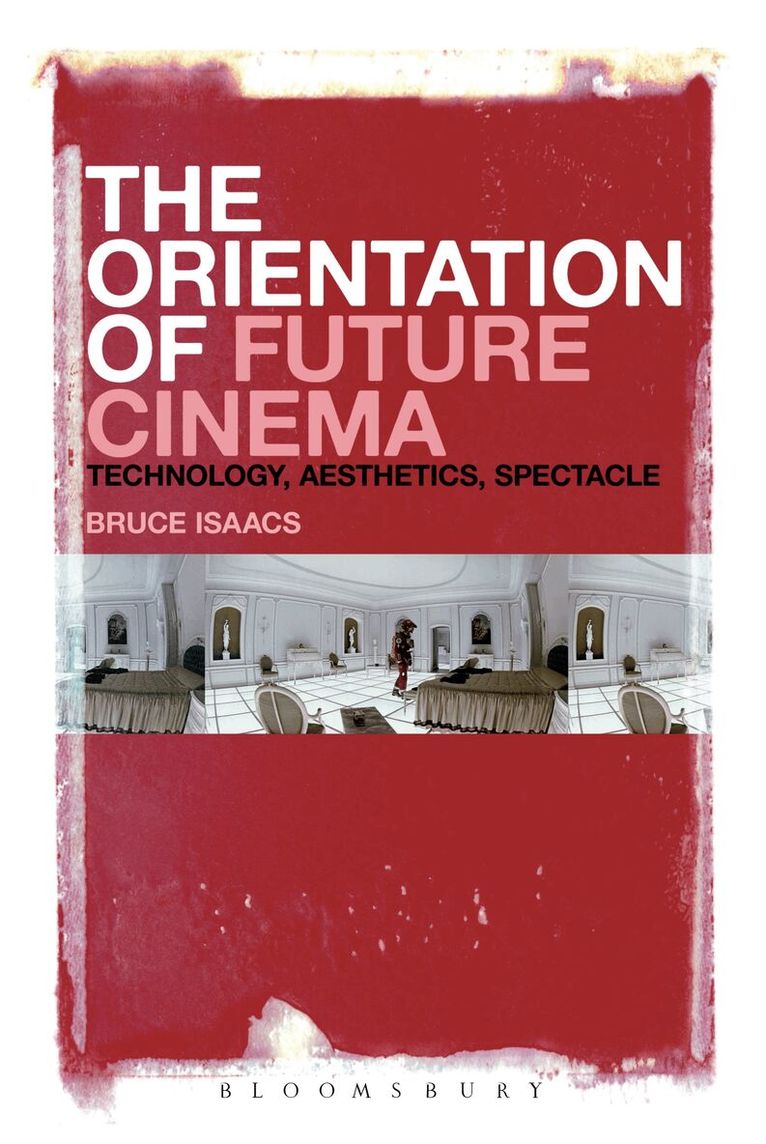
Häftad, Engelska, 2014
500 kr
Skickas inom 10-15 vardagar
What is the fate of cinema in an age of new technologies, new aesthetic styles, new modes of cultural production and consumption? What becomes of cinema and a century-long history of the moving image when the theatre is outmoded as a social and aesthetic space, as celluloid gives over to digital technology, as the art-house and multiplex are overtaken by a proliferation of home entertainment systems? The Orientation of Future Cinema offers an ambitious and compelling argument for the continued life of cinema as image, narrative and experience. Commencing with Lumière’s Arrival of a Train at a Station, Bruce Isaacs confronts the threat of contemporary digital technologies and processes by returning to cinema’s complex history as a technological and industrial phenomenon. The technology of moving images has profoundly changed; and yet cinema materialises ever more forcefully in digital capture and augmentation, 3-D perception and affect, High Frame Rate cinema, and the evolution of spectacle as the dominant aesthetic mode in contemporary studio production.