Bruce Macfarlane – författare
2 246 kr
Skickas inom 10-15 vardagar
735 kr
Skickas inom 10-15 vardagar
2 319 kr
Skickas inom 10-15 vardagar
578 kr
Skickas inom 10-15 vardagar
1 911 kr
Skickas inom 10-15 vardagar
537 kr
Skickas inom 10-15 vardagar
660 kr
Skickas inom 10-15 vardagar
1 911 kr
Skickas inom 10-15 vardagar
619 kr
Skickas inom 10-15 vardagar
2 685 kr
Skickas inom 5-8 vardagar
728 kr
Skickas inom 10-15 vardagar
714 kr
Skickas inom 10-15 vardagar
43 kr
Läs direkt efter köp
662 kr
Läs direkt efter köp
There is increased emphasis internationally on ethically sound research, and on good training for research supervisors. Researching with Integrity aims to identify what and how research can be undertaken ethically and with ‘virtue’ from initial conception of ideas through to dissemination. It outlines the context in which academics engage in research, considering the impact of discipline and institutional culture, the influence of government audit of research ‘quality’, the role of government and quangos, professional organisations and business sponsors, and examines the effects of the increasing power and influence of funding bodies, university ethics committees and codes of practice.
Based on the notion of ‘virtue’ ethics, this book proposes an alternative approach to research, which focuses not only on ethical rules and protocol to avoid unethical research, but encourages academic, professional and character development and allows for the exercise of personal judgement.
Themes considered include:
Increased competitiveness between academics and concentration of funding in fewer universities
Increasingly bureaucratic approval of processes focused on the treatment of human and animals in research
Meeting the expectations of research sponsors
‘Taboo’ research topics and methods
Exposing findings to the scrutiny of peers, taking credit for the work of others and self-citation
Bullying of junior researchers and plagiarism
Power and influence of institutional, discipline-based and professional organisations
Illustrated throughout with short narratives detailing ethical issues and dilemmas from international academic researchers representing different disciplines, research cultures and national contexts, this books proposes a an alternative approach to research which provides all research professionals with the intellectual tools they need to cope with complex research.
662 kr
Läs direkt efter köp
There is increased emphasis internationally on ethically sound research, and on good training for research supervisors. Researching with Integrity aims to identify what and how research can be undertaken ethically and with ‘virtue’ from initial conception of ideas through to dissemination. It outlines the context in which academics engage in research, considering the impact of discipline and institutional culture, the influence of government audit of research ‘quality’, the role of government and quangos, professional organisations and business sponsors, and examines the effects of the increasing power and influence of funding bodies, university ethics committees and codes of practice.
Based on the notion of ‘virtue’ ethics, this book proposes an alternative approach to research, which focuses not only on ethical rules and protocol to avoid unethical research, but encourages academic, professional and character development and allows for the exercise of personal judgement.
Themes considered include:
Increased competitiveness between academics and concentration of funding in fewer universities
Increasingly bureaucratic approval of processes focused on the treatment of human and animals in research
Meeting the expectations of research sponsors
‘Taboo’ research topics and methods
Exposing findings to the scrutiny of peers, taking credit for the work of others and self-citation
Bullying of junior researchers and plagiarism
Power and influence of institutional, discipline-based and professional organisations
Illustrated throughout with short narratives detailing ethical issues and dilemmas from international academic researchers representing different disciplines, research cultures and national contexts, this books proposes a an alternative approach to research which provides all research professionals with the intellectual tools they need to cope with complex research.
757 kr
Läs direkt efter köp
With increasing focus on excellence in research and teaching, the service role of the individual academic is often neglected. This book calls for greater recognition of this important aspect of academic life, highlighting the importance of mentoring, committee work and pastoral care in the daily running of universities. Drawing from extensive examples from models around the world, The Academic Citizen points to the benefits of effective communication with colleagues in the faculty, across the university and in corresponding faculties across the world, as well as those in maintaining positive associations with the wider world.
757 kr
Läs direkt efter köp
With increasing focus on excellence in research and teaching, the service role of the individual academic is often neglected. This book calls for greater recognition of this important aspect of academic life, highlighting the importance of mentoring, committee work and pastoral care in the daily running of universities. Drawing from extensive examples from models around the world, The Academic Citizen points to the benefits of effective communication with colleagues in the faculty, across the university and in corresponding faculties across the world, as well as those in maintaining positive associations with the wider world.
820 kr
Läs direkt efter köp
827 kr
Läs direkt efter köp
820 kr
Läs direkt efter köp
Written to meet the needs of teachers, lecturers and tutors working at different levels and in many situations, this is the guide to surveying and understanding the key issues, best practices and new developments in business and management studies.
Teaching in this field is a multi-faceted experience. The authors use an international perspective and support a wide range of situations by concentrating on five key areas:
* the teaching and supporting of learning* the design and planning of learning activities* assessment and giving feedback to students* developing effective learning environments and student learning support systems* reflective practice and professional development.
Practical and clear, this book will prove an invaluable guide for all those with an interest in developing business and management education and is essential reading for all those looking for professional accreditation for recognition of their teaching. It is also indispensable for the less experienced teacher seeking material for reflection and advice.
820 kr
Läs direkt efter köp
Written to meet the needs of teachers, lecturers and tutors working at different levels and in many situations, this is the guide to surveying and understanding the key issues, best practices and new developments in business and management studies.
Teaching in this field is a multi-faceted experience. The authors use an international perspective and support a wide range of situations by concentrating on five key areas:
* the teaching and supporting of learning* the design and planning of learning activities* assessment and giving feedback to students* developing effective learning environments and student learning support systems* reflective practice and professional development.
Practical and clear, this book will prove an invaluable guide for all those with an interest in developing business and management education and is essential reading for all those looking for professional accreditation for recognition of their teaching. It is also indispensable for the less experienced teacher seeking material for reflection and advice.
836 kr
Läs direkt efter köp
This edited volume will be an important and key resource for managers, researchers, and policy makers in the field of Higher Education and Further Education. It offers insights into a radical new way of organizing post-compulsory education on an international basis that directly promotes a social justice agenda (i.e., widening of student participation). Around the world post-compulsory education is divided between Universities and Community-based Colleges. Universities are typically concerned with "higher" education, while community based colleges focus on "further" and technical education. In response to a range of social and economic forces there has been a growth in the number of dual sector institutions (or "duals") that span this divide. Challenging Boundaries brings together leading international thinkers, policy analysts, academic managers, and researchers who question whether duals can provide relevant education to students and appropriate graduates for the economy, while also offering greater opportunities to disadvantaged students. Challenging Boundaries provides an analysis of the potential of "dual sector" institutions in North America, UK, South Africa, and Australasia.
This volume draws on the very latest research findings and effectively looks to:
Challenge conventional thinking about post-compulsory education Demonstrate how a number of institutions internationally are addressing the organizational, managerial, and cultural challenges of operating as dual sector universities Combine the latest research in the field from a range of international scholars with operational insights from university leaders Provide a key resource for education policy makers and researchers and students of educational policy and management at masters and doctoral level836 kr
Läs direkt efter köp
This edited volume will be an important and key resource for managers, researchers, and policy makers in the field of Higher Education and Further Education. It offers insights into a radical new way of organizing post-compulsory education on an international basis that directly promotes a social justice agenda (i.e., widening of student participation). Around the world post-compulsory education is divided between Universities and Community-based Colleges. Universities are typically concerned with "higher" education, while community based colleges focus on "further" and technical education. In response to a range of social and economic forces there has been a growth in the number of dual sector institutions (or "duals") that span this divide. Challenging Boundaries brings together leading international thinkers, policy analysts, academic managers, and researchers who question whether duals can provide relevant education to students and appropriate graduates for the economy, while also offering greater opportunities to disadvantaged students. Challenging Boundaries provides an analysis of the potential of "dual sector" institutions in North America, UK, South Africa, and Australasia.
This volume draws on the very latest research findings and effectively looks to:
Challenge conventional thinking about post-compulsory education Demonstrate how a number of institutions internationally are addressing the organizational, managerial, and cultural challenges of operating as dual sector universities Combine the latest research in the field from a range of international scholars with operational insights from university leaders Provide a key resource for education policy makers and researchers and students of educational policy and management at masters and doctoral level615 kr
Läs direkt efter köp
What is ‘intellectual leadership’ and how might this concept be better understood in the modern university? Drawing on research into the role of full or chair professors, this book argues that it is important to define and reclaim intellectual leadership as a counter-weight to the prevailing managerial culture of higher education. It contends that professors have been converted into narrowly defined knowledge entrepreneurs and often feel excluded or marginalised as leaders by their own universities. To fulfil their role professors need to balance the privileges of academic freedom with the responsibilities of academic duty. They exercise their academic freedom as critics and advocates but they also need to be mentors, guardians, enablers and ambassadors. Four orientations to intellectual leadership are identified: knowledge producer, academic citizen, boundary transgressor and public intellectual. These orientations are illustrated by reference to the careers of professors and show how intellectual leadership can be better understood as a transformational activity. This book tackles the question of what intellectual leadership actually is and analyses the questions most frequently associated with the role of senior academics, including:
How can intellectual leadership be distinguished from other forms of leadership and management?
How can professors balance their responsibilities both within and beyond the university?
How can universities make better use of the expertise of professors as leaders?
It concludes with recommendations for senior institutional managers on how to make more effective use of the expertise and leadership potential of the senior professoriate.
615 kr
Läs direkt efter köp
What is ‘intellectual leadership’ and how might this concept be better understood in the modern university? Drawing on research into the role of full or chair professors, this book argues that it is important to define and reclaim intellectual leadership as a counter-weight to the prevailing managerial culture of higher education. It contends that professors have been converted into narrowly defined knowledge entrepreneurs and often feel excluded or marginalised as leaders by their own universities. To fulfil their role professors need to balance the privileges of academic freedom with the responsibilities of academic duty. They exercise their academic freedom as critics and advocates but they also need to be mentors, guardians, enablers and ambassadors. Four orientations to intellectual leadership are identified: knowledge producer, academic citizen, boundary transgressor and public intellectual. These orientations are illustrated by reference to the careers of professors and show how intellectual leadership can be better understood as a transformational activity. This book tackles the question of what intellectual leadership actually is and analyses the questions most frequently associated with the role of senior academics, including:
How can intellectual leadership be distinguished from other forms of leadership and management?
How can professors balance their responsibilities both within and beyond the university?
How can universities make better use of the expertise of professors as leaders?
It concludes with recommendations for senior institutional managers on how to make more effective use of the expertise and leadership potential of the senior professoriate.
2 727 kr
Skickas inom 10-15 vardagar
568 kr
Läs direkt efter köp
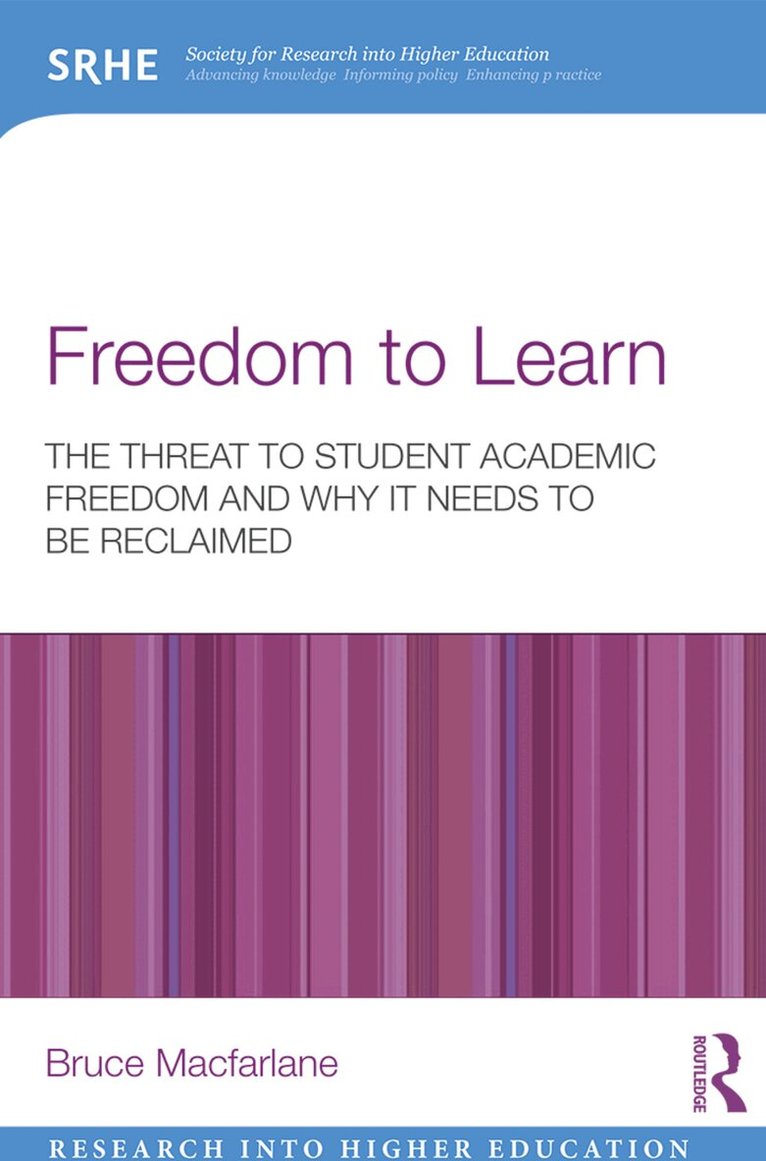
The freedom of students to learn at university is being eroded by a performative culture that fails to respect their rights to engage and develop as autonomous adults. Instead, students are being restricted in how they learn, when they learn and what they learn by the so-called student engagement movement. Compulsory attendance registers, class contribution grading, group project work and reflective learning exercises based on expectations of self-disclosure and confession take little account of the rights of students or individual differences between them. This new hidden university curriculum is intolerant of students who may prefer to learn informally, are reticent, shy, or simply value their privacy. Three forms of student performativity have arisen - bodily, participative and emotional – which threaten the freedom to learn.
Key themes include:
A re-imagining of student academic freedom
The democratic student experience
Challenging assumptions of the student engagement movement
An examination of university policies and practices
Freedom to Learn offers a radically new perspective on academic freedom from a student rights standpoint. It analyzes the effects of performative expectations on students drawing on the distinction between negative and positive rights to re-frame student academic freedom. It argues that students need to be thought of as scholars with rights and that the phrase ‘student-centred’ learning needs to be reclaimed to reflect its original intention to allow students to develop as persons. Student rights – to non-indoctrination, reticence, in choosing how to learn, and in being treated like an adult – ought to be central to this process in fostering a democratic rather authoritarian culture of learning and teaching at university.
Written for an international readership, this book will be of great interest to anyone involved in higher education, policy and practice drawing on a wide range of historical and contemporary literature related to sociology, philosophy and higher education studies.
568 kr
Läs direkt efter köp
The freedom of students to learn at university is being eroded by a performative culture that fails to respect their rights to engage and develop as autonomous adults. Instead, students are being restricted in how they learn, when they learn and what they learn by the so-called student engagement movement. Compulsory attendance registers, class contribution grading, group project work and reflective learning exercises based on expectations of self-disclosure and confession take little account of the rights of students or individual differences between them. This new hidden university curriculum is intolerant of students who may prefer to learn informally, are reticent, shy, or simply value their privacy. Three forms of student performativity have arisen - bodily, participative and emotional – which threaten the freedom to learn.
Key themes include:
A re-imagining of student academic freedom
The democratic student experience
Challenging assumptions of the student engagement movement
An examination of university policies and practices
Freedom to Learn offers a radically new perspective on academic freedom from a student rights standpoint. It analyzes the effects of performative expectations on students drawing on the distinction between negative and positive rights to re-frame student academic freedom. It argues that students need to be thought of as scholars with rights and that the phrase ‘student-centred’ learning needs to be reclaimed to reflect its original intention to allow students to develop as persons. Student rights – to non-indoctrination, reticence, in choosing how to learn, and in being treated like an adult – ought to be central to this process in fostering a democratic rather authoritarian culture of learning and teaching at university.
Written for an international readership, this book will be of great interest to anyone involved in higher education, policy and practice drawing on a wide range of historical and contemporary literature related to sociology, philosophy and higher education studies.
1 678 kr
Skickas inom 10-15 vardagar
Out of Time
239 kr
Skickas inom 3-6 vardagar